Physical Address
304 North Cardinal St.
Dorchester Center, MA 02124
Physical Address
304 North Cardinal St.
Dorchester Center, MA 02124

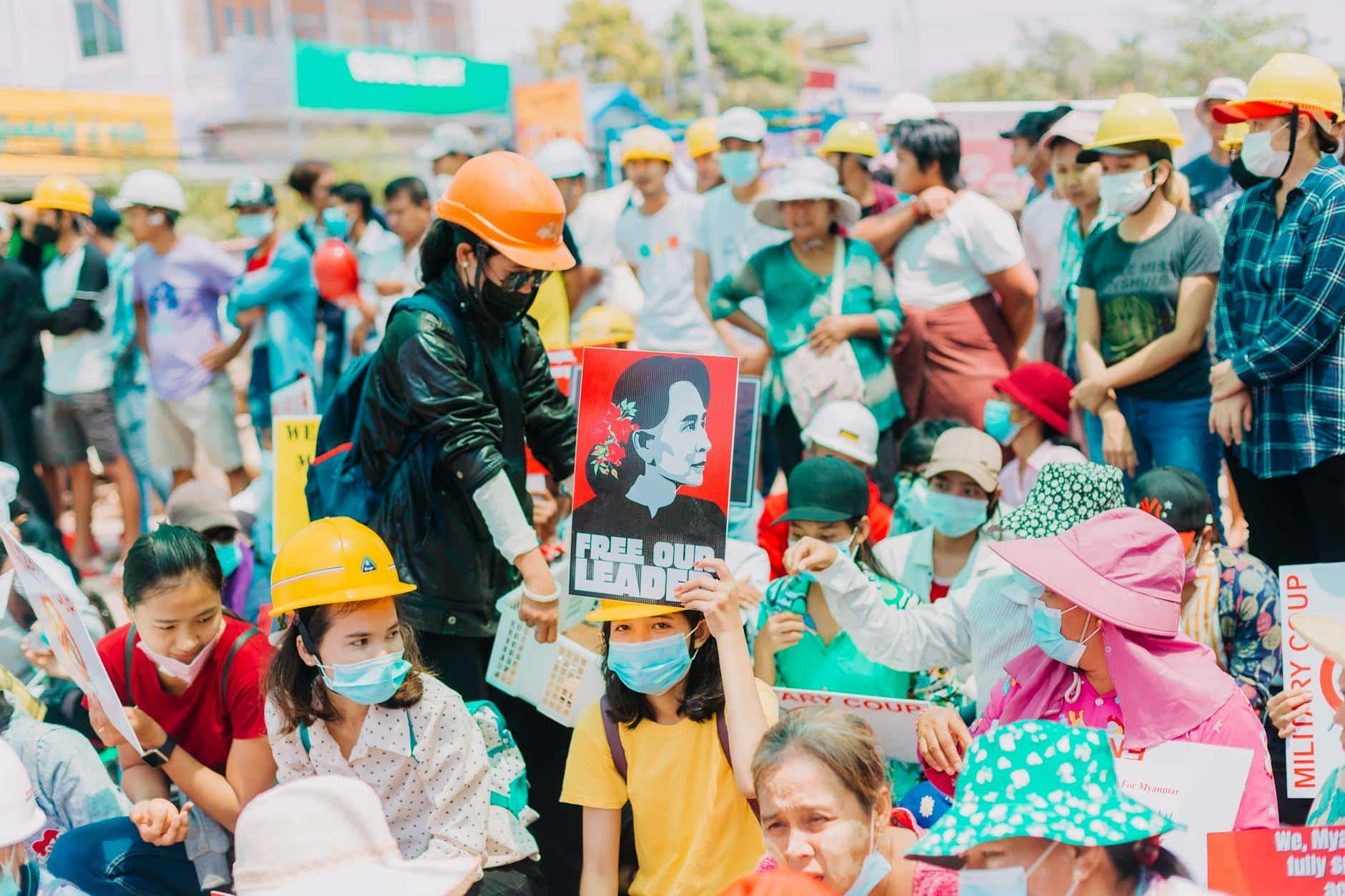
Myanmar is not undergoing democratic transition but rather experiencing a structural conflict between an entrenched military junta and an increasingly organized armed resistance movement. Western policymakers must abandon outdated transition frameworks and recognize the resistance as a legitimate political force reshaping the country's future.
Myanmar is not undergoing a democratic transition. This fundamental misreading of the country’s current trajectory has become the defining weakness of Western foreign policy responses to the 2021 military coup and its aftermath. Framing Myanmar through the lens of elite-level political competition—a narrative that dominated analysis following previous democratic openings—obscures the profound structural transformation occurring on the ground. The military junta’s seizure of power was not a temporary disruption of democratic progress but rather a violent reassertion of institutional dominance that has triggered a fundamentally different political contest: one waged through armed resistance rather than electoral competition.
This analytical failure carries serious policy consequences. When governments treat Myanmar as a country in temporary political flux awaiting elite negotiation, they implicitly validate the military’s claim to legitimacy and underestimate the staying power of organized armed resistance. Such an approach also creates space for diplomatic drift, where policy responses become reactive rather than strategic, and where the actual power dynamics reshaping Myanmar’s political future are systematically underestimated.
The Myanmar resistance movement has evolved far beyond spontaneous civil disobedience. Since 2021, armed ethnic insurgent groups—including the Karen National Union (KNU), Kachin Independence Army (KIA), and Shan State Army-North (SSA-N)—have significantly expanded operations and territorial control. Simultaneously, urban-based armed groups such as the People’s Defence Force (PDF) have emerged as organized military actors rather than scattered protest movements. These forces now contest state control across multiple regions simultaneously, a capability that represents a qualitative shift in Myanmar’s internal conflict dynamics.
The resistance movement has also demonstrated political sophistication beyond armed struggle. The National Unity Government (NUG), established as a shadow administration in opposition to the junta, has articulated alternative governance frameworks and secured diplomatic recognition from certain quarters. This combination of armed capability and political institution-building indicates a resistance movement with strategic depth, not merely tactical capacity. The junta faces not a temporary uprising but a sustained challenge to its monopoly on organized force and political legitimacy.
Foreign policy frameworks that treat this as a temporary aberration requiring elite mediation fundamentally misread the conflict’s nature. The resistance is not seeking negotiated power-sharing with the military; it seeks the military’s removal from political power entirely. This is not a position amenable to compromise through diplomatic pressure on the junta alone.
The “transition” narrative carries historical baggage from Myanmar’s 2011-2021 period, when the military did gradually cede certain political spaces, leading to the 2015 democratic elections and Aung San Suu Kyi’s National League for Democracy (NLD) government. This experience created an analytical template: military rule → managed liberalization → electoral democracy. When the military reversed course in February 2021, many analysts expected a similar cycle to repeat, with international pressure eventually forcing negotiations and another managed opening.
This template no longer applies. The 2021 coup was not driven by military hardliners reversing a liberalization process; it was driven by institutional self-preservation. The military perceived genuine threats to its economic interests, constitutional privileges, and political dominance through the NLD’s electoral legitimacy. The coup represented not a temporary aberration but a reassertion of the institutional logic that governed Myanmar for decades. The military has shown no inclination toward managed transition, and the resistance movement has demonstrated it will not accept one.
Policymakers continuing to operate within a “transition” framework inevitably default to waiting strategies: maintaining diplomatic channels, hoping for internal military factionalism, or expecting economic pressure to produce negotiated settlements. This approach wastes time while the actual balance of forces in Myanmar continues to shift. It also creates perverse incentives, where governments tacitly accept the junta’s continued governance in hopes of eventual elite-level negotiations, thereby undercutting the resistance movement’s strategic position.
When major powers treat Myanmar as a country in temporary crisis awaiting resolution through diplomatic channels, they inevitably deprioritize sustained policy engagement. This creates a vacuum filled by actors with clearer strategic interests: China, which maintains economic and strategic relationships with the junta; Thailand, which faces refugee flows and border security concerns; and ASEAN, which prioritizes consensus-based diplomacy over pressure on member states. The result is a policy environment where the resistance movement receives rhetorical support but limited material assistance, while the junta consolidates control through military expansion and economic restructuring.
The humanitarian costs of this drift are substantial. Myanmar’s internally displaced population has exceeded 1 million people. Airstrikes by military forces have destroyed civilian infrastructure across multiple regions. Armed conflict has intensified in ethnic states where resistance groups control territory. These are not temporary disruptions but rather the consequences of a sustained conflict that will persist regardless of whether Western governments acknowledge its structural nature.
A more strategically sound approach requires recognizing that Myanmar’s resistance movement represents a genuine alternative power center, not merely a temporary opposition to military rule. This recognition carries several analytical implications:
Western governments should abandon the assumption that Myanmar’s current trajectory is temporary and that elite-level negotiation will produce resolution. Instead, policy should be reoriented toward recognizing the resistance movement as a legitimate political force and adjusting engagement accordingly. This does not require choosing sides in a moral sense; it requires acknowledging the structural reality that the military junta no longer monopolizes organized political power in Myanmar.
A more strategic approach would involve sustained support for the resistance movement’s governance capacity, targeted sanctions on junta economic interests rather than broad-based measures that harm civilian populations, and regional engagement that acknowledges the resistance’s legitimacy rather than treating it as a temporary phenomenon. Thailand, Bangladesh, and other neighboring countries require assistance managing refugee flows and border security, but this should be decoupled from diplomatic recognition of the junta’s legitimacy.
The alternative—continuing to treat Myanmar as a country in transition awaiting elite negotiation—will simply extend the conflict while the resistance movement gradually consolidates control over portions of Myanmar’s territory. This outcome may eventually produce a federal or fragmented Myanmar quite different from the unified state that Western policymakers imagine through the lens of transition narratives. Policy drift in Myanmar is not costless; it is a choice to allow events to unfold without strategic direction, with significant humanitarian consequences and unpredictable regional implications.