Physical Address
304 North Cardinal St.
Dorchester Center, MA 02124
Physical Address
304 North Cardinal St.
Dorchester Center, MA 02124

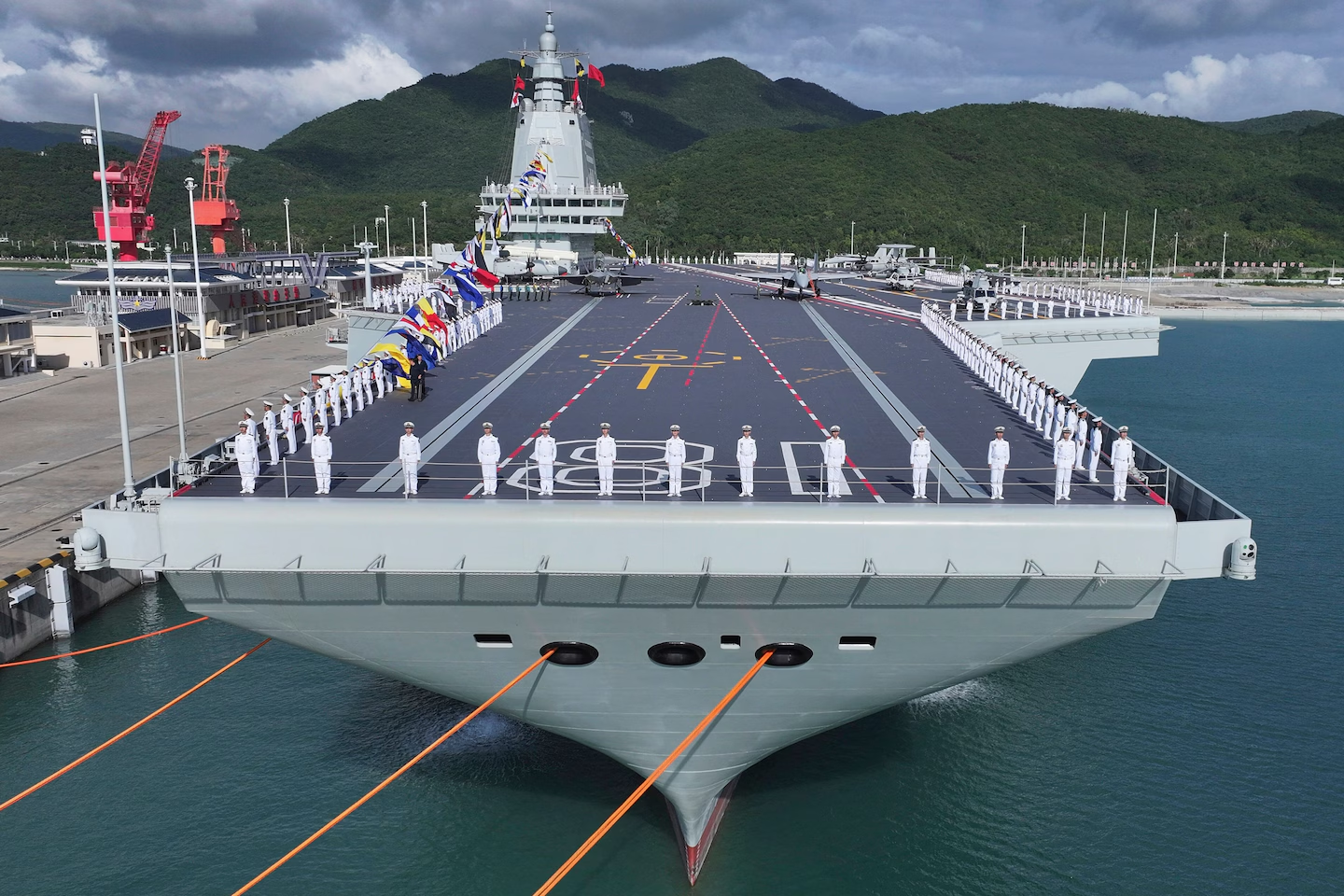
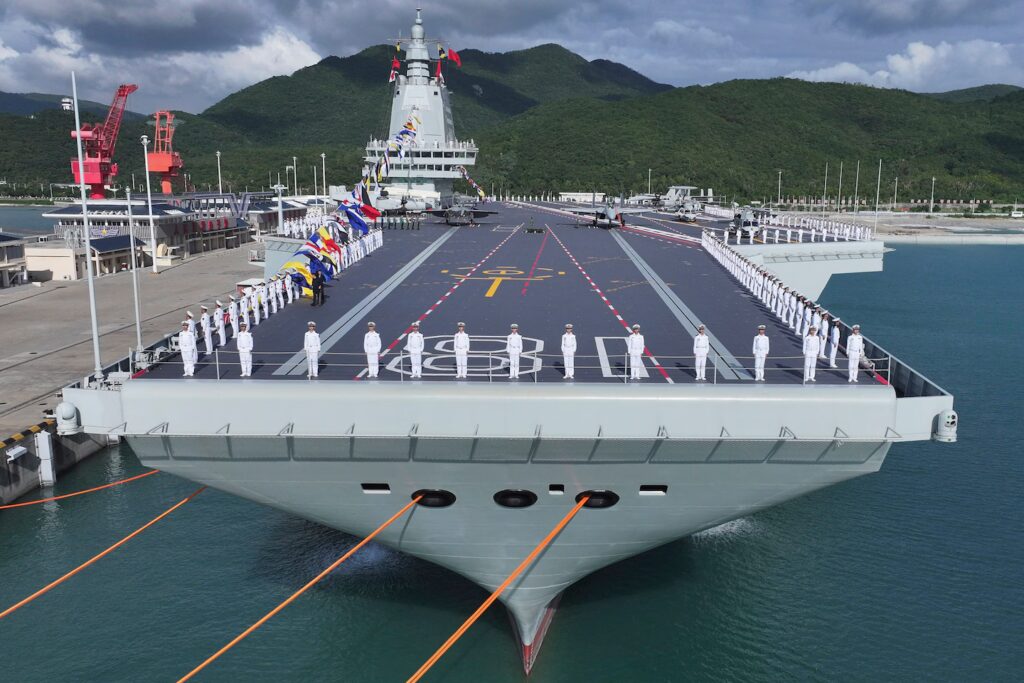
China’s launch and early operations of its newest aircraft carrier, the Fujian, mark a significant moment in the evolution of global naval power. As one of the most technologically advanced carriers ever built outside the United States, the Fujian reflects China’s ambition to become a leading global maritime force capable of long-range, sustained operations far beyond its coastline.
Unlike China’s earlier carriers, the Liaoning and Shandong, the Fujian features electromagnetic catapult systems, an innovation previously deployed only by the U.S. Navy. This technology allows the carrier to launch heavier aircraft with greater efficiency, enabling a more diverse and capable air wing that includes early-warning aircraft, electronic-warfare platforms and next-generation fighter jets.
The introduction of the Fujian contributes to a broader shift occurring within 21st-century naval competition. For decades, the United States has maintained an overwhelming advantage in aircraft carrier capability, operating 11 nuclear-powered supercarriers with unmatched global reach. China’s new carrier does not close this gap—but it narrows it in ways that will shape future maritime strategy.
The Fujian enhances China’s ability to project presence across the Indian Ocean, the Western Pacific, and key global trade routes that are essential to international shipping and energy supply chains. As global maritime traffic becomes increasingly contested, major powers view carrier strike groups as symbols of political influence and strategic credibility.
The carrier’s launch is prompting renewed discussions in capitals worldwide:
China’s growing carrier fleet also influences the evolution of naval doctrine. Carrier strike groups are no longer solely tools of traditional warfare—they now serve roles in:
The Fujian enhances China’s ability to engage in these activities, placing it among the world’s few nations capable of sustained, long-range carrier operations.
The launch of the Fujian is not simply a technological milestone; it is a geopolitical signal. It reflects a world where maritime power is diversifying, competition is intensifying, and naval capabilities are becoming key indicators of strategic influence.
As more nations strengthen their fleets, the coming decade may define a new maritime era—one shaped by technological innovation, shifting alliances, and the race to secure the world’s most vital sea routes.