Physical Address
304 North Cardinal St.
Dorchester Center, MA 02124
Physical Address
304 North Cardinal St.
Dorchester Center, MA 02124
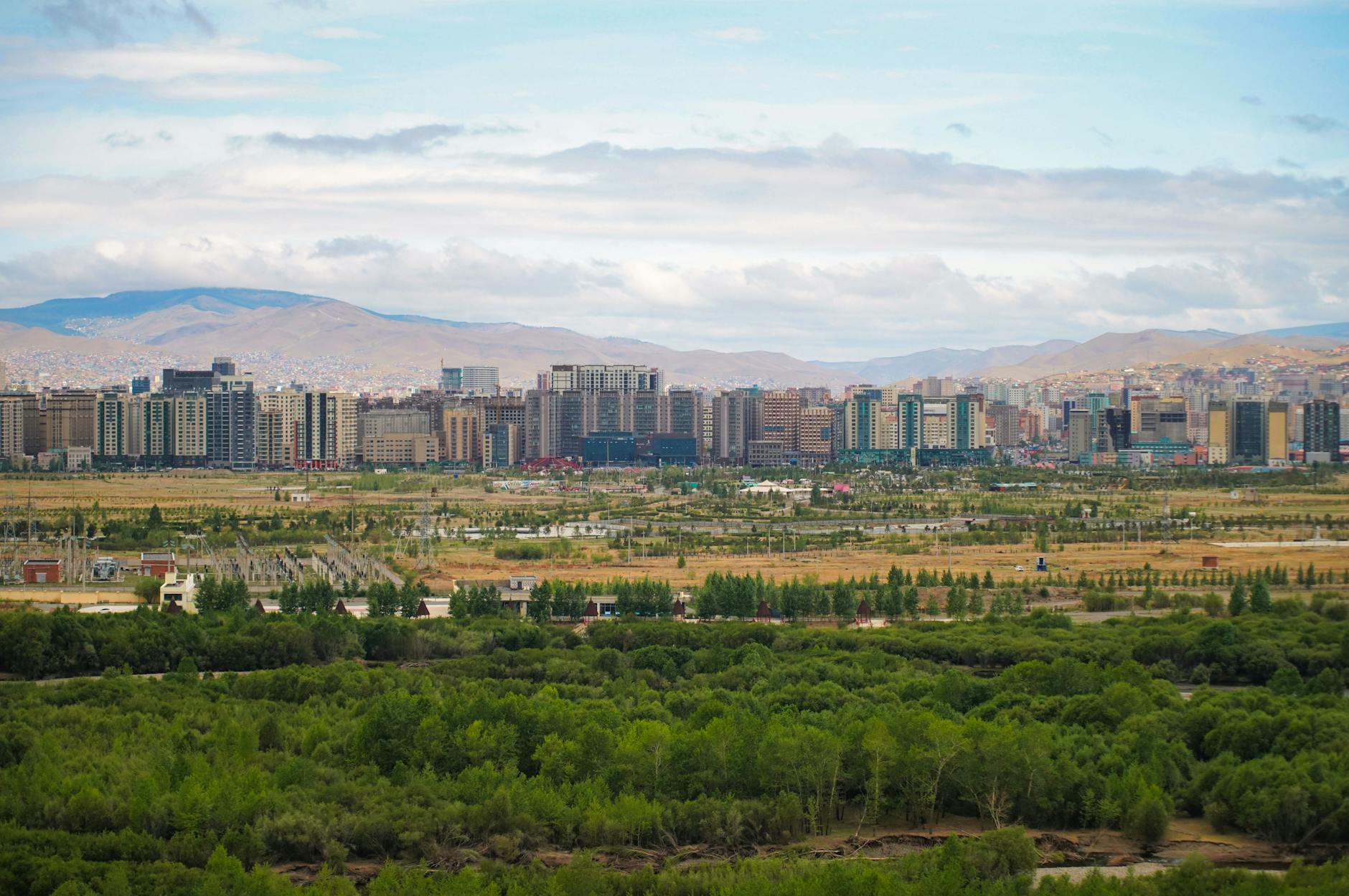
The EU is deepening strategic engagement with Mongolia, integrating development, democracy, and security cooperation to support the landlocked nation's autonomy amid intensifying great power competition. This partnership reflects European recognition that Central Asian stability is essential to broader Indo-Pacific security.
Mongolia occupies an increasingly significant position in European strategic thinking, though this reality remains underappreciated in many policy circles. Historically peripheral to EU concerns, the landlocked Central Asian nation has become a focal point for Brussels’ efforts to diversify partnerships beyond traditional Atlantic frameworks and counter-balance great power competition in the region. This shift reflects a broader European recognition that Mongolia’s geographic position—sandwiched between Russia and China—makes it a critical actor in shaping the stability and trajectory of Central Asia.
EU engagement with Mongolia has evolved substantially over the past decade, moving beyond development assistance toward a more comprehensive strategic partnership. Ambassador Ina Marciulionyte, the EU’s chief representative to Mongolia, has articulated this reorientation clearly: European Union projects in Mongolia now explicitly prioritize three interconnected pillars—sustainable development, economic development, and democratic governance—while increasingly incorporating peace and security considerations into this framework.
The EU’s emphasis on sustainable development in Mongolia extends beyond environmental rhetoric. Mongolia faces acute environmental pressures: desertification affects approximately 70 percent of the country’s territory, while air pollution in Ulaanbaatar regularly ranks among the world’s worst. European investment in renewable energy infrastructure, water management, and environmental governance serves dual purposes—addressing genuine development needs while creating economic interdependencies that anchor Mongolia toward European partners rather than exclusively toward Beijing or Moscow.
EU-funded projects in Mongolia’s energy sector represent this strategic dimension. European support for wind and solar capacity development provides Mongolia with alternatives to Chinese-dominated coal infrastructure and Russian energy dependency. This approach mirrors EU strategy in other post-Soviet spaces, where energy diversification has become a geopolitical tool for reducing vulnerability to coercive pressure from larger neighbors.
Mongolia’s economy remains heavily dependent on commodity exports, particularly to China, which accounts for approximately 85 percent of Mongolia’s mineral exports. This concentration creates structural vulnerability. EU engagement on economic development aims to reduce this asymmetry by facilitating Mongolia’s integration into broader regional value chains and encouraging foreign direct investment from European companies.
The EU has pursued trade agreements and investment frameworks with Mongolia that offer alternatives to the extractive relationship with China. European technology transfer, particularly in sustainable mining practices and value-added processing, provides Mongolia with opportunities to move beyond raw material exports. This economic reorientation, while gradual, represents a subtle but meaningful shift in Mongolia’s external orientation.
EU support for democratic institutions and rule of law in Mongolia reflects both principled commitment and strategic calculation. Mongolia has maintained democratic institutions since 1990—a distinction that sets it apart from most post-Soviet states and makes it a model case for EU engagement. However, democratic backsliding risks exist: political polarization has intensified, civil society space has contracted in recent years, and corruption remains endemic.
By investing in Mongolia’s democratic institutions, judicial independence, and civil society organizations, the EU is essentially supporting the conditions necessary for Mongolia to remain a stable, non-aligned actor. A Mongolia that drifts toward authoritarianism becomes more vulnerable to incorporation into either Russian or Chinese spheres of influence. Conversely, a Mongolia with functioning democratic institutions and transparent governance retains the autonomy to pursue balanced foreign policies.
The most significant recent development in EU-Mongolia relations is the explicit integration of peace and security considerations into the partnership framework. This represents a qualitative shift in European strategic thinking about Central Asia.
Mongolia’s security environment has deteriorated markedly since Russia’s 2022 invasion of Ukraine. While Mongolia maintains official neutrality and has not joined Western sanctions regimes, the conflict has exposed the vulnerabilities of relying on Russian security guarantees. Mongolia shares a 3,485-kilometer border with Russia; approximately 30 percent of Mongolia’s trade transits through Russian territory. The invasion demonstrated that Russia cannot be relied upon as a stable security partner, particularly for smaller neighbors.
Simultaneously, China’s military modernization and assertive posture in the region have created security concerns for Mongolia. Chinese military exercises near the Mongolian border, combined with China’s broader strategic competition with the United States and its allies, create uncertainty about Mongolia’s security environment.
EU engagement on security issues addresses these concerns through capacity-building, defense cooperation frameworks, and diplomatic support for Mongolia’s sovereignty. While the EU cannot provide the security guarantees that NATO offers to its members, it can offer technical assistance, defense industry partnerships, and diplomatic backing for Mongolia’s territorial integrity and non-aligned status. This approach has proven effective in other Central Asian contexts, where EU security partnerships have provided smaller states with alternatives to exclusive dependence on Russia or China.
Mongolia’s foreign policy has historically rested on a doctrine of “eternal neutrality,” formalized in its 1992 Constitution. This neutrality has enabled Mongolia to maintain relationships with all major powers while avoiding entrapment in great power conflicts. However, the intensity of U.S.-China competition and the Russia-West confrontation have made genuine neutrality increasingly difficult to maintain.
Mongolia has pursued a “Third Neighbor” policy, supplementing relationships with its two primary neighbors (Russia and China) with engagement with distant partners—the United States, European nations, and Japan. EU engagement represents the operationalization of this policy. By deepening ties with Brussels, Mongolia creates a counterweight to Russian and Chinese influence without formally abandoning neutrality.
The EU’s approach respects Mongolia’s non-aligned status while offering concrete partnership alternatives. This distinguishes European engagement from U.S. efforts, which sometimes contain implicit pressure toward alignment. The EU’s emphasis on development, governance, and selective security cooperation allows Mongolia to deepen European ties without the political costs of formal alliance commitments.
The deepening of EU-Mongolia relations carries implications extending beyond bilateral ties. It reflects European recognition that Indo-Pacific stability depends partly on developments in Central Asia. A Mongolia that remains democratic, economically diversified, and strategically autonomous contributes to broader regional stability. Conversely, a Mongolia drawn into exclusive dependence on Russia or China would represent a consolidation of authoritarian influence across Central and East Asia.
For Australia and other Indo-Pacific states, EU engagement with Mongolia offers a model for supporting smaller nations navigating great power competition. It demonstrates that strategic partnership need not require formal alliance commitments or military bases. Instead, it can rest on development cooperation, economic interdependence, and institutional support—tools that respect sovereignty while creating alignment on fundamental values and interests.
The integration of peace and security into EU-Mongolia cooperation signals that European strategic thinking about the Indo-Pacific region is maturing. Central Asia is no longer treated as peripheral to Indo-Pacific security architecture. Rather, it is recognized as a critical zone where the outcomes of great power competition will significantly influence regional stability and the viability of rules-based international order.
Mongolia’s trajectory over the next five to ten years will test whether diversified partnerships can effectively counter great power pressure. The success or failure of EU engagement with Mongolia will inform European and allied approaches to other small states navigating similar pressures across Central Asia, the Pacific, and Southeast Asia.