Physical Address
304 North Cardinal St.
Dorchester Center, MA 02124
Physical Address
304 North Cardinal St.
Dorchester Center, MA 02124
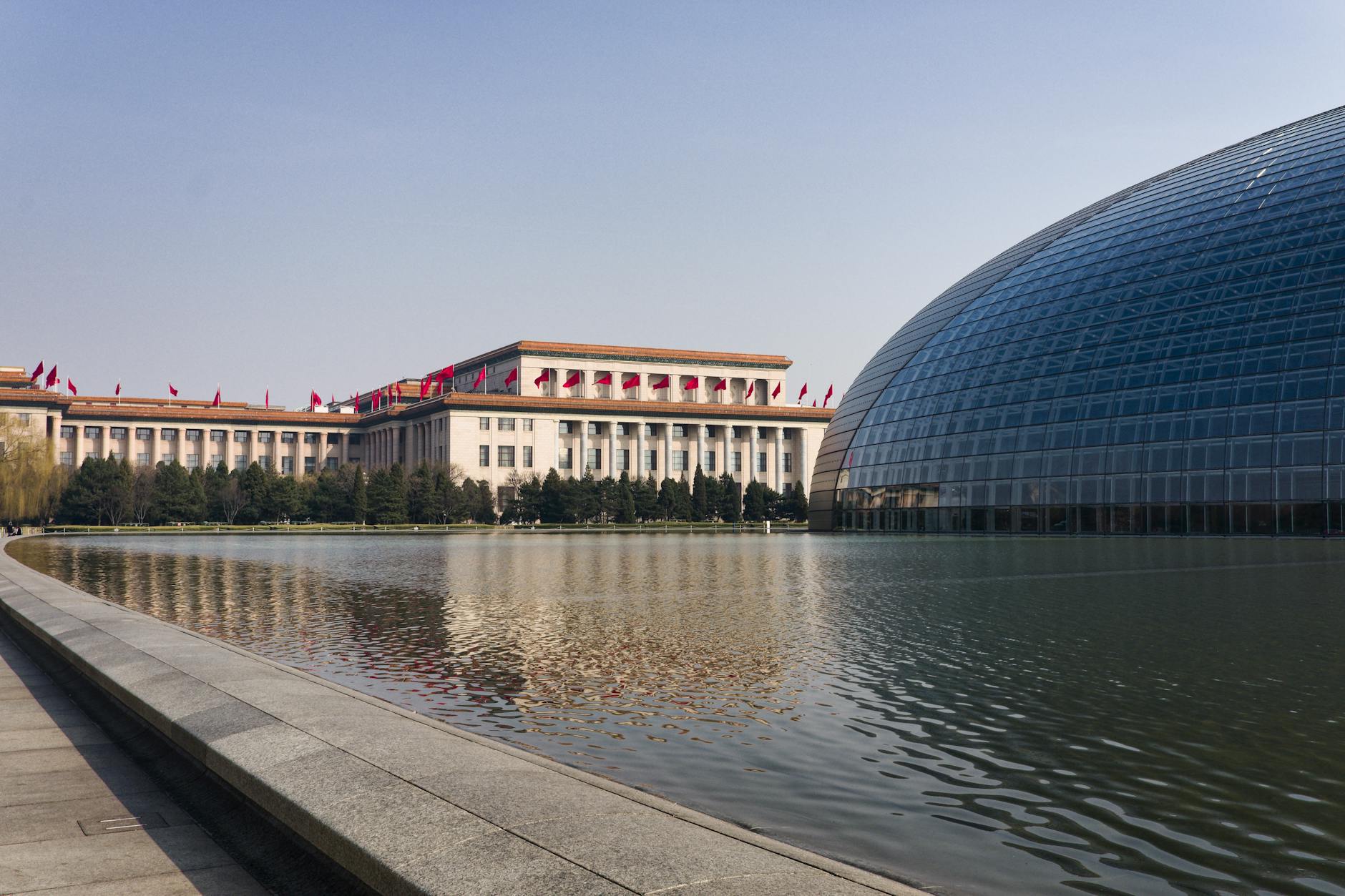
Trump's May 2025 Beijing summit with Xi Jinping will test whether the U.S. and China can manage competition across Taiwan, trade, and technology—with profound implications for Indo-Pacific security and alliance stability.
U.S. President Donald Trump’s announced visit to Beijing from May 13-15, 2025, represents far more than diplomatic theater. The summit with Chinese President Xi Jinping will determine the trajectory of great power competition across three interconnected domains: political sovereignty, economic leverage, and technological dominance. For the Indo-Pacific region, the outcomes will reshape perceptions of American reliability and the stability of the existing strategic order.
The timing and choreography of the visit itself reveal Beijing’s negotiating approach. When China announced the visit on May 11—just two days before commencement—it signaled control over the agenda. Trump had publicly floated a two-day visit; Beijing extended it to three days. This was not merely protocol. The extra 24 hours carried political meaning: if the U.S. President was coming to Beijing, he would operate on China’s terms. This reflects Beijing’s broader strategy toward Trump’s second administration: do not initiate diplomatic overtures, do not refuse engagement, and do not compromise on core national interests.
Taiwan will dominate the summit’s political subtext, even if other issues occupy the formal agenda. For Beijing, Taiwan is not one agenda item among many—it is the issue that defines the relationship’s political boundaries. During preparatory congressional visits to Beijing, Chinese officials repeatedly stressed that stable U.S.-China relations depend on Washington’s adherence to the One China principle.
Trump’s transactional approach to diplomacy creates both opportunity and acute risk on this question. His instinct is to convert every issue into a negotiable deal: aircraft orders, agricultural purchases, tariff adjustments. But Taiwan cannot be treated as a soybean contract. Any attempt to use Taiwan as a pressure card would trigger Beijing’s strongest resistance. Conversely, any visible dilution of U.S. commitments to Taiwan in exchange for Chinese economic concessions would alarm Australia, Japan, South Korea, and Southeast Asian partners—precisely the states most dependent on American security guarantees.
The most probable outcome is not a grand bargain over Taiwan, but a struggle over language and formulation. Beijing will press for stronger U.S. reassurances on the One China principle and opposition to Taiwan independence. Washington will seek to avoid any visible retreat from existing policy commitments. The danger lies in calculated ambiguity: Trump may prefer language that sounds like a diplomatic breakthrough to domestic audiences while creating uncertainty among allies about the durability of American security commitments.
For the Indo-Pacific region, this carries profound implications. Deterrence depends not merely on military capability, but on confidence in political commitments. If the summit creates doubt about American reliability on Taiwan, it will reverberate through alliance structures from Tokyo to Canberra to Manila. This is why the specific language of any Taiwan-related statement will matter more than its surface appearance.
The second major summit thread involves trade and economic transactions. Trump requires visible economic wins that domestic audiences can understand and measure: Boeing aircraft orders, agricultural purchases (soybeans, corn, beef), tariff reductions, and investment pledges. This is managed trade, not rules-based liberalization. The metric is not systemic reform but announceables—numbers that can be photographed and sold politically to American constituencies hurt by years of tariff volatility.
China has incentives to accommodate some of this demand. Beijing’s economy still benefits from reduced tariff uncertainty, U.S. investment flows, and market access. Chinese firms and consumers gain from selected imports. The leadership may calculate that carefully chosen purchase commitments represent a manageable price for reducing short-term tensions and demonstrating to domestic audiences that Xi can manage the relationship with Washington.
However, Beijing will resist any framework that grants Washington open-ended leverage. The Phase One trade deal of 2020 taught China a critical lesson: large purchase commitments are politically useful but structurally fragile. More importantly, China has diversified its trade relationships and reduced its dependence on U.S. imports since 2018. It now has greater room to absorb tariff pressure without capitulating to Washington’s demands. This structural shift in Chinese economic resilience fundamentally alters the negotiating dynamic. Trump may secure announcement-worthy agreements, but Beijing will ensure they do not constrain its strategic autonomy.
The third critical thread is technology competition, which will sit beneath the formal talks as the most consequential form of asymmetric interdependence. The U.S. possesses dominant strength in frontier artificial intelligence, advanced semiconductors, software ecosystems, and cloud infrastructure. China wields counter-leverage through dominance in rare earth processing, critical mineral refining, industrial supply chains, and fast-moving application ecosystems.
Washington’s strategic pressure points are clear. The United States has imposed export controls on advanced semiconductors and AI chips designed to slow China’s progress in frontier artificial intelligence and prevent Chinese firms from accessing the most advanced components of the U.S.-led technology stack. Since December 2025, Trump has demonstrated willingness to trade this leverage for tariff concessions—a concerning signal for those focused on maintaining technological decoupling.
Beijing’s counter-leverage operates upstream in the physical supply chain. China dominates rare earth processing and magnet manufacturing—materials essential for defense systems, robotics, wind turbines, electric vehicles, and advanced manufacturing. Neither side can fully decouple without imposing serious costs on itself. U.S. semiconductor restrictions encourage China to accelerate technological autonomy efforts. Chinese rare earth restrictions strengthen Western efforts to build alternative supply chains. This is the paradox of weaponized interdependence: each coercive action incentivizes the other side to reduce its vulnerability, thereby weakening the original coercive power.
The summit is therefore both dangerous and necessary. Dangerous because each side is tempted to exploit its chokepoints coercively. Necessary because unmanaged technology competition can rapidly spill into industrial disruption, supply chain shocks, and military escalation.
A critical asymmetry shapes the negotiating dynamic: Trump is in a hurry. Domestic political pressures, economic uncertainty, and Middle East instability make visible diplomatic wins valuable to his administration. Beijing, by contrast, can afford to slow the tempo when advantageous. Time increasingly appears to favor China. The unforgiving logic of great power bargaining dictates that the side most desperate for an outcome typically starts from a position of weakness.
This temporal dimension explains why the summit’s choreography matters strategically. Trump’s diplomacy depends on converting pressure into visible concessions. If Beijing maintains its composure and forces Trump to accept limited wins, it demonstrates to both American allies and Chinese domestic audiences that Washington cannot compel Beijing to move. Conversely, if Trump secures substantial commitments, he strengthens perceptions of American negotiating power—though at the risk of creating false expectations about the durability of any agreements.
The May 2025 Trump-Xi summit will not resolve the fundamental tensions in U.S.-China relations. Taiwan will remain contested, trade friction will persist, and technology competition will intensify. What the summit will reveal is whether the two powers can establish a framework for managed competition or whether they are drifting toward strategic confrontation.
For Indo-Pacific states, the critical question is not what Trump and Xi announce, but whether the summit alters perceptions of American commitment and Chinese assertiveness. If the meeting produces ambiguous language on Taiwan or visible economic concessions to China without reciprocal U.S. gains, it will reinforce doubts about American staying power. If Trump secures genuine commitments while maintaining clear language on Taiwan and technology competition, it will strengthen alliance confidence.
The most likely outcome is a mixed result: some economic announcements, careful language on Taiwan that satisfies neither side completely, and continued technology competition below the level of formal agreement. This reflects the reality that Trump and Xi are managing a relationship that neither can afford to rupture but neither is willing to fundamentally restructure. For the Indo-Pacific, this means continued strategic uncertainty, persistent alliance management challenges, and the need for regional states to strengthen their own resilience rather than rely on great power accommodation.