Physical Address
304 North Cardinal St.
Dorchester Center, MA 02124
Physical Address
304 North Cardinal St.
Dorchester Center, MA 02124

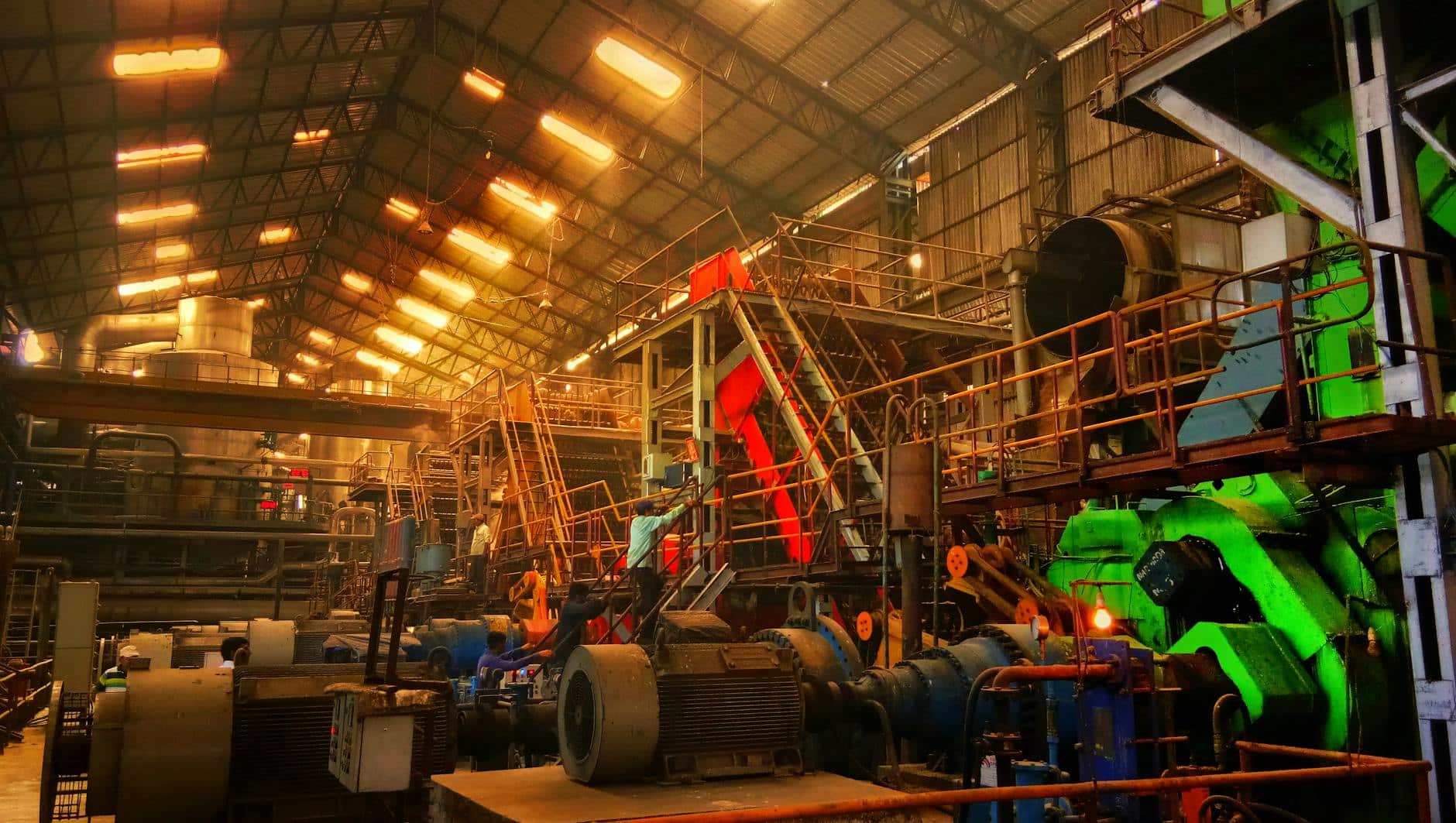
India's partnership with ASML marks entry into advanced chipmaking, but reliance on Chinese critical minerals threatens true technological sovereignty. The Dholera facility addresses lithography bottlenecks while leaving upstream mineral dependencies unresolved.
On May 16, 2026, Prime Minister Narendra Modi witnessed the signing of a memorandum of understanding between Tata Electronics and ASML in The Hague, Netherlands—a moment that signals India’s determined push toward semiconductor manufacturing self-sufficiency. The agreement represents far more than a routine technology transfer; it marks India’s admission into the world’s most exclusive semiconductor production club, one where only a handful of nations possess the capability to manufacture advanced microchips.
The MoU commits ASML, the Dutch technology giant, to supporting Tata Electronics in establishing and scaling a fabrication facility in Dholera, Gujarat. The facility, developed in partnership with Taiwan’s PSMC, is projected to produce $11 billion worth of semiconductors annually, covering nodes from 28 nanometers to 110 nanometers for automotive, artificial intelligence, and mobile applications. Commercial production of Indian-origin chips is expected before the end of 2026. The Indian government is co-investing 450 billion rupees ($5.5 billion)—50 percent of the total Dholera fab investment—underscoring that this is industrial policy, not market-driven enterprise.
Understanding the strategic significance of this partnership requires grasping ASML’s monopolistic position in global semiconductor manufacturing. ASML is the sole company worldwide that manufactures Extreme Ultraviolet (EUV) lithography systems—the critical technology enabling production of advanced-node chips. Every major semiconductor manufacturer globally—Taiwan Semiconductor Manufacturing Company (TSMC), South Korea’s Samsung, and the United States’ Intel—depends entirely on ASML equipment. No alternative supplier exists, and despite decades of investment and billions in research expenditure, no nation, including China, has successfully replicated this technology.
China’s semiconductor equipment imports reached a record $26 billion in 2024, partly driven by strategic stockpiling ahead of anticipated U.S. sanctions. While Chinese equipment manufacturers are advancing incrementally, they remain years away from producing indigenous EUV lithography systems capable of competing with ASML’s capabilities. This technological monopoly transforms the Tata-ASML agreement from a routine commercial transaction into a geopolitical realignment. India now has direct access to the one technology supplier whose cooperation cannot be substituted in any serious chipmaking operation.
The previous phase of India’s semiconductor ambitions—where the nation supplied approximately 20 percent of global chip design expertise while hosting Taiwan’s fabless companies—represented a subordinate position in the value chain. India designed chips but manufactured none. The Dholera facility fundamentally restructures this equation, positioning India as a manufacturer rather than merely a service provider.
The ASML partnership operates within the framework of India’s Semiconductor Mission, currently in its second phase. As of May 5, 2026, the Indian government has approved 12 semiconductor projects across six states, representing total investment of approximately 1.64 trillion rupees. The government designated Dholera as a Special Economic Zone for Tata Semiconductor on April 9, 2026, subsequently granting it inland container depot status to facilitate logistics and cargo handling efficiency.
This represents a deliberate strategic calculation: semiconductors are deemed too critical for national sovereignty to remain subject to market forces alone. The 2020 pandemic exposed global vulnerabilities in semiconductor supply chains, with production interruptions cascading across automotive manufacturing, telecommunications, and consumer electronics sectors. For a nation of India’s scale and geopolitical ambitions, dependence on Taiwan, South Korea, or the United States for advanced chip production represents an unacceptable strategic vulnerability.
India’s 20 percent share of global chip design talent provides a comparative advantage. The nation possesses the engineering expertise, growing domestic demand, and geographic positioning to serve as a manufacturing alternative to East Asian concentration. For ASML and other advanced semiconductor firms seeking geographic diversification away from Taiwan’s escalating geopolitical risks, India offers supply chain security through alignment with democratic, economically developed partners.
Yet the celebratory framing of the ASML agreement obscures a more intractable dependency that the MoU does not address: India’s reliance on China for critical minerals essential to semiconductor manufacturing. This represents not a new problem but rather an older, more pervasive vulnerability that industrial policy has largely sidestepped.
China dominates global rare earth elements production (60-70 percent), rare earth processing (85-90 percent), graphite processing (over 90 percent), and cobalt processing (65-74 percent). These are not peripheral inputs but essential materials used throughout semiconductor fabrication processes, incorporated into permanent magnets, specialty alloys, and processing materials across every production stage.
Beijing has demonstrated willingness to weaponize these dependencies. On April 4, 2025, China implemented export restrictions on critical rare earth elements including terbium and dysprosium in response to U.S. President Donald Trump’s tariff regime. Indian automotive manufacturers—Bajaj Auto and Maruti Suzuki—immediately signaled supply disruptions. Subsequently, on October 9, 2025, China enacted MOFCOM Notice No. 61, expanding its rare earth export control regime to include extraterritorial provisions: foreign companies incorporating any traces (0.1 percent) of Chinese-origin rare earths or utilizing Chinese rare earth technology must obtain Chinese export licenses.
India’s trade imbalance with China underscores the structural vulnerability. In 2024-25, India’s trade deficit reached $99.2 billion, with imports totaling $113.5 billion against exports of merely $14.3 billion. Over 90 percent of rare earth magnets and metals supplied to Indian manufacturers originate from China. In October 2025, India announced a National Critical Mineral Stockpile in direct response to China’s export restrictions on gallium, germanium, and antimony—compounds essential to advanced semiconductor production. A complete Chinese blockade would immediately compromise 90 percent of advanced chip production globally.
The Dholera facility may produce “Made in India” chips utilizing ASML lithography equipment, but if it sources rare earth requirements from Chinese supply chains, India has not achieved true technological sovereignty. It has merely relocated dependency upstream, where it remains less visible politically but equally constraining operationally.
The Tata-ASML partnership reflects broader restructuring of global semiconductor architecture driven by U.S.-China technology competition and export control regimes. ASML’s diversification into India serves multiple strategic purposes beyond commercial expansion. Taiwan’s concentration of advanced chip manufacturing capacity presents escalating geopolitical risk for companies dependent on that ecosystem. India offers geographic dispersal across politically aligned democracies, reducing concentration risk while maintaining alignment with rules-based international order.
For the Netherlands, India represents a geopolitically attractive partner: a major democracy with growing technological capability, significant capital investment capacity, and strategic alignment with Western technology governance frameworks. The bilateral relationship between India and the Netherlands is deepening across economic and technological dimensions precisely as semiconductor firms seek alternatives to East Asian concentration.
This partnership also reflects India’s broader positioning within Indo-Pacific geopolitical architecture. As the Quad (India, Australia, Japan, United States) seeks to establish alternative supply chains and technology ecosystems independent of Chinese dominance, semiconductor manufacturing capability becomes essential infrastructure. India’s emergence as an advanced chip manufacturer strengthens Quad resilience and reduces collective dependence on Taiwan.
The ASML agreement represents a genuine strategic advance for India’s technological sovereignty. Access to the world’s only EUV lithography supplier removes the most critical technical bottleneck to indigenous advanced chip production. The Dholera facility will generate substantial domestic capability, employment, and technological learning that cannot be easily replicated elsewhere.
However, the agreement simultaneously exposes the limits of supply chain autonomy achievable through manufacturing facility development alone. India has addressed the downstream chokepoint—lithography technology—while the upstream critical minerals problem remains largely unresolved. Until India develops indigenous rare earth processing capacity, diversifies mineral sourcing away from China, or establishes strategic stockpiles of sufficient magnitude, the nation remains vulnerable to Chinese economic coercion at a fundamental level.
The policy framework requires expansion beyond semiconductor manufacturing to encompass critical minerals security. This demands investment in domestic rare earth extraction and processing, accelerated diversification of mineral sourcing toward countries such as Australia, Vietnam, and Indonesia, and potentially joint procurement arrangements within the Quad framework. Without addressing this upstream vulnerability, India’s semiconductor sovereignty remains conditional on Chinese tolerance—a precarious foundation for long-term strategic autonomy.