Physical Address
304 North Cardinal St.
Dorchester Center, MA 02124
Physical Address
304 North Cardinal St.
Dorchester Center, MA 02124

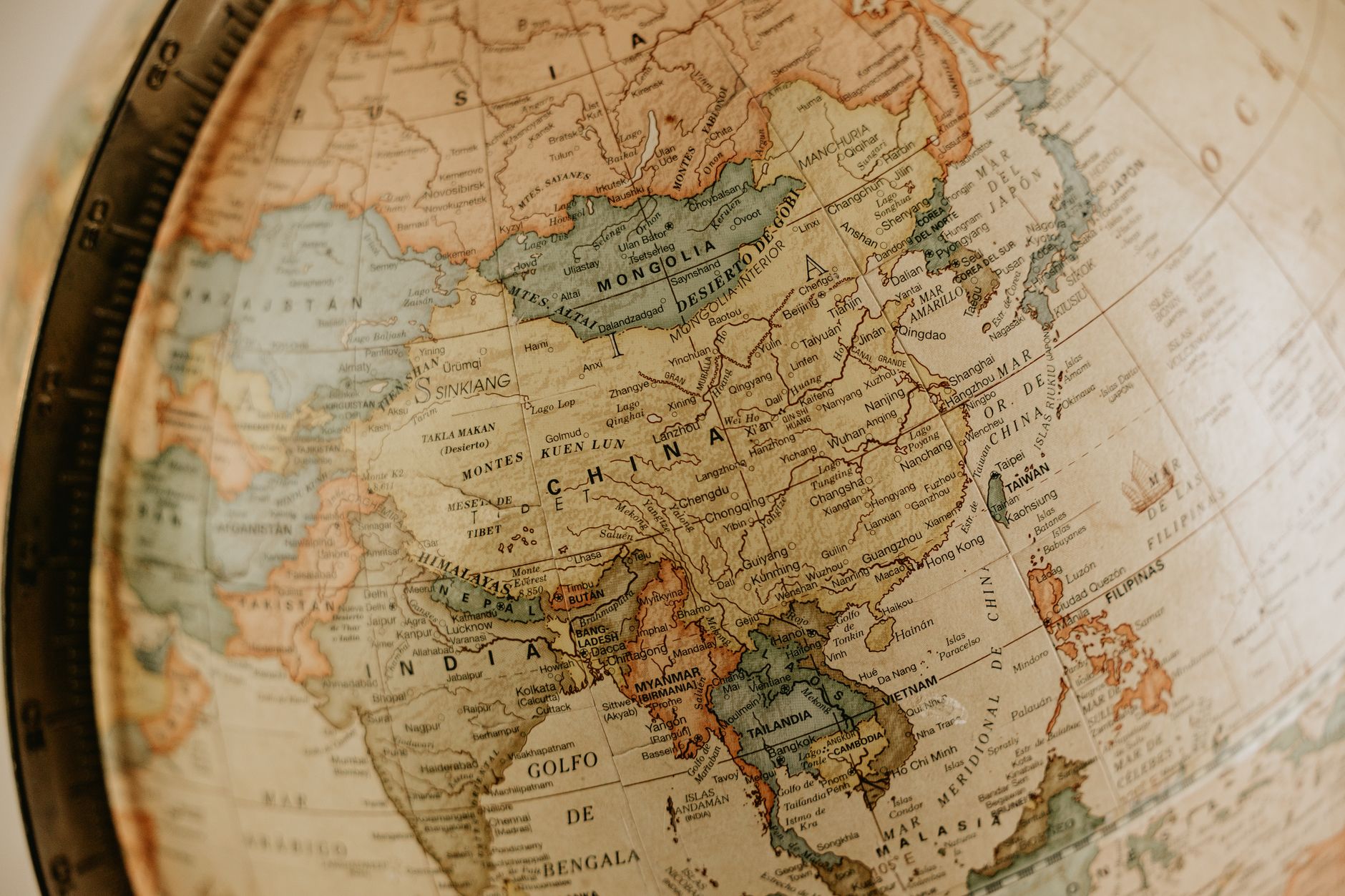
US-China rivalry threatens to become the sole organizing principle of international politics, subordinating all policy domains to geopolitical competition. For Indo-Pacific states, this creates acute constraints on policy autonomy and institutional capacity precisely when multilateral cooperation is most needed.
The emerging contest between the United States and China presents a fundamentally different challenge to the international system than Cold War bipolarity. While the Soviet-American standoff was explicitly ideological and geographically bounded, contemporary great power competition threatens to subsume all other policy domains—from trade and technology to climate and pandemic response—into a zero-sum framework. This transformation poses acute risks for middle powers, alliance structures, and the functional capacity of multilateral institutions across the Indo-Pacific and beyond.
The danger lies not primarily in the risk of direct military conflict, though that remains a concern. Rather, the strategic peril emerges from the possibility that US-China rivalry becomes the sole organizing principle through which all international actors must navigate their interests. Such a development would fundamentally constrain policy autonomy for regional states and undermine issue-specific cooperation precisely when transnational challenges demand coordinated responses.
The Cold War operated within a defined ideological framework and maintained clear geographic spheres of influence, particularly after the Cuban Missile Crisis established implicit boundaries. The Soviet Union and United States competed across multiple domains, but the competition was understood as systemic and existential—a clash between communism and capitalism.
Contemporary US-China rivalry lacks this clarity. Both powers operate within capitalist frameworks, maintain extensive economic interdependencies, and compete for influence across overlapping geographic spaces rather than separate blocs. This creates a more permeable, less stable equilibrium. The absence of ideological demarcation means that competition can theoretically extend into every policy domain without the stabilizing effect of accepted spheres of influence.
More critically, the economic integration between Washington and Beijing—despite recent decoupling rhetoric—remains far deeper than Cold War US-Soviet relations ever achieved. This creates perverse incentives: both powers have incentives to compete intensely in strategic domains while maintaining profitable commercial relationships. The result is unpredictable oscillation between confrontation and cooperation, making the system inherently unstable.
When great power rivalry becomes the organizing principle of international politics, secondary actors face a structural compulsion to align themselves within the dominant competition. This is not primarily a matter of coercion, though that remains a tool. Rather, it reflects rational cost-benefit calculations: states increasingly perceive that their ability to achieve objectives in any domain—economic access, security guarantees, technological standards, climate finance—depends on their positioning relative to the primary competition.
This mechanism has already manifested in several policy areas:
For Indo-Pacific states particularly—including Australia, Japan, South Korea, Vietnam, and the Philippines—this subordination creates acute policy constraints. Each must calibrate economic relationships, security partnerships, technology adoption, and diplomatic positioning with reference to the primary competition. This reduces the space for autonomous policy-making and increases the likelihood of being forced into binary choices that do not reflect actual national interests.
As US-China competition penetrates multilateral institutions, those bodies increasingly lose functional capacity in their core mandates. The World Health Organization’s response to COVID-19, for instance, was substantially hampered by US-China disputes over the organization’s independence and China’s early transparency. The World Trade Organization faces paralysis on dispute resolution mechanisms, partly reflecting fundamental disagreements between Washington and Beijing over trade rules and industrial subsidies.
Regional institutions face similar pressures. ASEAN’s consensus-based decision-making has become increasingly difficult to achieve when member states face contradictory pressures from the United States and China. The East Asia Summit, designed as a forum for inclusive regional dialogue, has instead become a venue where great power competition manifests through proxy disagreements over South China Sea governance, Myanmar’s political crisis, and development priorities.
This institutional decay matters because it removes mechanisms through which states can pursue cooperative solutions to genuinely shared problems. Climate change, pandemic preparedness, maritime safety, and resource management all require functional multilateral institutions. When those institutions become subordinated to great power competition, their capacity to address these issues diminishes precisely when demand for solutions increases.
Australia occupies a particularly exposed position within this bipolar trap. As a wealthy, technologically advanced democracy with deep security ties to the United States and extensive economic relationships with China, Australia has attempted to maintain strategic autonomy while managing both relationships. However, the intensification of US-China competition has progressively narrowed this space.
The Chinese government’s imposition of tariffs on Australian agricultural exports, wine, and coal in 2020-2021 was explicitly framed as retaliation for Australian government statements on COVID-19 origins and technology security. These actions demonstrated the mechanism through which great power competition translates into direct economic pressure on states perceived as insufficiently aligned. Similarly, US pressure on technology choices—particularly regarding Huawei and semiconductor supply chains—has forced Australian policymakers to make decisions that carry significant economic costs but are justified through security frameworks.
Japan, South Korea, and Vietnam face similar pressures, each attempting to maintain economic relationships with China while deepening security partnerships with the United States and its allies. This balancing act becomes progressively more difficult as the competition intensifies and as both Washington and Beijing demand increasingly explicit alignment on issues ranging from technology standards to territorial disputes.
Preventing war between the United States and China remains important but is insufficient as a strategic objective. The real challenge for policymakers in the Indo-Pacific and globally is maintaining sufficient institutional capacity and policy autonomy to address non-competitive issues even as great power competition intensifies.
This requires several policy approaches:
The fundamental insight is that great power competition and global functional capacity are not compatible when competition becomes the organizing principle of all international politics. Managing this tension requires deliberate, sustained effort to compartmentalize competition and protect spaces for cooperation. Without such effort, the international system will progressively lose capacity to address the transnational challenges that ultimately threaten all states, regardless of their position in great power competition.