Physical Address
304 North Cardinal St.
Dorchester Center, MA 02124
Physical Address
304 North Cardinal St.
Dorchester Center, MA 02124
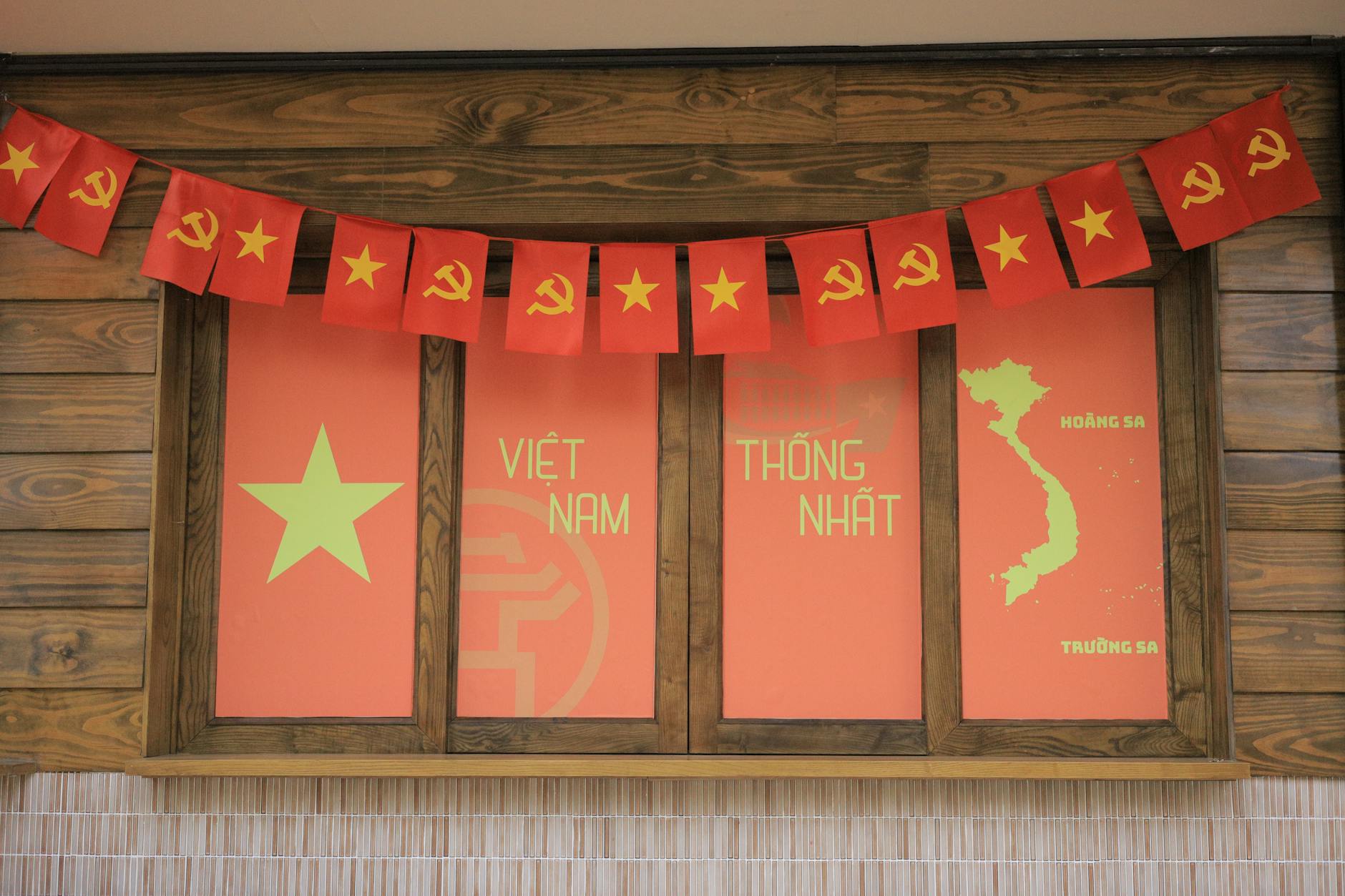
Vietnam's Communist Party General Secretary To Lam's visit to Beijing signals a critical effort to reset one of Southeast Asia's most strategically important bilateral relationships. A prospective 2026 joint statement could reshape regional dynamics around South China Sea disputes, economic integration, and great power competition.
Vietnam’s Communist Party General Secretary To Lam’s visit to Beijing in late 2024 represents a critical inflection point in one of Southeast Asia’s most strategically consequential bilateral relationships. The timing and substance of this engagement carry implications that extend well beyond Hanoi and Beijing, shaping the trajectory of Indo-Pacific stability, ASEAN cohesion, and the broader balance of power in the region.
The relationship between Vietnam and China has historically oscillated between cooperation and tension—a dynamic rooted in competing territorial claims in the South China Sea, historical grievances, and divergent strategic alignments. To Lam’s elevation to General Secretary in October 2024 presented an opportunity to reset this fraught partnership, and his early decision to prioritize a Beijing visit signals Vietnamese leadership’s calculation that managed engagement with China remains preferable to confrontation.
To Lam assumed the Communist Party’s top position during a period of heightened regional tension. The South China Sea remains contested, with China’s expansive maritime claims under the nine-dash line framework directly overlapping with Vietnam’s exclusive economic zone. Since 2016, when the Permanent Court of Arbitration ruled against China’s historical claims, Beijing has largely disregarded the verdict, while Hanoi has pursued a careful balancing act—maintaining strategic autonomy while avoiding direct confrontation with its much larger neighbour.
To Lam’s predecessor, Nguyen Phu Trong, oversaw a period of pragmatic engagement with Beijing despite underlying tensions. The new General Secretary inherits this diplomatic framework but faces domestic pressures and regional expectations. Vietnam’s economic interdependence with China is substantial: China remains Vietnam’s largest trading partner and a major source of foreign direct investment. Simultaneously, Vietnam has cultivated strategic partnerships with the United States, Japan, South Korea, and India—partnerships that implicitly hedge against Chinese dominance.
The prospective 2026 joint statement between Vietnam and China would likely address several core issues. First, maritime demarcation and management mechanisms represent the most immediate concern. Rather than resolving the underlying territorial disputes—which remain intractable given fundamental incompatibilities—pragmatic bilateral agreements typically focus on reducing incidents, establishing communication channels, and creating buffer zones. The Code of Conduct (CoC) for the South China Sea, under ASEAN negotiation since 2002, offers a potential framework, though China has consistently resisted binding constraints on its freedom of action.
Second, economic cooperation will feature prominently. The Regional Comprehensive Economic Partnership (RCEP), which entered force in January 2022, provides institutional architecture for deepening trade integration. Vietnam benefits substantially from RCEP, particularly through supply chain diversification away from China-centric models. A joint statement could formalize commitments to infrastructure development, particularly in transport corridors that enhance connectivity across Southeast Asia.
Third, the statement will likely contain carefully calibrated language on political alignment. Vietnam’s Communist Party maintains ideological affinity with Beijing, but Vietnamese nationalism—particularly regarding sovereignty and territorial integrity—constrains how far Hanoi can align with Chinese strategic preferences. Expect the statement to emphasize shared socialist values while maintaining studied ambiguity on geopolitical alignments.
Vietnam’s approach to China carries outsized significance within ASEAN. As the bloc’s second-largest economy and a vocal advocate for the rules-based order, Vietnam’s bilateral relationship with Beijing influences ASEAN’s collective stance on South China Sea issues. A warming of Vietnam-China ties could either strengthen ASEAN consensus-building on maritime issues or, conversely, fragment ASEAN solidarity if Vietnam appears to prioritize bilateral advantage over collective interests.
The Philippines, under President Ferdinand Marcos Jr., has taken a more confrontational stance toward China, conducting resupply missions to disputed features and filing diplomatic protests. Thailand and Cambodia, conversely, maintain closer strategic relationships with Beijing. To Lam’s engagement with China will be scrutinized by ASEAN partners for signals about whether Vietnam is moving toward accommodation or whether it remains committed to collective regional approaches.
The 2026 joint statement will be analyzed for its language on the South China Sea disputes. If it includes explicit recognition of ASEAN’s role in CoC negotiations, it signals Vietnamese commitment to multilateral frameworks. If it emphasizes bilateral mechanisms, it suggests a shift toward compartmentalized, bilateral problem-solving that could undermine ASEAN unity.
Vietnam’s balancing act occurs within the context of intensifying US-China strategic competition. The Biden and now Trump administrations have prioritized Indo-Pacific engagement, with Vietnam designated as a Comprehensive Strategic Partner of the United States in 2023. This elevation reflects Washington’s interest in Vietnam as a counterweight to Chinese influence and as a critical node in supply chain diversification away from China.
To Lam’s Beijing visit does not signal Vietnamese abandonment of this US partnership. Rather, it reflects Hanoi’s assessment that maintaining equidistance between Washington and Beijing—while tilting slightly toward the US for security guarantees and market access—remains the optimal strategy. Vietnam’s defense modernization, including acquisition of advanced naval platforms and air defense systems, continues to reflect this hedging posture.
Any 2026 joint statement will be parsed by US policymakers for evidence of Vietnamese alignment shifts. Language emphasizing non-alignment or military non-interference would reassure Washington; conversely, commitments to deeper defense cooperation with China would signal a Vietnamese tilt that could prompt US recalibration of its regional strategy.
To Lam’s Beijing visit and the prospective 2026 joint statement represent not a fundamental realignment but rather a recalibration of an inherently asymmetrical relationship. Vietnam faces the structural reality that it cannot afford confrontation with China while simultaneously cannot afford to abandon its strategic partnerships with the United States and other regional powers. The statement will likely codify mechanisms for managing the relationship’s friction points rather than resolving underlying disputes.
The critical variable will be implementation. Joint statements often contain aspirational language that bears little relation to actual state behavior. The true test of any Vietnam-China reset will be whether incidents in the South China Sea decline, whether economic cooperation accelerates without compromising Vietnamese strategic autonomy, and whether ASEAN cohesion strengthens or fractures as a result.
For Indo-Pacific strategists, this engagement warrants close monitoring not because it signals a dramatic shift in regional alignments, but because Vietnam’s approach to China provides a crucial indicator of how smaller powers navigate great power competition. If Vietnam can maintain its strategic partnerships while managing tensions with Beijing, it offers a model for other Southeast Asian states. If Vietnamese accommodation of China comes at the cost of regional solidarity, it portends a more fragmented and contested Indo-Pacific.