Physical Address
304 North Cardinal St.
Dorchester Center, MA 02124
Physical Address
304 North Cardinal St.
Dorchester Center, MA 02124

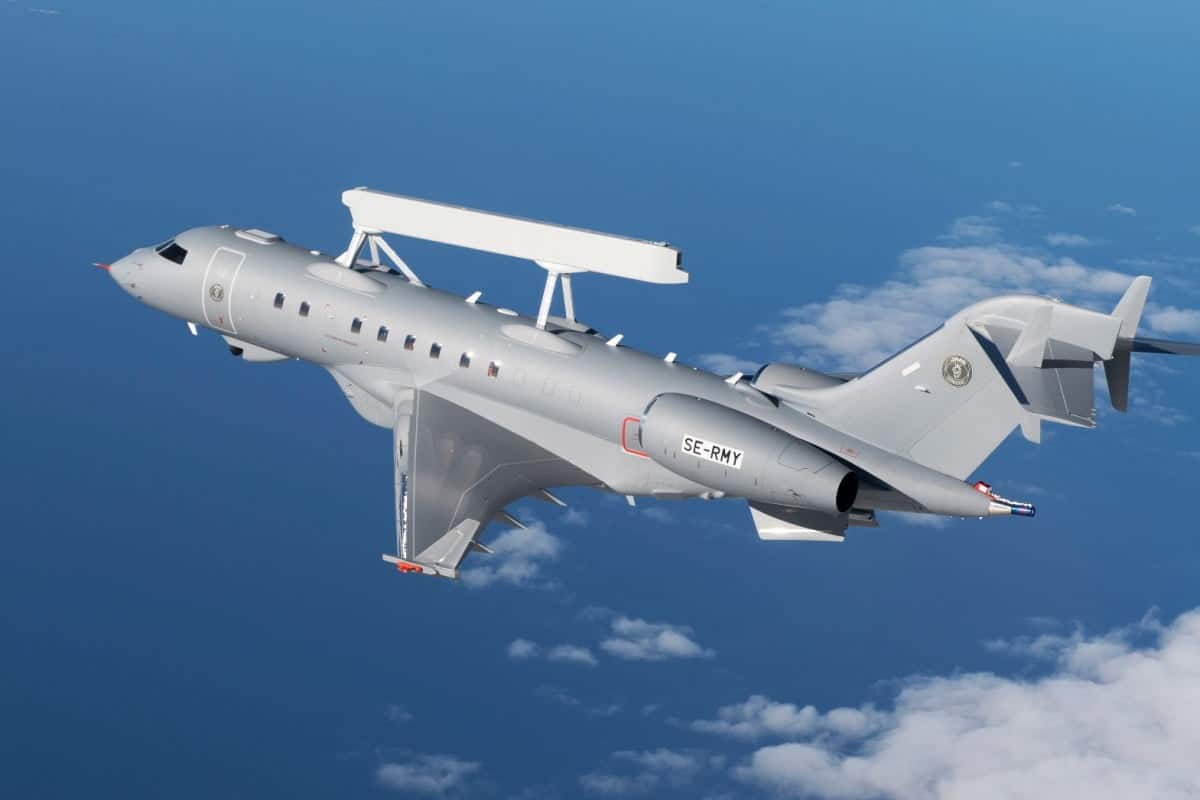
As geopolitical tensions intensify across multiple regions—from Europe’s eastern flank to the Middle East and the Indo-Pacific—demand for advanced airborne early warning and control (AEW&C) aircraft is rising sharply. Sweden’s defence manufacturer Saab AB has now positioned its flagship surveillance platform, the GlobalEye, at the centre of this evolving market, offering Gulf states a high-end system designed to strengthen air- and missile-warning capabilities.
In new disclosures this week, Saab confirmed it has submitted formal offers to both Qatar and Saudi Arabia, while continuing deepening discussions with the United Arab Emirates, which already operates the aircraft. Saab is also pursuing opportunities in Canada, Europe, and the Asia-Pacific, signalling a broader trend: next-generation early-warning systems are becoming essential components of national security architectures.
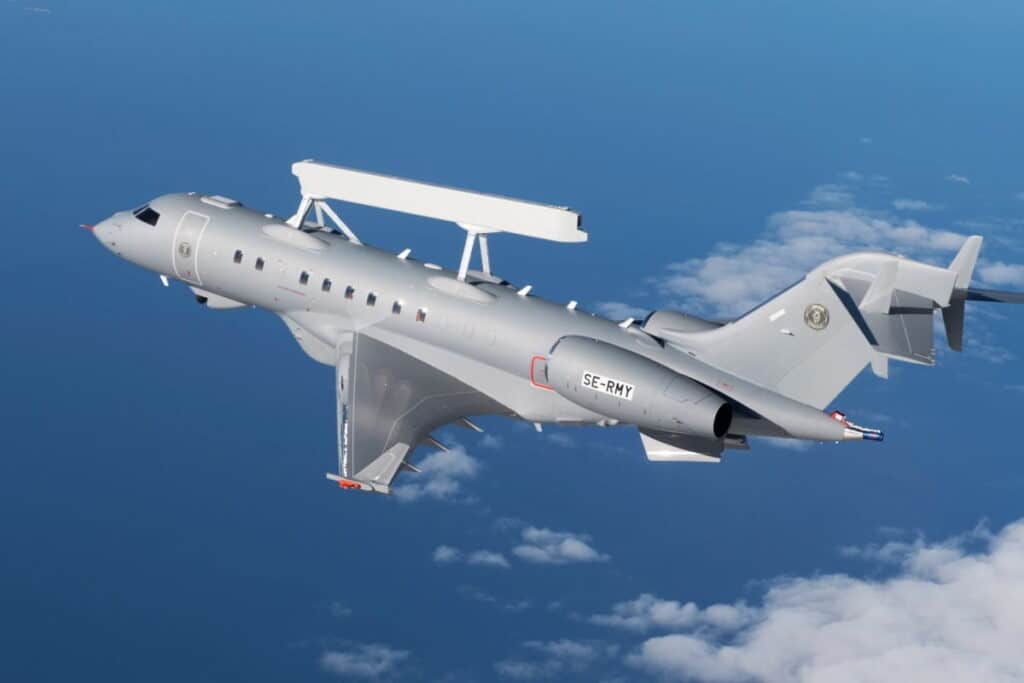
The GlobalEye platform combines Saab’s Erieye ER radar with a Bombardier Global 6000/6500 jet—providing long-range coverage, advanced electronic-surveillance capability, and persistent multi-domain situational awareness. With a detection range exceeding 550 kilometres and the ability to track fighters, drones, cruise missiles and maritime threats simultaneously, GlobalEye competes directly with systems such as:
Saab’s competitive advantage lies in its export flexibility, modular radar architecture, and willingness to negotiate technology-transfer and local-industry partnerships, which Gulf states increasingly demand.
The Middle East has experienced a surge in low-altitude drone attacks, cruise-missile strikes, and asymmetric air threats—many of which evade older radar systems. Platforms like GlobalEye allow governments to detect low-RCS (radar-cross-section) targets well before they approach strategic infrastructure.
Countries such as Saudi Arabia and the UAE are building integrated networks that link AEW&C aircraft with:
GlobalEye enhances this network by functioning as an airborne command post and long-range detection hub.
Gulf governments increasingly seek co-production and localisation. Saab’s willingness to discuss industrial participation, software collaboration, and radar sub-system integration appeals to states trying to expand their defence-industrial base.
Interestingly, Saab’s market opportunity partly emerged because several NATO countries paused or reassessed their procurement of Boeing E-7 Wedgetails. Factors include:
This geopolitical realignment opened space for GlobalEye to enter conversations in Canada, Belgium, Poland, and the Netherlands.
Saab has aggressively capitalised on this window, positioning GlobalEye as:
The spread of airborne early-warning systems among middle powers will alter regional strategic calculations. Countries with GlobalEye-class capability gain:
If deployed in the Gulf, GlobalEye could cover maritime corridors such as:
These waterways are vital for global energy flows and commercial shipping. Enhanced surveillance strengthens global trade security.
Saab’s emphasis on industrial collaboration reflects a major trend:
defence deals are no longer just about equipment—they are vehicles for technological influence and partnership ecosystems.
This shift affects how states calculate long-term security commitments.
The GlobalEye campaign highlights how the defence-industrial market is changing:
Saab’s strategy—light, modular, interoperable systems with customisation options—aligns with global trends favouring agility over size.
Saab’s pursuit of Gulf and NATO contracts signifies a pivotal moment in the next era of airborne early-warning capability. As states confront increasingly complex security environments—ranging from hypersonic weapons to swarming drones—the demand for advanced surveillance and integrated command-and-control will only grow.
GlobalEye’s expansion campaign is not merely a commercial initiative; it is a clear indicator of how airpower, defence technology, and geopolitical strategy are converging. The results of these negotiations may reshape regional air-defence networks for the coming decade.