Physical Address
304 North Cardinal St.
Dorchester Center, MA 02124
Physical Address
304 North Cardinal St.
Dorchester Center, MA 02124
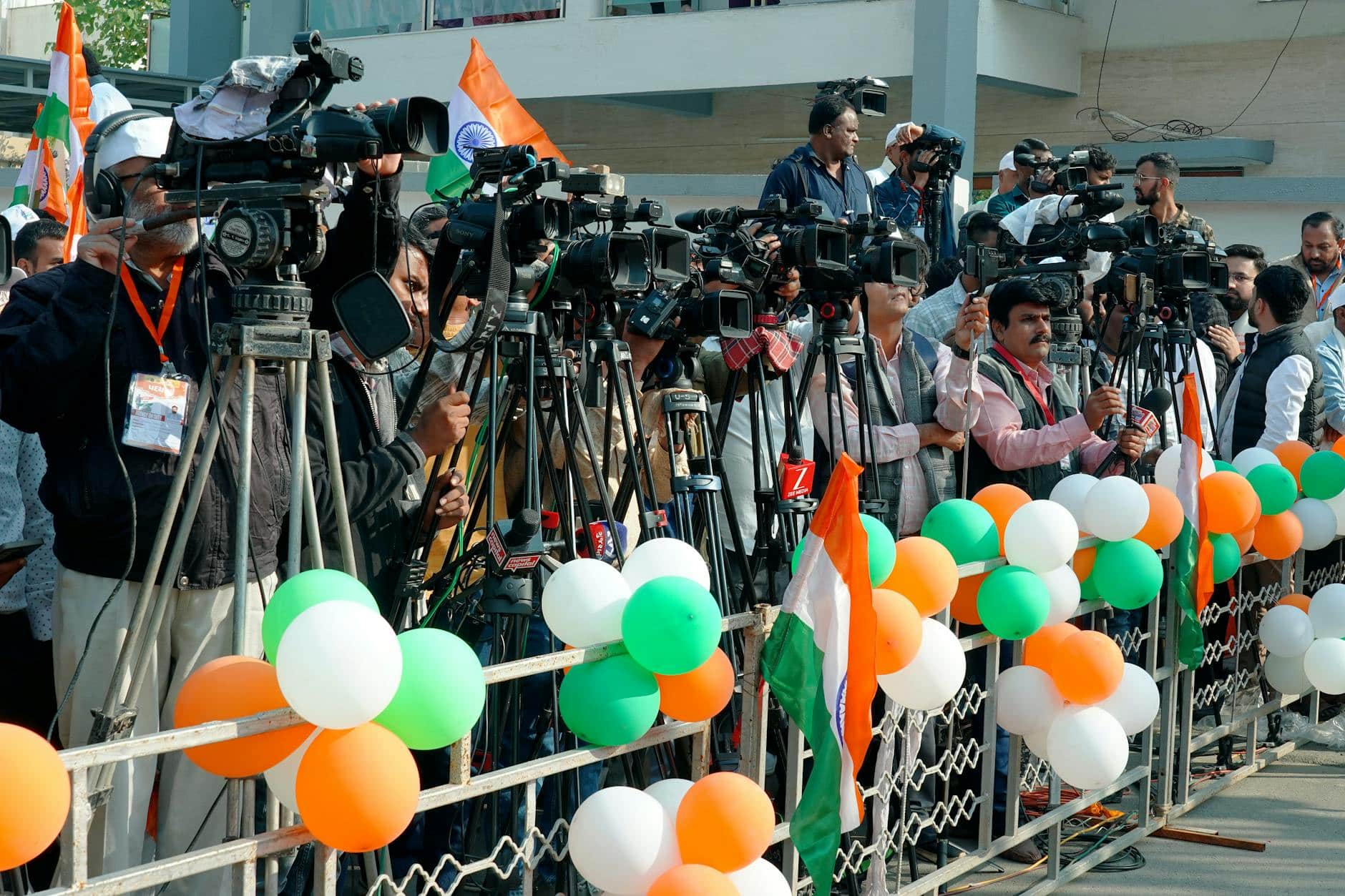
India's declining press freedom ranking reflects systematic pressures on journalistic independence through regulatory weaponization, media ownership concentration, and coordinated harassment. These structural trends threaten democratic accountability mechanisms critical to regional stability.
India’s position in Reporters Without Borders’ (RSF) World Press Freedom Index has become a critical barometer of the nation’s democratic trajectory. The ranking itself matters less as a numerical score than as an indicator of systemic pressures on journalistic independence, media pluralism, and institutional accountability. India’s descent in recent years reflects not isolated incidents but structural shifts in how state and non-state actors interact with the media ecosystem.
The significance of India’s press freedom ranking extends beyond media criticism circles into fundamental questions about democratic resilience. As the world’s most populous democracy with over 1.4 billion citizens, India’s media environment shapes political discourse, electoral competition, and the functioning of checks and balances across the entire South Asian region. Deterioration in press freedom metrics therefore carries implications for democratic governance that reach well beyond journalism itself.
India’s press freedom challenges stem from multiple reinforcing mechanisms rather than single-point failures. The concentration of media ownership among a small number of business conglomerates has created structural vulnerabilities where proprietors face pressure from government relationships and regulatory bodies. This ownership concentration reduces editorial independence and creates incentives for self-censorship, particularly on stories affecting owners’ commercial interests or political patrons.
Regulatory instruments have become increasingly weaponized against critical reporting. The use of defamation suits, sedition charges under colonial-era legislation, and aggressive tax investigations creates a chilling effect on investigative journalism. Journalists covering sensitive topics—including communal violence, government accountability, or corporate malfeasance involving politically connected actors—face harassment, legal threats, and physical intimidation. This pattern reflects a deliberate strategy to narrow the boundaries of acceptable public discourse rather than isolated enforcement actions.
Digital platforms have amplified these pressures while creating new vulnerabilities. Coordinated social media campaigns targeting journalists, often amplified by accounts with apparent state connections, create reputational risks that news organizations struggle to counter. The targeting of women journalists has become particularly pronounced, with gender-based harassment used as a tool to silence reporting on gender-related issues and political accountability.
India’s regulatory agencies—including the Ministry of Information and Broadcasting, the Income Tax Department, and the Enforcement Directorate—have been deployed in patterns that correlate with critical coverage of government policies or politically connected actors. While individual actions can be characterized as routine enforcement, the aggregate pattern demonstrates systematic pressure on media organizations deemed insufficiently compliant with government messaging.
The Ministry of Information and Broadcasting has issued repeated directives to broadcast media regarding content standards, with enforcement appearing selective based on political orientation. Digital media, initially less regulated, now faces increasing government pressure through notices, takedown requests, and proposed regulatory frameworks. This regulatory expansion occurs without corresponding protections for editorial independence or transparent criteria for enforcement.
The impact extends to self-censorship within newsrooms. Editors and proprietors, aware of regulatory risks and political sensitivities, exercise preventive caution that reduces critical coverage without requiring explicit government intervention. This creates a media environment where formal censorship becomes unnecessary because institutional pressures achieve similar outcomes through market and regulatory mechanisms.
India’s press freedom trajectory carries significance for the broader South Asian region. As the largest democracy in South Asia and a regional power, India’s media environment influences democratic norms across the region. The normalization of regulatory pressure on critical journalism in India provides precedent and justification for similar actions in smaller South Asian democracies facing weaker institutional constraints.
Conversely, India’s democratic institutions—including a relatively independent judiciary, functioning election commission, and established civil society—have provided some countervailing pressure against complete media capture. The Supreme Court has occasionally intervened to protect journalistic freedom, and civil society organizations continue monitoring press freedom violations. These institutional safeguards, however, face erosion as political pressures accumulate.
The regional comparison is instructive. While Pakistan and Bangladesh have experienced more dramatic press freedom deterioration, India’s decline is significant precisely because it occurs within stronger institutional frameworks. This suggests that press freedom requires active defense even in robust democracies, and that structural pressures on media can degrade democratic functioning even when formal democratic institutions remain intact.
Beyond regulatory mechanisms, economic pressures shape India’s media landscape. Government advertising—a significant revenue source for many news organizations—can be withdrawn from outlets publishing critical coverage. This creates direct financial incentives for editorial compliance. Large conglomerate owners, dependent on government contracts and regulatory approvals for their broader business operations, face conflicts of interest when their media divisions attempt critical reporting on government policies.
The decline of print media revenue and advertising markets has accelerated consolidation, reducing the number of independent news organizations. Smaller outlets cannot survive without government advertising support or patronage from political actors. This economic reality means that press freedom depends increasingly on the forbearance of concentrated media owners rather than structural protections or market competition.
Digital media initially promised to disrupt this concentration, enabling lower-cost news production and broader participation. However, digital advertising markets have concentrated around Google and Facebook, reducing direct revenue streams for news organizations. Additionally, digital platforms’ content moderation policies—often responding to government pressure—create new mechanisms for suppressing critical coverage without formal censorship.
India’s press freedom ranking decline reflects genuine structural deterioration in media independence, not merely perception or methodological artifacts. The combination of regulatory weaponization, ownership concentration, economic pressure, and digital harassment creates a multi-layered system constraining critical journalism. This matters not as abstract principle but as a practical problem for democratic accountability.
The trajectory is not irreversible. India’s civil society, judiciary, and journalistic community retain capacity to contest media pressures. Recent Supreme Court decisions protecting digital media from arbitrary government takedown requests demonstrate that institutional pushback remains possible. However, sustained defense of press freedom requires political will, legal protection, and economic models that support independent journalism—all of which face pressure in contemporary India.
For regional security and governance, India’s press freedom trajectory warrants serious analytical attention not as a human rights abstraction but as a concrete problem affecting democratic accountability, institutional checks and balances, and the quality of public information available to voters. A democracy with constrained media is more vulnerable to policy errors, corruption, and institutional decay. For the Indo-Pacific region, India’s democratic health—including the health of its media ecosystem—carries strategic significance that extends well beyond India’s borders.