Physical Address
304 North Cardinal St.
Dorchester Center, MA 02124
Physical Address
304 North Cardinal St.
Dorchester Center, MA 02124

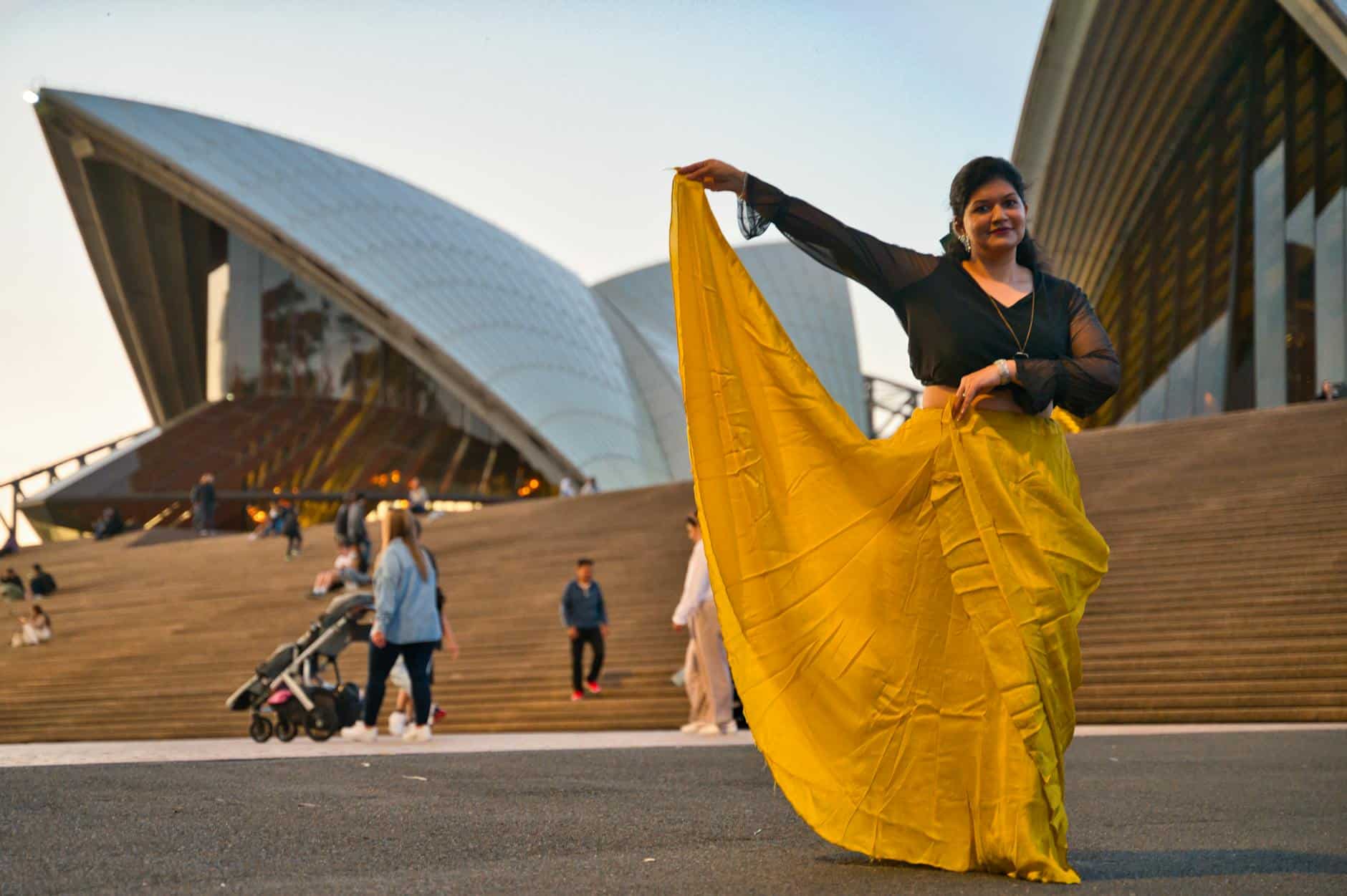
The bomb threat at an Australian PM's residence during a Shen Yun performance reveals how cultural diplomacy has become a contested battleground in China-Australia relations. The incident exposes deeper strategic competition over Chinese identity and representation in the Indo-Pacific region.
The December 2024 bomb threat targeting the residence of Australian Prime Minister Anthony Albanese during a Shen Yun performance at the Sydney Opera House exposed a fault line in Australia’s relationship with China that extends far beyond traditional security concerns. The incident, which forced the evacuation of government officials and triggered a major security response, reveals how cultural diplomacy has become a contested terrain in the broader Indo-Pacific strategic competition. Shen Yun—a New York-based performing arts company with roots in Falun Gong, a spiritual movement banned in mainland China—has become a proxy battleground for competing narratives about Chinese identity, religious freedom, and political legitimacy in the transnational Chinese diaspora.
Shen Yun operates as a sophisticated cultural platform that blends classical Chinese dance, music, and theatrical production to present a particular vision of Chinese civilization. The company’s performances deliberately emphasize pre-Communist Chinese cultural traditions and incorporate themes of spiritual freedom that directly challenge the People’s Republic of China’s (PRC) official narrative about Chinese identity and governance. This positioning is not incidental; it represents a deliberate strategic choice to contest Beijing’s monopoly over the definition of “authentic” Chinese culture on the global stage.
The company has expanded its international touring schedule significantly, with multiple simultaneous productions across North America, Europe, and the Asia-Pacific region. In Australia specifically, Shen Yun performances have become increasingly prominent in major cities including Sydney, Melbourne, and Brisbane, attracting audiences of several thousand per show. This expansion reflects both growing diaspora demand and the company’s strategic objective to reach mainstream audiences beyond ethnic Chinese communities.
The December 2024 threat against Prime Minister Albanese’s residence during the Shen Yun performance represents a significant escalation in the contestation over the company’s presence in Australia. While the threat’s origin remains under investigation by Australian Federal Police, the timing and targeting were strategically significant: the Prime Minister’s attendance at a Shen Yun performance constitutes a form of official endorsement that elevates the company’s cultural and political legitimacy within Australia.
The incident forced the evacuation of government officials and required substantial security resources, disrupting normal government operations. This outcome—whether intended or not—demonstrates how cultural events can become vectors for political pressure in an era of heightened strategic competition. The threat weaponized security concerns to create a chilling effect on political engagement with cultural activities perceived as challenging to Beijing’s interests.
Shen Yun’s activities must be understood within the context of broader competition over representation and political voice within Chinese diaspora communities and among global audiences consuming Chinese cultural content. The company explicitly positions itself as representing an alternative vision of Chinese culture—one that emphasizes spiritual traditions, pre-revolutionary aesthetics, and implicit critiques of Communist Party governance.
The Beijing government views this positioning as a direct threat to its soft power objectives. China’s cultural diplomacy strategy, articulated through institutions like Confucius Institutes and state media outlets, seeks to present a unified, PRC-approved narrative of Chinese civilization and contemporary China. Shen Yun’s international success undermines this monopoly by offering competing Chinese cultural products that reach mainstream Western audiences, Chinese diaspora communities, and audiences across the Indo-Pacific region.
This competition reflects deeper ideological divisions within the global Chinese community. Falun Gong adherents, who form the core of Shen Yun’s organizational base, have been subject to systematic persecution in mainland China since 1999. The organization of Shen Yun represents both a creative response to this persecution and a sustained challenge to Beijing’s authority to define Chinese identity and culture.
The Shen Yun controversy carries significant implications for Australian policy and Indo-Pacific security architecture. Australia has experienced sustained pressure from Beijing across multiple domains—trade restrictions, cyber operations, and foreign interference activities—designed to influence Australian foreign policy and constrain Australia’s alliance relationships. The bomb threat incident suggests that cultural and ideological competition may become an additional vector for pressure.
From an Australian sovereignty perspective, the incident raises critical questions about the government’s capacity to maintain open cultural and political space in the face of coercive pressure. Prime Minister Albanese’s attendance at the performance, and the government’s subsequent security response, implicitly affirms Australia’s commitment to cultural pluralism and freedom of expression. However, the security disruption also demonstrates the costs of this commitment in an environment of elevated threat levels.
The incident also has implications for broader Indo-Pacific regional dynamics. Australia’s handling of the Shen Yun controversy will be observed closely by other regional actors, particularly those with significant Chinese diaspora populations or those navigating their own relationships with Beijing. The precedent established—whether Australia prioritizes cultural openness or security concerns—will influence how other regional governments approach similar situations.
The Shen Yun controversy exemplifies a broader challenge facing liberal democracies in the Indo-Pacific: how to maintain open cultural and political space while managing security threats and foreign interference. This is not a problem with a clean solution. Restricting Shen Yun’s access to Australian venues would constitute a capitulation to coercive pressure and would undermine Australia’s commitment to cultural freedom. Conversely, failing to acknowledge the strategic dimensions of cultural competition risks leaving Australia vulnerable to further pressure campaigns.
Australia’s optimal approach involves three elements: first, robust security measures that protect government officials and public venues without restricting cultural access; second, transparent communication about the strategic competition over cultural representation occurring at the transnational level; and third, active support for diverse cultural voices within diaspora communities, recognizing that open societies benefit from pluralism rather than monopolistic cultural narratives.
The Shen Yun incident should prompt broader reflection within Australian policy circles about the role of culture in great power competition. As China increasingly leverages cultural, educational, and informational tools to advance its strategic interests, Australia and other liberal democracies must develop more sophisticated frameworks for understanding and responding to cultural diplomacy as a dimension of strategic competition. This requires moving beyond treating culture as peripheral to “real” security concerns and recognizing that the struggle over representation, identity, and narrative has direct implications for geopolitical influence and regional stability.