Physical Address
304 North Cardinal St.
Dorchester Center, MA 02124
Physical Address
304 North Cardinal St.
Dorchester Center, MA 02124

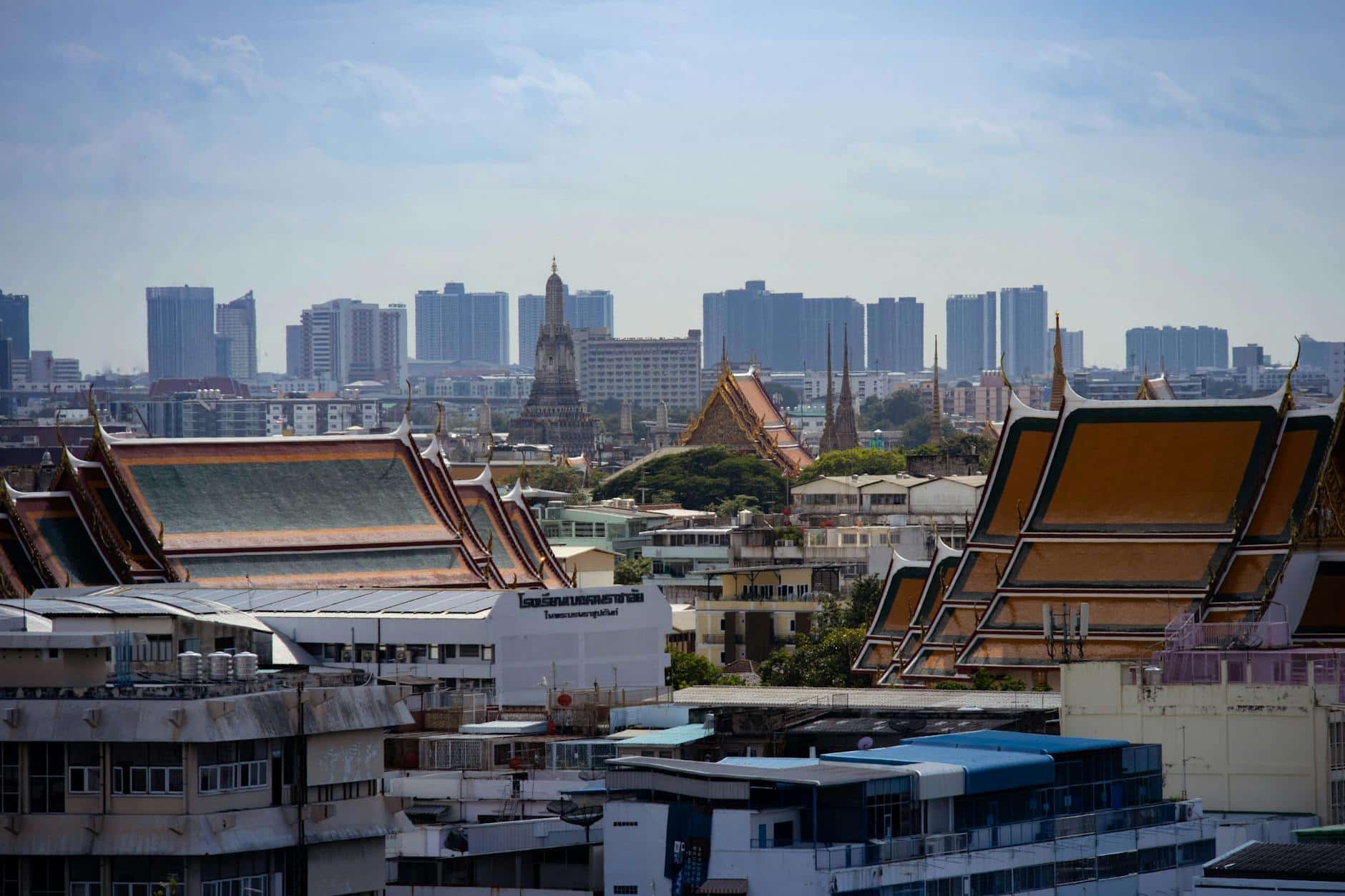
Thailand's 2026 election has consolidated conservative power through the Bhumjaithai-led coalition, reversing democratic momentum and embedding security-focused governance. The result leaves constitutional reform unresolved and signals renewed dominance of establishment elites over reform movements.
Thailand’s 2026 snap election has produced a decisive outcome that reverses the democratic momentum of recent years and signals a return to establishment-dominated governance. The Bhumjaithai Party’s electoral success, combined with its coalition agreement with military-aligned and conservative parties, represents a structural consolidation of power by Thailand’s traditional political elite—a development with significant implications for regional stability, democratic governance, and Thailand’s role in Indo-Pacific geopolitics.
The Bhumjaithai-led coalition marks a departure from the reform-oriented trajectory that emerged following the 2023 general election. Where that election produced a pro-democracy coalition led by Pheu Thai and Move Forward, the 2026 result has empowered a coalition anchored by Bhumjaithai, a party historically aligned with Thailand’s establishment and military structures. This shift reflects deeper currents within Thai politics: the reassertion of conservative forces, the instrumentalisation of security concerns, and the effective marginalisation of reform agendas that had briefly gained traction.
The Bhumjaithai victory cannot be separated from the political context that enabled it: rising nationalist sentiment and border security concerns that have dominated Thai political discourse. The party’s campaign strategy explicitly leveraged these anxieties, positioning itself as the guardian of Thai sovereignty and territorial integrity against perceived external and internal threats.
Border tensions, particularly with Myanmar and along the southern provinces, have provided a potent narrative for conservative politicians. Thailand shares a 2,416-kilometre border with Myanmar, and the ongoing instability in Myanmar since the February 2021 military coup has created genuine security challenges—refugee flows, drug trafficking, and occasional armed incursions. Conservative parties have weaponised these legitimate concerns, using them to justify stronger executive authority, reduced parliamentary oversight, and a nationalist political agenda that marginalises minority voices and reform movements.
This dynamic is not unique to Thailand but reflects a broader pattern in Southeast Asia where security narratives are deployed to consolidate executive power at the expense of democratic institutions. The Bhumjaithai coalition’s emphasis on border security and nationalist governance provides political cover for policies that would face greater scrutiny under a reform-minded government.
Perhaps most significantly, the 2026 election outcome has effectively frozen Thailand’s unresolved constitutional question. The 2017 military coup and subsequent 2019 constitution created a hybrid system designed to insulate Thailand’s military and monarchy from electoral accountability. The 2023 election briefly suggested that popular pressure might force genuine constitutional reform, particularly regarding the appointed Senate and the structural advantages granted to military-aligned parties.
The Bhumjaithai coalition’s consolidation of power removes the political incentive for constitutional change. A government composed of establishment parties and military-aligned actors has no motivation to dismantle the constitutional structures that enabled their victory. This represents a critical failure point for Thai democracy: the institutional framework that constrains popular sovereignty remains intact, and the 2026 election result suggests it will persist indefinitely.
The absence of genuine constitutional reform means Thailand’s underlying political tensions—between democratic aspirations and elite-controlled institutions—remain unresolved. This creates conditions for future instability, as popular frustration with constrained democratic participation may eventually provoke renewed conflict between reform movements and conservative elites.
The specific composition of the Bhumjaithai-led coalition matters for understanding how Thai governance will function. Bhumjaithai, traditionally a mid-sized party with roots in Thailand’s pharmaceutical and business sectors, has leveraged coalition negotiations to secure senior ministerial positions and policy influence disproportionate to its electoral strength. This reflects a broader pattern in Thai coalition politics where parties negotiate for executive positions and policy control rather than programmatic alignment.
The inclusion of military-aligned parties in the coalition—such as the United Thai Nation Party and Palang Pracharath—ensures that security agencies maintain direct access to executive decision-making. This institutional arrangement has several consequences: defence and security policy will remain insulated from parliamentary scrutiny; security sector budgets and activities will face minimal oversight; and the police and military will retain operational autonomy in managing border security and internal order.
For economic policy and development priorities, the Bhumjaithai coalition represents continuity with the status quo. The party’s business-oriented base and coalition partners share an interest in infrastructure development, privatisation, and foreign investment—policies that benefit established commercial networks and international capital. This contrasts with the reform coalition’s emphasis on social welfare expansion and wealth redistribution, suggesting that the 2026 result will produce divergent distributional outcomes favoring existing elites.
Thailand’s internal political consolidation has external dimensions. As ASEAN’s second-largest economy and a country with significant geopolitical weight in mainland Southeast Asia, Thailand’s governance trajectory influences regional stability and institutional dynamics.
The Bhumjaithai coalition’s nationalist emphasis and security-focused governance will likely reinforce Thailand’s cautious approach to ASEAN integration and regional multilateralism. Thailand has historically used ASEAN’s non-interference principle to shield its internal politics from external criticism, and a conservative government has even greater incentive to maintain this posture. This may limit Thailand’s willingness to engage with ASEAN initiatives on human rights, democratic governance, or accountability—areas where the reform coalition had shown greater openness.
Conversely, Thailand’s border security concerns create potential for enhanced bilateral security cooperation with regional partners, particularly the United States and Japan. The Bhumjaithai coalition’s alignment with establishment security interests may facilitate deeper defence partnerships and military-to-military cooperation, positioning Thailand as a stable security partner for Indo-Pacific powers seeking to manage great power competition in Southeast Asia.
The 2026 Thai election represents a consolidation of conservative power, but not a resolution of Thailand’s underlying political contradictions. The Bhumjaithai coalition has secured executive authority through a combination of institutional advantages, nationalist sentiment, and security concerns—but it has not addressed the democratic aspirations that periodically erupt in Thai politics.
Thailand’s trajectory will depend on whether the conservative coalition can deliver effective governance and economic performance sufficient to maintain elite cohesion and public acquiescence. If economic growth stalls, corruption persists, or border security concerns intensify without effective response, renewed pressure for democratic reform will likely emerge. The constitutional structures that enabled the 2026 conservative consolidation may become targets for reform movements, creating conditions for renewed political conflict.
For regional analysts, Thailand’s 2026 election signals that Southeast Asia’s democratic trajectory remains contested and contingent. Electoral outcomes do not automatically produce democratic consolidation; they can instead entrench authoritarian-leaning institutional arrangements. Thailand’s experience demonstrates that security narratives, nationalist politics, and institutional design interact to shape political outcomes in ways that may constrain rather than expand democratic participation.