Physical Address
304 North Cardinal St.
Dorchester Center, MA 02124
Physical Address
304 North Cardinal St.
Dorchester Center, MA 02124

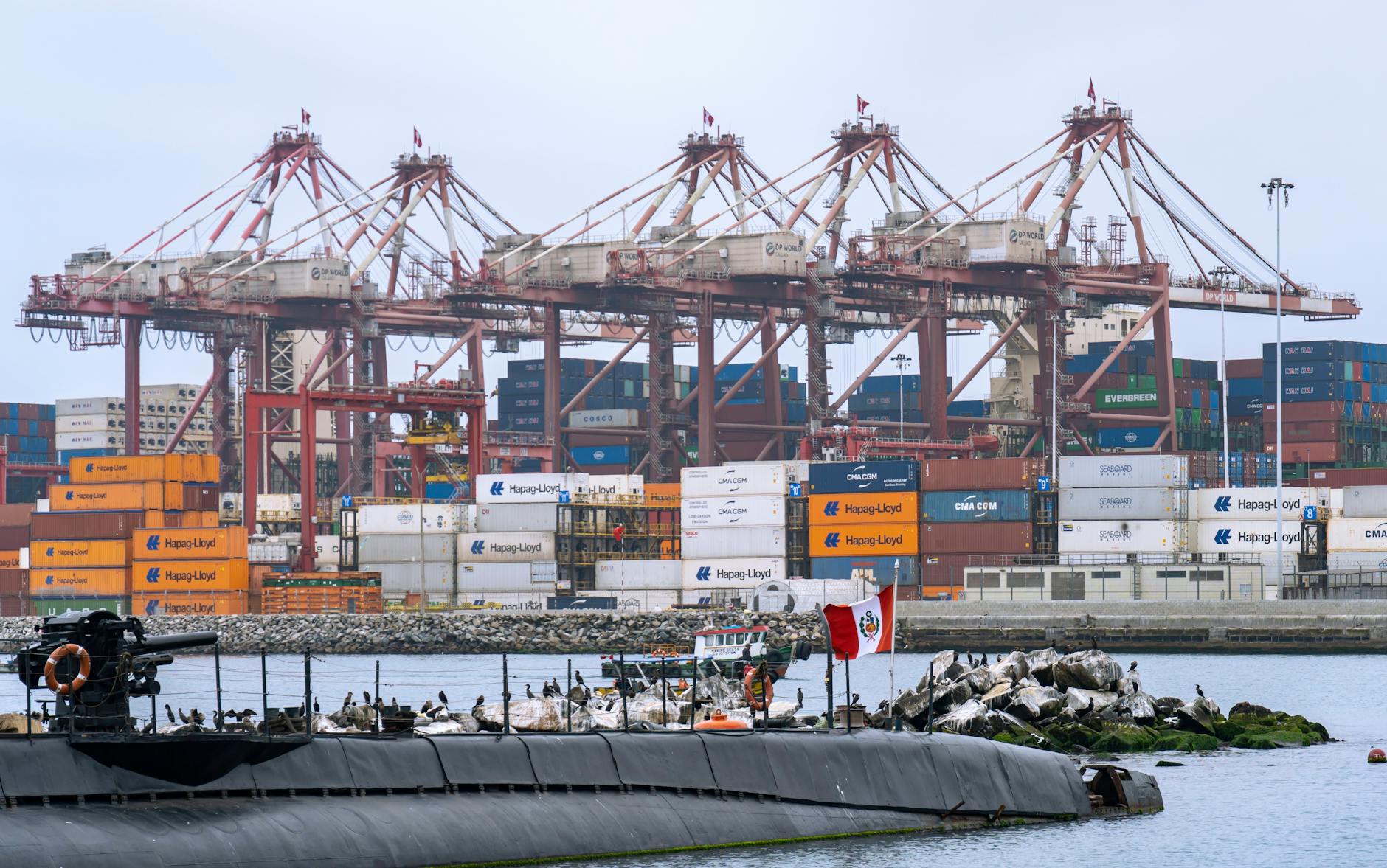
China's Port of Chancay in Peru, operational since November 2024, presents significant strategic risks amid Peru's political instability. The 60-year Chinese concession could enable military logistics, intelligence gathering, and sanctions evasion in the Western Hemisphere.
The convergence of Peru’s deepening political instability and China’s expanding port infrastructure in South America presents a critical strategic challenge for the United States and regional stability. The Port of Chancay, located approximately 80 kilometres north of Lima, represents far more than a commercial facility—it embodies China’s broader strategy of securing strategic assets across the Western Hemisphere at a moment when Peru’s institutional capacity to safeguard national interests faces unprecedented strain.
This intersection of domestic political fragmentation and foreign strategic investment warrants serious examination of how authoritarian actors might exploit governance vacuums to advance military and geopolitical objectives. The case of Chancay illustrates a pattern increasingly visible across Latin America: the use of infrastructure investment as a pathway to long-term strategic positioning.
China’s state-owned China Communications Construction Company (CCCC) has invested approximately $1.3 billion in the Port of Chancay, with operations commencing in November 2024. The facility represents the largest port investment in Peru’s history and is designed to handle 30 million containers annually at full capacity—making it one of South America’s most significant deep-water port facilities.
The port’s strategic geography is central to its significance. Unlike Peru’s existing ports, Chancay offers deep-water access suitable for the largest modern container vessels without requiring dredging. This natural advantage, combined with its proximity to Lima and Peru’s primary economic centres, positions it as a potential hub for Chinese logistics and supply chain operations throughout South America. The facility includes container terminals, bulk cargo facilities, and integrated warehousing—infrastructure that serves dual commercial and logistical purposes.
Critically, the operational control structure gives Chinese entities substantial management authority over port operations. CCCC holds a 60-year concession agreement, meaning that Chinese technical personnel, security arrangements, and operational protocols will govern the facility’s management across the critical period of the next six decades. This extended timeframe creates conditions for the entrenchment of Chinese strategic interests regardless of Peru’s future political direction.
Peru’s current political environment significantly amplifies the risks associated with foreign strategic infrastructure control. President Dina Boluarte has governed amid unprecedented institutional fragmentation following the December 2022 removal of Pedro Castillo from office. The subsequent period has witnessed recurring protests, roadblocks, and demonstrations that have claimed over 60 lives and created extended periods during which central government authority in provincial areas has been substantially compromised.
The Peruvian Congress remains fractionalised, with no single political coalition commanding stable majorities. This fragmentation means that critical decisions regarding port security, foreign investment oversight, and infrastructure access often lack the institutional consensus necessary for effective governance. Regional governors and local authorities frequently operate with limited coordination from Lima, creating multiple points where foreign actors might exploit administrative gaps or competing jurisdictional claims.
The security environment compounds these governance challenges. Organised crime networks, including drug trafficking organisations and illegal mining operations, maintain substantial control over territory in Peru’s interior regions. These networks have demonstrated willingness to challenge state authority and capacity to corrupt local officials. In this context, a foreign-controlled port facility becomes an attractive asset for circumventing state oversight—whether for illicit trafficking, sanctions evasion, or other activities requiring operational secrecy.
The potential military applications of Chancay extend beyond conventional port operations. A deep-water facility under Chinese operational control provides several strategic advantages that could be leveraged in a conflict scenario or during periods of heightened US-China tension:
Peru’s situation reflects a broader pattern of Chinese strategic positioning across Latin America. Similar port investments and infrastructure projects are underway in Brazil, Chile, and Ecuador. The cumulative effect of these investments is the creation of a network of strategic chokepoints and logistics hubs that could be leveraged to project Chinese power, gather intelligence, and constrain US regional influence.
The timing of Chancay’s opening—November 2024—coincides with Peru’s continued political fragmentation and limited capacity for effective oversight. This convergence suggests that Chinese decision-makers view the current window as optimal for consolidating operational control before Peru’s political situation potentially stabilises.
For the United States and its regional partners, Chancay represents a concrete example of how infrastructure investment can become a strategic liability when host nations lack the institutional capacity to maintain effective oversight. The port’s significance lies not in its current operations but in the long-term strategic positioning it enables for Beijing.
The convergence of Peru’s political crisis and China’s strategic port control presents a challenge that cannot be addressed through traditional diplomatic channels alone. Several policy considerations merit attention from the United States and regional partners:
First, strengthening Peru’s institutional capacity for infrastructure oversight and security governance should be a priority for regional engagement. This includes support for Peru’s maritime security agencies, port authority capacity-building, and intelligence sharing frameworks that allow Peru to maintain effective monitoring of port operations.
Second, regional coordination mechanisms should establish clear standards for foreign control of critical infrastructure, particularly in maritime facilities with dual-use potential. ASEAN’s experience with similar challenges in Southeast Asia provides relevant precedents for balancing commercial openness with security safeguards.
Third, the United States should accelerate development of alternative logistics infrastructure and port capacity in the Western Hemisphere to reduce the strategic significance of any single facility. This includes investment in port modernisation in allied nations and diversification of supply chain routing.
The Port of Chancay exemplifies how strategic competition in the Indo-Pacific and beyond increasingly operates through infrastructure control rather than traditional military competition. Peru’s political fragmentation creates conditions where this competition occurs without effective institutional oversight—a pattern likely to repeat across the region unless deliberate policy measures address both governance capacity and strategic infrastructure control.