Physical Address
304 North Cardinal St.
Dorchester Center, MA 02124
Physical Address
304 North Cardinal St.
Dorchester Center, MA 02124

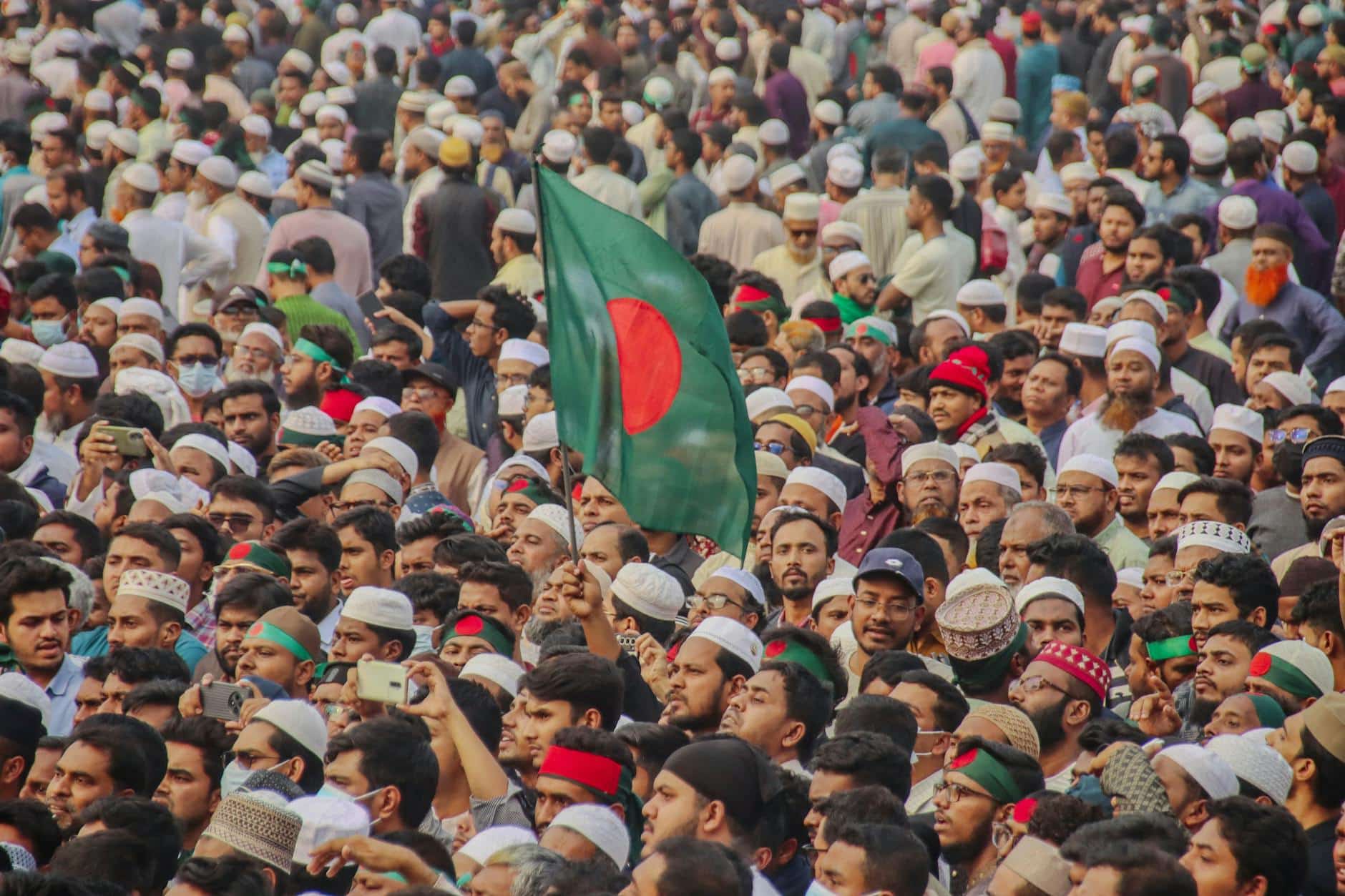
Bangladesh's 2026 general election produced only seven female parliamentarians out of 300 seats, marking a historic collapse in women's political representation. This regression exposes critical failures in political parties, electoral institutions, and the relationship between development gains and democratic inclusion.
Bangladesh faces a critical democratic legitimacy challenge following its 2026 general election, in which women secured only seven of 300 parliamentary seats—representing just 2.3 percent of the National Assembly. This dramatic collapse in female political representation marks a severe regression for a nation that has positioned itself as a regional leader on gender equity and development. The outcome demands urgent analytical attention not only for its implications for Bangladesh’s domestic governance, but also for what it signals about the durability of gender-inclusive democratic institutions across South Asia and the Indo-Pacific region.
The 2026 result represents a catastrophic setback for women’s political participation in Bangladesh. With only seven women elected to the 300-seat parliament, female representation has fallen to levels not seen in recent decades. This is particularly striking given that Bangladesh has maintained constitutional provisions for reserved seats for women—a mechanism designed specifically to prevent this outcome. The failure of both electoral mechanisms and political parties to produce female candidates who could compete successfully in general elections reveals systemic dysfunction in how Bangladesh’s democratic institutions operate.
The contrast with previous electoral cycles underscores the severity of this regression. Bangladesh has historically maintained higher levels of women’s parliamentary representation through a combination of direct election and reserved seat allocations. The 2026 outcome suggests that reserved seat provisions alone are insufficient to counteract deepening political and social pressures that actively discourage women’s electoral participation.
Bangladesh’s major political parties bear direct responsibility for this outcome. The Awami League, Bangladesh Nationalist Party (BNP), and other significant political organizations failed to nominate competitive female candidates in winnable constituencies. Rather than view women’s candidacy as a strategic electoral asset or a democratic imperative, these parties appear to have treated female candidates as secondary considerations in seat allocation processes.
This reflects a deeper problem within Bangladesh’s political culture: the instrumentalization of gender equity rhetoric without corresponding institutional commitment. Political parties routinely invoke women’s rights and gender equality in public statements and party manifestos, yet translate these commitments into minimal candidate selection in competitive races. The gap between stated commitment and electoral practice reveals that gender equality remains a peripheral concern in Bangladesh’s party politics, rather than a core democratic value.
The failure also implicates Bangladesh’s Electoral Commission, which has limited authority to compel parties to nominate female candidates. Unlike some democracies that mandate minimum female candidate quotas, Bangladesh’s system relies on voluntary party compliance with gender equity principles. The 2026 result demonstrates the inadequacy of this approach.
Bangladesh’s regression carries significance beyond its borders. As a major South Asian democracy with approximately 170 million citizens, Bangladesh’s political trajectory influences regional perceptions of democratic governance and gender inclusion. The country has positioned itself—through development agencies and international forums—as a model for combining economic growth with social progress on gender indicators.
The 2026 electoral outcome contradicts this narrative fundamentally. It suggests that economic development and gender-focused development programming do not automatically translate into political empowerment or substantive democratic inclusion. Female literacy, workforce participation, and microfinance access have expanded significantly in Bangladesh over the past two decades, yet these gains have not secured corresponding advances in political representation. This disconnect raises questions about the relationship between social development and political democratization across the Indo-Pacific region more broadly.
For other South Asian and Pacific democracies considering their own approaches to women’s political participation, Bangladesh’s experience provides a cautionary lesson: development metrics and electoral representation operate according to different political logics. Improving women’s economic and social status does not guarantee that political elites will voluntarily share power or that electoral systems will produce gender-inclusive outcomes.
Bangladesh’s constitutional framework includes provisions for 50 reserved seats for women in parliament, filled through an indirect process following general elections. These reserved seats have historically ensured that women comprise a meaningful minority in the National Assembly, even when direct election results were disappointing. However, the 2026 outcome raises urgent questions about whether this mechanism can survive intact if direct electoral representation continues to deteriorate.
If women win only seven seats through direct election, the 50 reserved seats would theoretically bring total female representation to 57 of 300 seats (19 percent). However, this calculation assumes the reserved seat system remains unchanged and functions as designed. Political pressure to reduce or eliminate reserved seats often intensifies when direct electoral representation is weak, as opponents argue that reserved seats become unrepresentative of actual electoral support. Bangladesh may face precisely this dynamic in coming years, potentially eroding one of its few remaining institutional protections for women’s parliamentary participation.
Bangladesh’s 2026 electoral crisis demands urgent policy intervention at multiple levels. First, the Electoral Commission should establish mandatory minimum quotas for female candidates in party nomination processes—not as voluntary guidelines, but as enforceable regulations tied to party registration and ballot access. Second, political parties require internal institutional reform to elevate women to competitive candidate positions and leadership roles within party hierarchies.
Third, Bangladesh’s development partners—including the World Bank, Asian Development Bank, and bilateral donors—should explicitly condition future governance support on measurable progress in women’s electoral representation. Development assistance frameworks that ignore political inclusion undermine their own long-term objectives.
Finally, civil society organizations and women’s rights groups must mobilize sustained pressure on political parties and state institutions. The 2026 result reflects not inevitable structural constraints, but deliberate political choices by party elites. These choices can be reversed through combination of institutional reform and political accountability.
Bangladesh’s democratic trajectory over the next electoral cycle will indicate whether the 2026 outcome represents a temporary anomaly or the beginning of sustained regression in women’s political participation. Either way, the result demands that policymakers across the Indo-Pacific region confront the reality that gender-inclusive democracy requires more than development programs and constitutional provisions—it requires sustained political commitment from democratic institutions themselves.