Physical Address
304 North Cardinal St.
Dorchester Center, MA 02124
Physical Address
304 North Cardinal St.
Dorchester Center, MA 02124

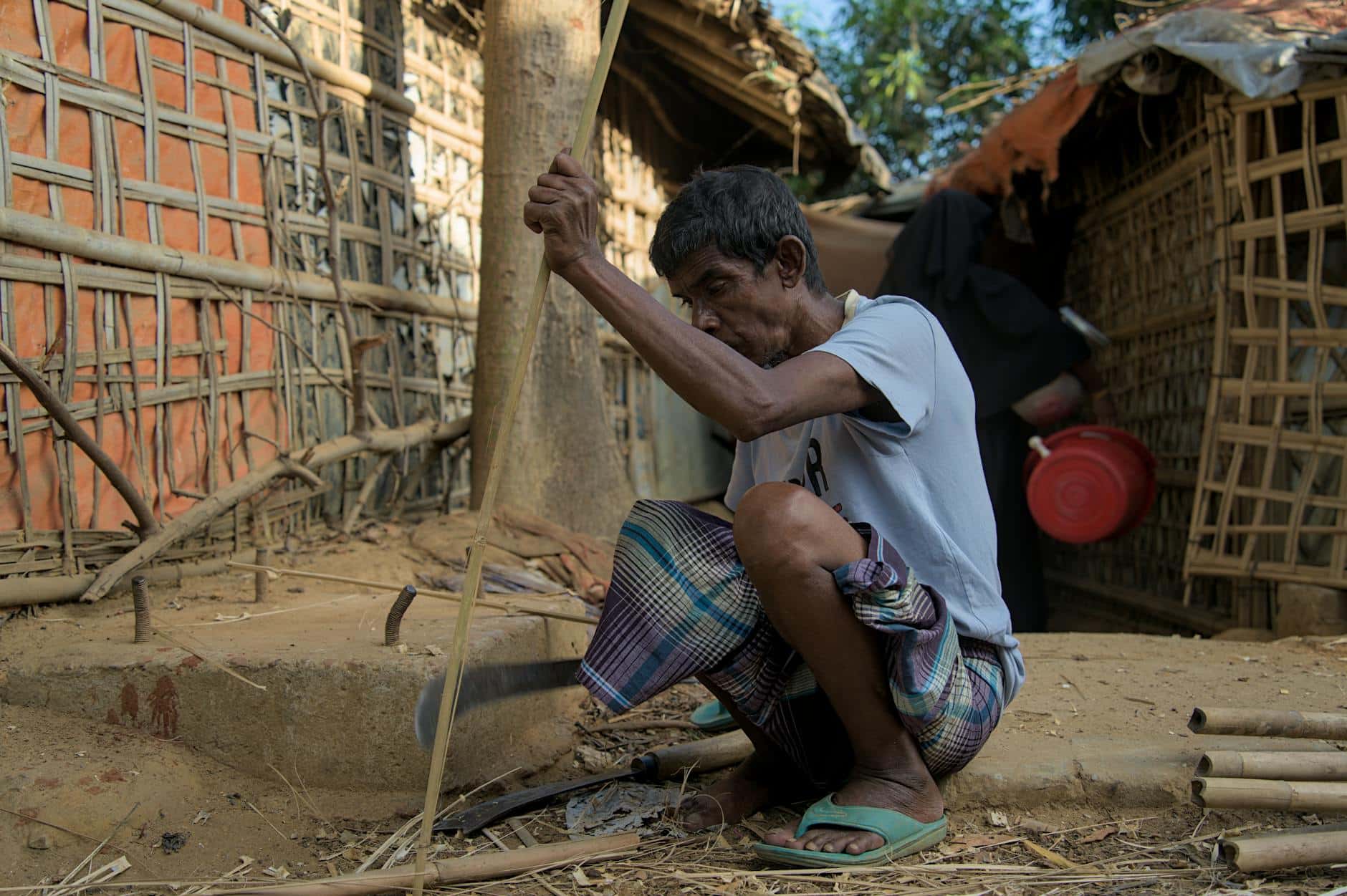
Myanmar's Rakhine conflict is generating significant economic spillover into Bangladesh through trade disruption, smuggling expansion, and illicit financial flows. The conflict threatens Bangladesh's energy security and garment export competitiveness while strengthening black market networks.
The armed conflict in Myanmar’s Rakhine State has created significant economic disruption extending far beyond the immediate conflict zone. Bangladesh, sharing a 271-kilometer border with Myanmar and deeply integrated into regional trade networks, faces mounting economic pressures stemming from the Rakhine war. The conflict has fundamentally altered trade patterns, spawned illicit economic activity, and exposed structural vulnerabilities in Bangladesh’s commercial infrastructure. Understanding these economic spillover effects is critical for assessing broader regional stability and Bangladesh’s economic resilience.
The escalation of conflict in Rakhine State has severely constrained official bilateral trade between Bangladesh and Myanmar. The two countries historically maintained trade relationships centered on agricultural products, textiles, and energy imports, with Bangladesh importing natural gas and timber from Myanmar while exporting garments and processed foods. The conflict has forced periodic closures of border crossing points, particularly at Teknaf-Maungdaw and Bandarban-Lailaung, disrupting established supply chains and forcing Bangladeshi importers to seek alternative sourcing arrangements at higher costs.
This trade disruption carries particular significance for Bangladesh’s energy security. Myanmar has historically supplied liquefied natural gas to Bangladesh through pipeline infrastructure, and conflict-induced instability threatens the reliability of these energy imports. Bangladeshi manufacturing sectors, particularly the garment industry which accounts for approximately 80 percent of merchandise exports, depend on stable energy supplies. Supply shocks translate directly into production costs and competitiveness concerns for Bangladesh’s largest export sector.
As formal trade channels have contracted, smuggling networks have expanded significantly across the Bangladesh-Myanmar border. Illicit goods trafficking—including contraband timber, jade, gems, narcotics, and counterfeit products—has flourished in the security vacuum created by the Rakhine conflict. Bangladesh’s Border Guard Bangladesh (BGB) has documented substantial increases in smuggling incidents along the Chittagong Hill Tracts and Cox’s Bazar regions, indicating systematic exploitation of border vulnerabilities.
The proliferation of black markets creates multiple economic distortions. Smuggled goods undercut legitimate domestic industries, reducing tax revenues for the Bangladeshi government and creating unfair competitive pressures on registered businesses. The garment manufacturers and agricultural producers operating within the formal economy face price competition from untaxed contraband, eroding profit margins and discouraging investment in legitimate sectors. Additionally, the smuggling economy fuels corruption among border officials and law enforcement, weakening institutional capacity and rule of law along the frontier.
Narcotics trafficking deserves particular analytical attention. The Rakhine conflict has coincided with increased methamphetamine production in Myanmar, with trafficking networks leveraging Bangladesh as a transit route to India and beyond. The UN Office on Drugs and Crime documented significant increases in synthetic drug seizures at Bangladesh’s borders between 2021 and 2023, indicating that the conflict environment has enabled drug trafficking organizations to operate with reduced interdiction risk.
Beyond goods smuggling, the conflict has stimulated growth in informal financial networks and currency manipulation schemes along the border. The official exchange rate between the Bangladeshi taka and Myanmar kyat diverges substantially from black market rates, creating arbitrage opportunities that incentivize informal currency exchange. These networks, while providing financial services to communities in remote border areas, simultaneously drain foreign exchange reserves from Bangladesh’s formal banking system and enable money laundering activities associated with trafficking organizations.
The expansion of informal money transfer mechanisms also complicates Bangladesh’s monetary policy implementation. The central bank’s ability to manage money supply and inflation becomes compromised when significant currency flows operate outside official channels. This is particularly problematic for Bangladesh, which has experienced inflation pressures in recent years and relies on precise monetary management to maintain macroeconomic stability.
The Rakhine conflict has exposed fundamental capacity limitations in Bangladesh’s border management infrastructure. The BGB operates with limited resources across a 271-kilometer frontier characterized by dense forests, river crossings, and challenging terrain. The conflict has intensified cross-border security threats, forcing the BGB to allocate resources toward counterinsurgency and refugee management rather than customs enforcement and smuggling interdiction.
Bangladesh hosts approximately 900,000 Rohingya refugees in Cox’s Bazar, a humanitarian consequence of the Rakhine conflict that compounds border security challenges. The refugee camps create humanitarian needs but also generate informal economic activity, including labor migration and goods trading that further complicates border control efforts. The intersection of refugee management and smuggling interdiction stretches institutional capacity beyond effective thresholds.
The Rakhine conflict’s economic spillover into Bangladesh demonstrates how regional conflicts generate transnational economic disruptions extending well beyond immediate combat zones. Bangladesh’s experience illustrates the vulnerability of smaller economies integrated into regional trade networks when neighboring states experience prolonged instability. The expansion of smuggling and illicit markets represents not merely an economic efficiency loss but a fundamental challenge to institutional legitimacy and rule of law.
For Bangladesh’s medium-term economic strategy, three priorities emerge. First, diversification of energy imports away from Myanmar dependency requires accelerated development of liquefied natural gas import capacity and renewable energy infrastructure. Second, enhanced border security and customs capacity—including technology investments and personnel training—are essential to contain smuggling networks and protect legitimate trade sectors. Third, regional diplomatic engagement aimed at Myanmar conflict resolution offers the most sustainable pathway to restoring stable trade relationships and reducing illicit economic activity.
The Rakhine conflict demonstrates that regional security challenges impose direct economic costs on neighboring states regardless of their military involvement. Bangladesh’s policymakers must treat border security and trade corridor stability as integral components of economic policy, not peripheral security concerns. The longer the Rakhine conflict persists, the more entrenched smuggling networks become and the greater the institutional damage to Bangladesh’s regulatory capacity.