Physical Address
304 North Cardinal St.
Dorchester Center, MA 02124
Physical Address
304 North Cardinal St.
Dorchester Center, MA 02124

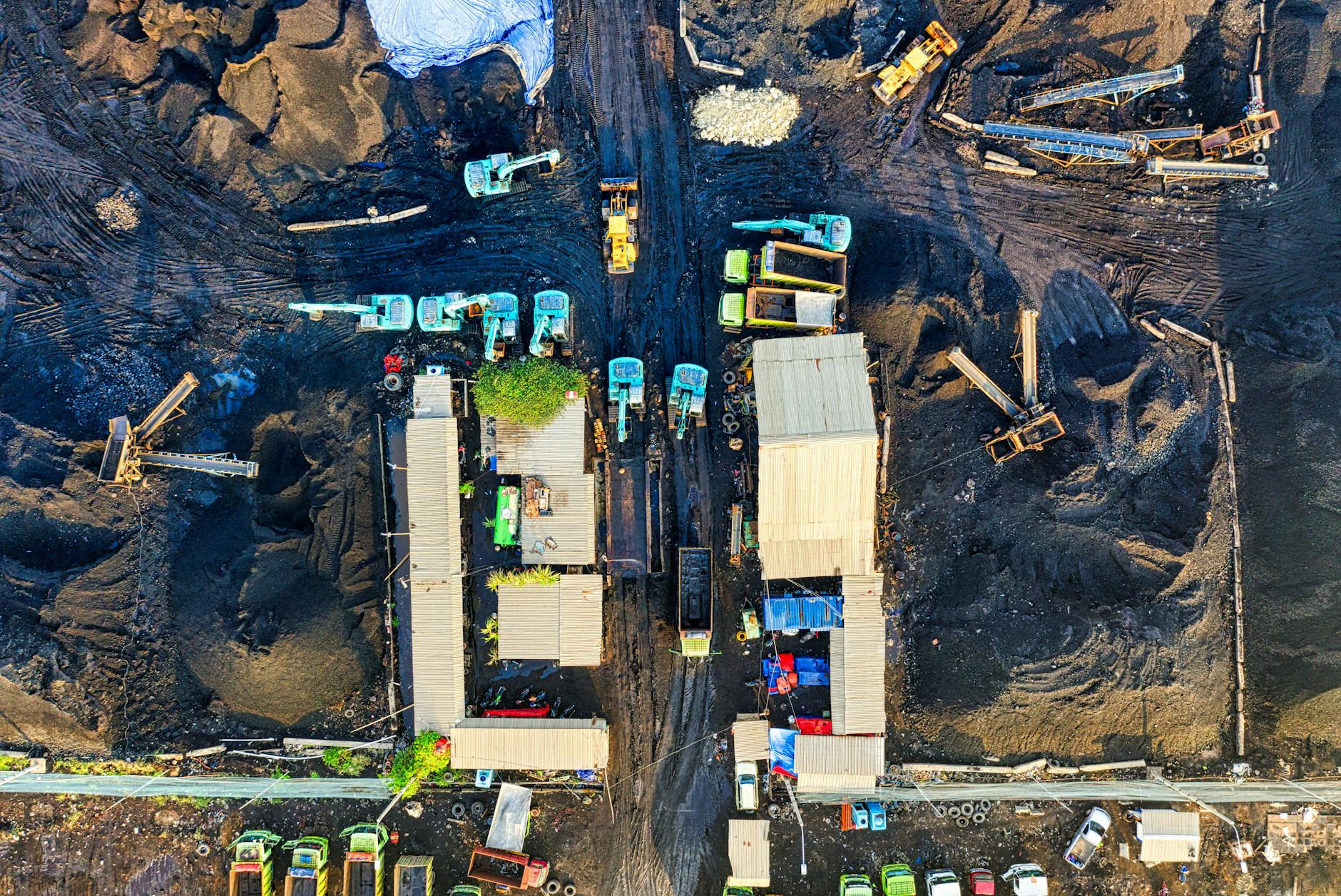
Indonesia confronts an intractable energy policy contradiction: its coal-dependent system is unsustainable, but the transition to LNG and renewables exceeds what its fiscal budget can afford. Without substantial increases in international climate finance, Indonesia cannot simultaneously maintain energy affordability for 97 million poor citizens, retire coal infrastructure, and meet Paris Agreement targets.
Indonesia faces a strategic energy policy contradiction that threatens both its fiscal stability and climate commitments. As the world’s largest coal exporter and a significant coal consumer domestically, Indonesia has committed to international climate targets while simultaneously struggling to afford the transition to liquefied natural gas (LNG) and renewable energy infrastructure. This tension reveals a fundamental challenge confronting middle-income nations in the Indo-Pacific: the cost of energy transition often exceeds what domestic budgets can sustain without external support.
Indonesia’s energy sector consumes approximately 35 percent of government spending on subsidies, with coal remaining the backbone of the nation’s 280 gigawatt electricity generation capacity. The country’s reliance on coal-fired power plants—which account for roughly 60 percent of electricity generation—has created an energy system optimized for low-cost domestic fuel extraction rather than diversified supply chains. This structural dependency creates a policy lock-in effect: shifting away from coal requires simultaneous investment in LNG infrastructure, renewable energy capacity, and grid modernization—costs that strain a government budget already pressured by infrastructure development demands and social spending obligations.
Proponents of energy diversification have suggested that Indonesia increase imports of U.S. liquefied natural gas as a transition fuel away from coal. However, this prescription fundamentally misunderstands Indonesia’s fiscal constraints. American LNG exports, priced on international spot markets and indexed to crude oil prices, cost substantially more than Indonesia’s domestically-mined coal. In 2023, LNG import costs for Southeast Asian buyers averaged $12-15 per million British thermal units (MMBtu), compared to domestic coal costs of $2-3 per MMBtu for Indonesian producers.
For a nation where 97 million people live below or near the poverty line, energy price increases translate directly into reduced purchasing power and increased poverty risk. Indonesia’s electricity tariffs are already subsidized at roughly 40 percent below cost-recovery rates. Replacing coal with imported LNG without corresponding tariff increases would deepen fiscal deficits; raising tariffs would trigger political backlash and social instability. The Indonesian government under President Joko Widodo (2014-2024) and his successor Prabowo Subianto faces an electorate sensitive to energy cost increases, having witnessed the 2005 fuel subsidy riots that destabilized the nation.
Indonesia’s energy infrastructure embeds coal dependency at multiple levels. The country operates 24 coal-fired power plants built between 2000 and 2020, with average operational lifespans of 40 years. These plants represent sunk capital investments totaling approximately $35 billion. Retiring these assets prematurely—before recovering capital costs—creates stranded asset problems that Indonesian state-owned enterprises (particularly PT PLN, the national utility) cannot absorb without government bailouts.
Additionally, Indonesia’s coal mining sector directly employs 500,000 workers, with an estimated 2-3 million indirect jobs in coal supply chains, port operations, and related industries. Rapid coal phase-out would require equivalent job creation in renewable energy sectors—a transition that typically requires 5-10 years and substantial retraining investment. The political economy of coal employment in regions like South Kalimantan and East Kalimantan creates powerful constituencies resistant to accelerated decarbonisation timelines.
The renewable energy alternative faces separate constraints. Indonesia’s solar and wind resources are geographically dispersed across an archipelago of 17,000 islands. Building the transmission infrastructure to connect renewable generation in eastern Indonesia to demand centers in Java requires estimated investments of $40-60 billion over the next decade. Current renewable energy capacity stands at only 12 percent of total generation, requiring a doubling of renewable infrastructure within 10 years to meet Indonesia’s 2030 emissions reduction targets under the Paris Agreement.
Indonesia has committed to reducing greenhouse gas emissions by 29 percent below 2020 baseline levels by 2030, with conditional commitments reaching 41 percent reductions with international support. However, these targets assumed access to international climate finance that has not materialized at promised scales. The Green Climate Fund has allocated only $1.2 billion to Indonesia since 2015—insufficient for the $300+ billion transition costs estimated by the International Energy Agency.
This financing gap creates a credibility problem. Indonesia cannot simultaneously maintain coal-dependent electricity systems, control energy costs for poor households, and meet international climate targets without either: (1) substantial increases in international climate finance; (2) debt-financed investment in renewable infrastructure; or (3) acceptance of higher energy costs that reduce living standards for vulnerable populations.
The government’s current strategy—gradual coal phase-out with coal-to-gas transitions and selective renewable investment—represents a compromise that satisfies no stakeholder completely. International climate advocates view it as insufficient; coal-dependent regions view it as threatening; fiscal conservatives view it as unaffordable; and the poor view it as indifferent to energy affordability.
Indonesia’s energy dilemma has regional consequences. As the largest economy in Southeast Asia and a founding member of ASEAN, Indonesia’s energy policy influences regional energy markets, carbon pricing mechanisms, and climate diplomacy. If Indonesia cannot afford rapid energy transition, this signals similar constraints across the region. Vietnam, Thailand, and the Philippines face comparable coal dependencies and fiscal constraints.
The failure to develop affordable transition pathways risks either: (1) stalled progress on Paris Agreement commitments, undermining global climate credibility; or (2) energy poverty deepening if rapid transitions are imposed without compensatory mechanisms. Either outcome destabilizes the region’s development trajectory.
Indonesia’s energy future will not be determined by the relative merits of coal versus LNG versus renewables in abstract terms. It will be determined by the intersection of three hard constraints: fiscal sustainability, political economy, and the pace of international climate finance. The current policy framework—which implicitly assumes gradual coal retirement while maintaining energy affordability and meeting climate targets—is not internally consistent given resource constraints.
Resolution requires either: substantial increases in concessional climate finance (grants rather than loans) to fund renewable infrastructure; acceptance of higher energy costs as a price of decarbonisation; or extension of coal phase-out timelines beyond 2030 targets. The Indonesian government must explicitly choose among these options rather than attempting to pursue all three simultaneously. Until that choice is made transparent and resourced accordingly, Indonesia will remain locked in an energy transition that is neither affordable nor achievable.