Physical Address
304 North Cardinal St.
Dorchester Center, MA 02124
Physical Address
304 North Cardinal St.
Dorchester Center, MA 02124
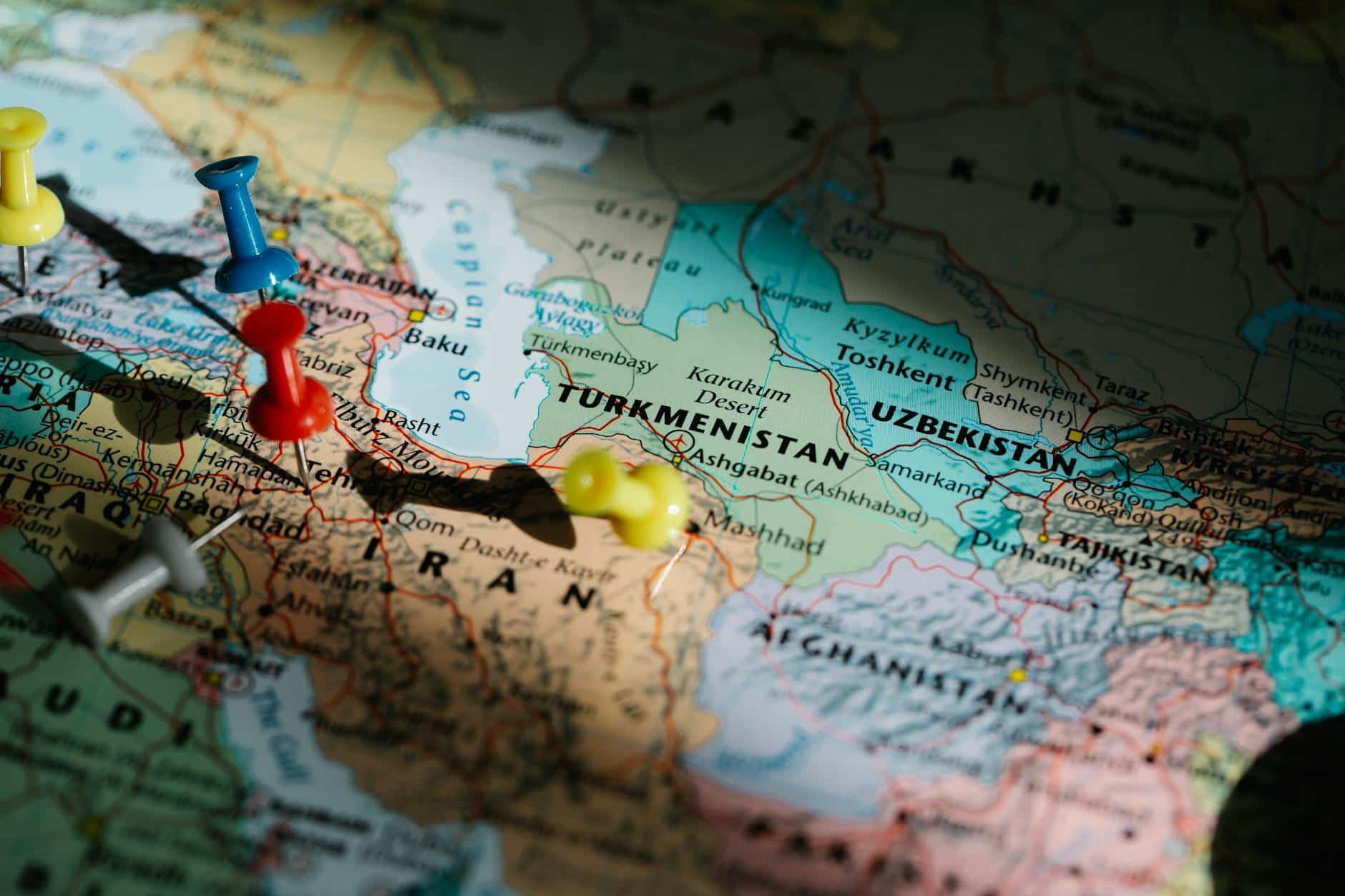
Central Asian states face mounting pressure from Middle East escalation, threatening energy security, fueling extremism risks, and complicating great power balancing acts. Kazakhstan, Uzbekistan, and neighboring capitals must strengthen institutional capacity and economic resilience to weather potential spillover effects.
The escalation of Middle East tensions presents a complex challenge for Central Asian states, whose geopolitical calculations have long depended on a relatively stable international order. Kazakhstan, Uzbekistan, Turkmenistan, Tajikistan, and Kyrgyzstan occupy a strategic position between Russia, China, and the broader Muslim world, making them acutely sensitive to disruptions in Middle Eastern affairs. Unlike Indo-Pacific nations with direct maritime interests, Central Asian states face indirect but consequential risks: energy market volatility, refugee flows, radicalization pathways, and shifting great power alignments that could reshape regional security dynamics.
The potential for a broader Middle East conflict introduces unpredictability precisely when Central Asian governments are attempting to balance competing interests from Moscow, Beijing, and Washington. This instability threatens the delicate equilibrium these states have maintained since independence in 1991.
Central Asian economies remain heavily dependent on hydrocarbon exports and transit revenues. Kazakhstan, the region’s largest economy with GDP exceeding $500 billion USD, derives significant revenue from oil and gas exports through pipelines that traverse the Caspian Sea and connect to global markets. Middle East instability directly impacts global energy prices; a major regional conflict could trigger oil price spikes that would simultaneously benefit some Central Asian producers while destabilizing global markets that these landlocked economies depend upon.
Uzbekistan, under President Shavkat Mirziyoyev’s reform agenda since 2016, has pursued economic diversification but remains vulnerable to commodity price shocks. The Caspian Pipeline Consortium and the Baku-Tbilisi-Ceyhan pipeline represent critical infrastructure through which Central Asian energy transits. Any disruption to Middle Eastern supply chains could create secondary effects on Central Asian export revenues and foreign currency reserves.
Beyond energy, Central Asia’s limited manufacturing base and dependence on Russian and Chinese markets means regional economies lack buffers against international economic turbulence. A prolonged Middle East conflict could trigger capital flight from emerging markets, directly affecting Central Asian currencies and investment flows.
Central Asian governments face a historical vulnerability to Islamist extremism. The Islamic State of Khorasan Province (ISKP), which operates across Afghanistan and Central Asia, has demonstrated capacity to conduct attacks in the region. A broader Middle East conflict risks radicalizing recruitment networks and creating ungoverned spaces where extremist organizations can consolidate power. Tajikistan and Kyrgyzstan, already burdened by their own border conflict that has claimed thousands of lives since 2020, cannot afford simultaneous security pressures from transnational extremist groups.
Refugee flows present a secondary concern. Afghanistan’s instability since the Taliban takeover in August 2021 has already created displacement pressures. A major Middle East war could trigger additional migration waves through Central Asia toward Russia or China, straining border management capacity and creating humanitarian crises that exceed these states’ institutional capacity to manage.
Kazakhstan’s National Security Committee and Uzbekistan’s State Security Service have invested heavily in counterterrorism operations, but these agencies operate with limited resources compared to Western equivalents. A spike in extremist activity would stretch already-thin security apparatus.
Central Asian states maintain pragmatic relationships with Russia, China, and the West through institutions like the Shanghai Cooperation Organization (SCO) and the Collective Security Treaty Organization (CSTO). Middle East escalation complicates these balancing acts by forcing clearer alignment choices.
Russia, already committed militarily in Ukraine, faces pressure to manage its Middle East interests (particularly in Syria) while sustaining its Central Asian sphere of influence. China, dependent on Middle Eastern energy and invested in Gulf state partnerships through Belt and Road Initiative projects, must calibrate its response carefully. The United States, despite limited direct presence in Central Asia, maintains strategic interests in the region through NATO partnerships in Afghanistan’s aftermath and counterterrorism cooperation.
For Kazakhstan and Uzbekistan, which have pursued multi-vector foreign policies to avoid excessive dependence on any single power, Middle East conflict creates pressure toward forced choices. The SCO, which includes Russia, China, Iran, and Central Asian states, could fracture along fault lines if Middle East tensions translate into broader geopolitical realignment.
Central Asian regional institutions remain weak. The Central Asian Union, established in 1994, has limited operational capacity. Border disputes between Tajikistan and Kyrgyzstan have consumed significant diplomatic and military resources; the two nations fought a major conflict in September 2022 that killed over 100 soldiers. This internal fragmentation limits Central Asia’s collective capacity to respond to external shocks.
Turkmenistan’s strategic autonomy and historical reluctance to participate in collective security arrangements further constrains regional coordination. While Kazakhstan and Uzbekistan have attempted to strengthen intra-regional cooperation under the C5+1 framework (Central Asia plus the United States), these mechanisms lack enforcement capacity or rapid response capability for security crises.
The absence of robust regional institutions means Central Asian states respond individually to external pressures, reducing their collective leverage and increasing vulnerability to divide-and-conquer strategies by larger powers.
Central Asian governments should anticipate three primary scenarios: (1) a contained Middle East conflict with manageable spillover effects; (2) a prolonged regional war creating sustained economic disruption and refugee pressure; or (3) a broader great power confrontation that forces explicit alignment choices incompatible with multi-vector foreign policies.
The optimal policy response involves strengthening economic resilience through diversification, enhancing border security infrastructure, and deepening cooperation with neighboring states on counterterrorism and refugee management. Kazakhstan and Uzbekistan should pursue expanded partnerships with non-aligned nations and strengthen ties to European markets to reduce overdependence on Russian and Chinese economic relationships.
Central Asian policymakers must recognize that their region’s stability is not determined solely by regional factors. Middle East escalation demonstrates how distant conflicts generate cascading effects through energy markets, extremist networks, and great power competition. Without proactive institutional strengthening and strategic foresight, Central Asian states risk becoming collateral damage in conflicts originating far from their borders.