Physical Address
304 North Cardinal St.
Dorchester Center, MA 02124
Physical Address
304 North Cardinal St.
Dorchester Center, MA 02124

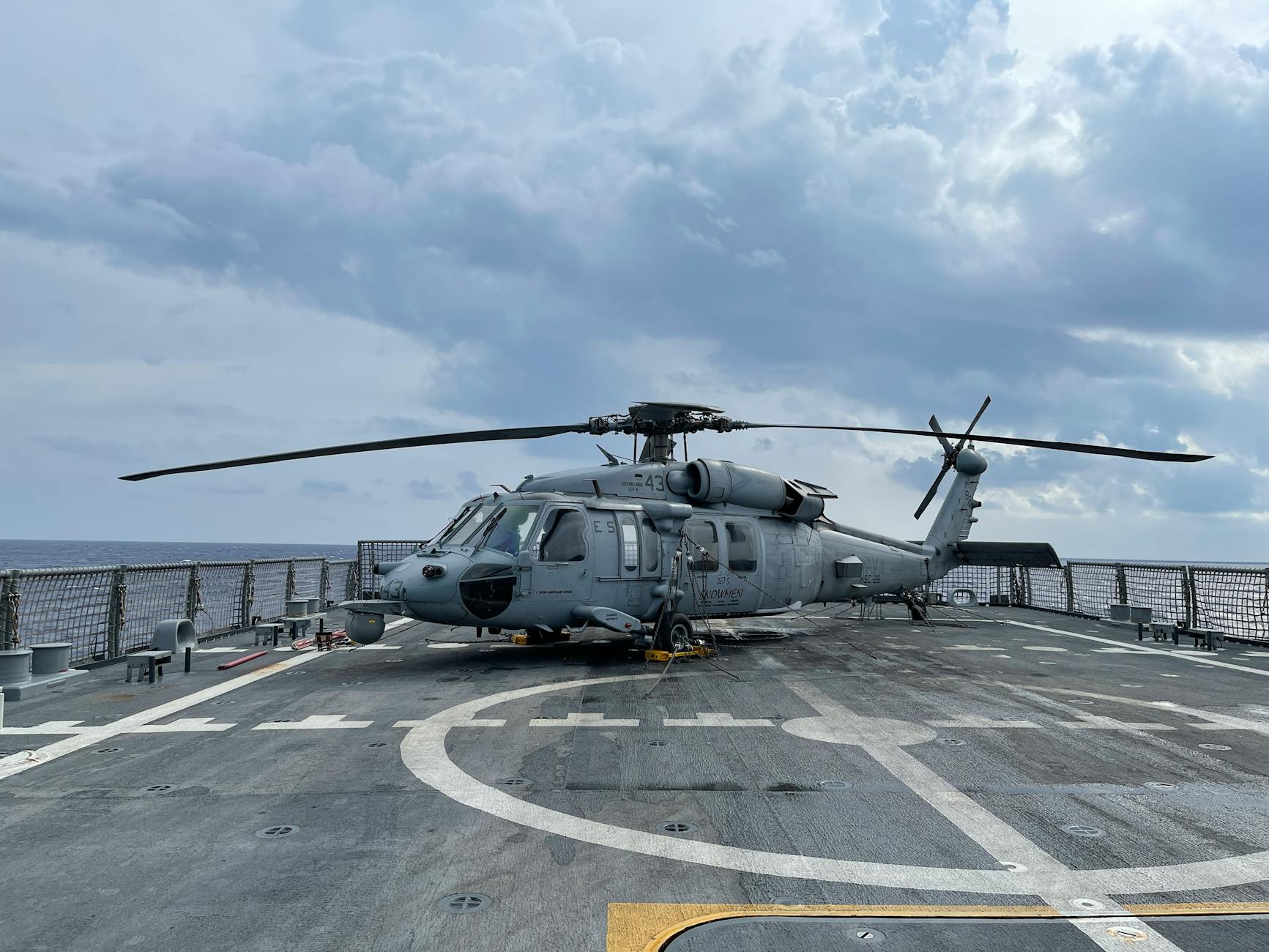
The U.S. and Israeli military strikes on Iran revealed the limits of China's economic-focused Middle East strategy. This experience carries critical implications for Beijing's ability to translate economic dominance into strategic outcomes across the Indo-Pacific.
The October 2024 Israeli and U.S. military strikes against Iranian targets exposed a fundamental constraint in Beijing’s approach to great power competition: economic and diplomatic influence, however substantial, cannot substitute for credible military capability when state interests face direct challenge. China’s carefully constructed Middle East strategy—built on economic integration through Belt and Road Initiative projects, energy partnerships, and diplomatic neutrality—proved unable to prevent or meaningfully shape the course of military escalation between Washington, Jerusalem, and Tehran. This asymmetry carries significant implications for how Beijing might assess its strategic position across the Indo-Pacific, where the balance between economic interdependence and military deterrence remains equally contested.
Over the past decade, China has methodically constructed what analysts characterize as a “soft power” architecture in the Middle East. Beijing invested heavily in regional infrastructure projects, secured energy supply agreements worth hundreds of billions of dollars, and positioned itself as a neutral diplomatic actor willing to engage all regional parties. The 2023 Iran-Saudi Arabia rapprochement, brokered by Chinese diplomacy in Beijing, exemplified this approach: China achieved a major diplomatic victory without deploying military assets or threatening force.
This strategy reflected a deliberate choice. China maintains no permanent military bases in the Middle East comparable to U.S. Fifth Fleet operations or regional air bases. Chinese naval presence in the region, while growing, remains episodic rather than institutionalized. Beijing’s leverage derived from its role as a critical energy market for regional producers, its willingness to finance infrastructure Beijing’s Middle East strategy relied on the assumption that economic interdependence and diplomatic engagement would provide sufficient influence to protect Chinese interests and shape regional outcomes. The logic was straightforward: states dependent on Chinese markets and investment would prove receptive to Chinese preferences.
The October strikes demonstrated the fragility of this assumption. When the United States and Israel determined that military action served their interests, neither Beijing’s economic leverage nor its diplomatic standing provided meaningful constraint or negotiating power. China was not consulted. Chinese protests were noted and disregarded. The strikes proceeded without modification based on Beijing’s preferences, and China possessed no military capability to deter or complicate the operation.
This outcome reveals a critical distinction in international relations: economic influence operates within a security framework established by military power. When that framework shifts—when military actors believe their security interests override economic considerations—the hierarchy of power reasserts itself. The U.S. and Israeli assessment that striking Iranian military and nuclear facilities served their security imperatives overrode any economic calculation about disrupting Middle Eastern stability or damaging relations with Beijing.
The Middle East experience carries direct relevance to Beijing’s strategic position in the Indo-Pacific, where China faces a different but analogous challenge: translating economic dominance into political and strategic outcomes against a U.S.-led security architecture.
China’s economic integration with Indo-Pacific states—particularly Australia, Vietnam, South Korea, and ASEAN members—far exceeds its military presence or capability to defend regional partners. Beijing has leveraged trade relationships, investment flows, and infrastructure projects to cultivate political influence and constrain regional alignment with U.S. security arrangements. This strategy proved partially successful: Australia’s economic dependence on Chinese markets created domestic political pressure against closer defense ties with Washington; Vietnam balances Chinese economic integration with strategic hedging; ASEAN maintains official non-alignment despite deepening Chinese economic penetration.
However, the Middle East precedent suggests this leverage has structural limits. When military security concerns become acute—as they have in the Taiwan Strait, the South China Sea, and around the Korean Peninsula—economic interdependence may prove insufficient to alter state behavior. Australia’s 2021 pivot toward AUKUS (Australian-United Kingdom-United States security partnership) despite significant economic costs from Chinese trade restrictions demonstrated this principle: security considerations can override economic rationality when states perceive existential threats.
China’s military modernization over the past two decades has been substantial: the People’s Liberation Army Navy now operates over 350 vessels compared to approximately 290 for the U.S. Navy; Chinese missile capabilities have advanced significantly; air force modernization continues. Yet these capabilities remain concentrated in the Western Pacific and remain untested in actual combat against advanced peer competitors. In contrast, the U.S. military has demonstrated operational capability repeatedly across multiple theaters. This credibility differential matters strategically.
Regional states assessing security partnerships must evaluate not merely the size of military forces but their demonstrated effectiveness and reliability. The U.S. military’s track record of sustained operations, logistical sophistication, and technological integration carries weight that numerical superiority alone cannot match. China’s inability to project power effectively beyond the First Island Chain—the line extending from Japan through the Philippines to Borneo that defines the outer boundary of China’s immediate maritime sphere—contrasts with U.S. global reach.
The Middle East strikes illustrate a broader principle that Beijing must reckon with: great power competition ultimately rests on military capacity and willingness to employ it. Economic leverage creates dependencies and shapes incentives, but it cannot substitute for credible military deterrence when fundamental security interests diverge.
This assessment does not suggest that economic tools lack strategic value. Rather, it clarifies their role: economic influence operates most effectively when underpinned by military credibility. China’s economic dominance in the Indo-Pacific gains strategic effect precisely because Beijing has invested in military modernization. Conversely, Beijing’s inability to project military power into the Middle East constrained its ability to translate economic influence into political outcomes.
For regional states in the Indo-Pacific, this dynamic creates a complex calculus. Deepening economic ties with China offer tangible benefits in trade, investment, and infrastructure development. Yet these benefits must be weighed against security concerns about Chinese military expansion and the credibility of U.S. security guarantees. States cannot assume that economic integration with Beijing will insulate them from military coercion if political circumstances shift.
The Middle East experience suggests several likely developments in Indo-Pacific strategic competition:
The fundamental lesson from the Middle East for Indo-Pacific strategy is clear: military power remains the ultimate arbiter of strategic outcomes. Economic influence matters, but only within constraints set by military capability. Beijing’s challenge is to close the military credibility gap while maintaining economic leverage—a task complicated by geographic distance, technological gaps, and the demonstrated willingness of the United States to employ force when it assesses vital interests at stake. For Indo-Pacific states, the implication is equally straightforward: security partnerships with credible military backing retain strategic primacy over economic relationships, particularly when those relationships conflict with fundamental security concerns.