Physical Address
304 North Cardinal St.
Dorchester Center, MA 02124
Physical Address
304 North Cardinal St.
Dorchester Center, MA 02124

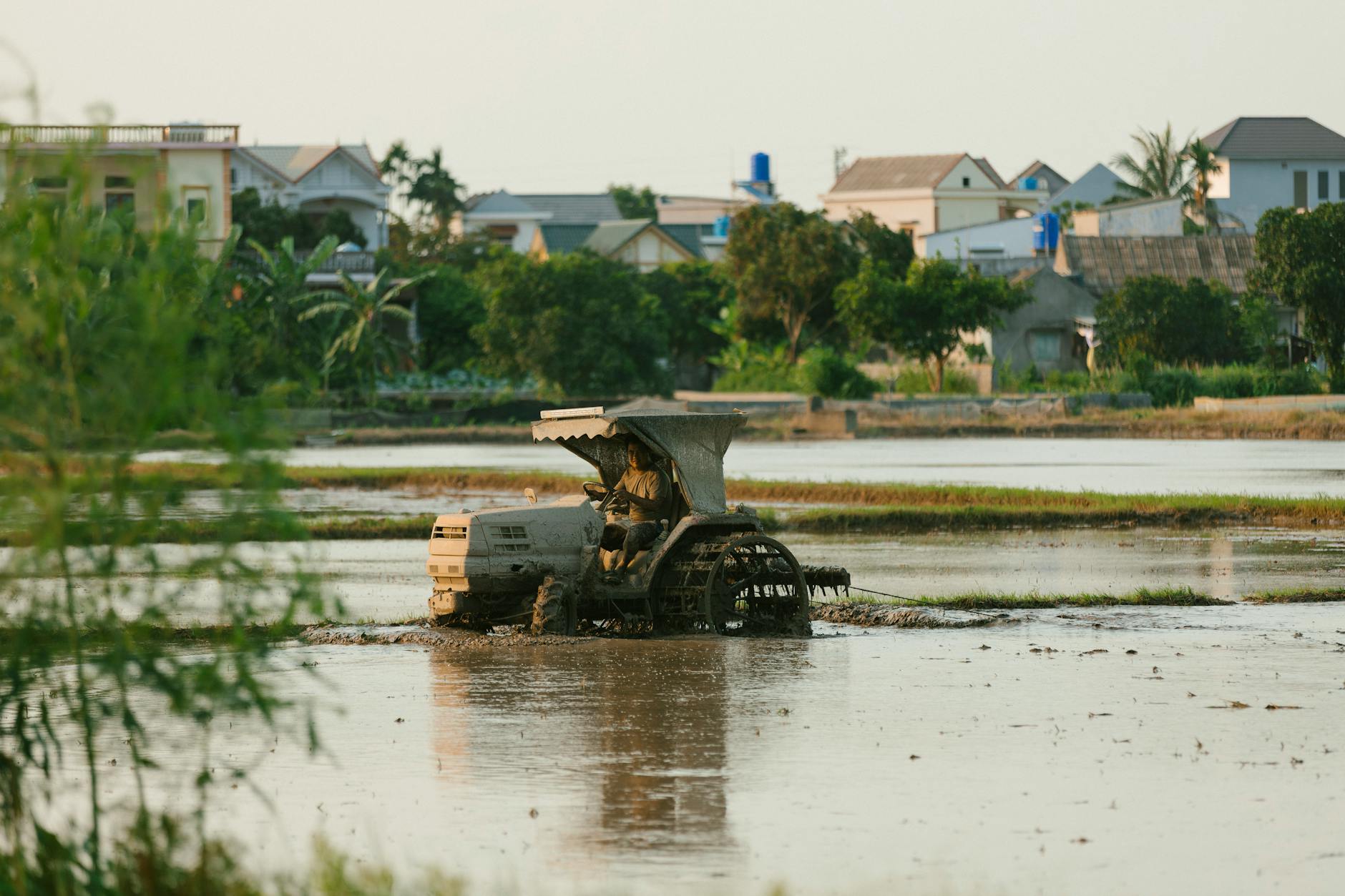
A sustained Middle East conflict could trigger an energy crisis with cascading effects on Southeast Asia's food systems. Historical precedent from 2008 demonstrates how oil price spikes compress agricultural margins, reduce fertiliser availability, and ultimately threaten social stability across the region's most populous nations.
Southeast Asia faces a distinctive vulnerability in the current Middle East security environment. Unlike developed economies with strategic petroleum reserves and diversified energy portfolios, the region’s ten ASEAN nations depend heavily on uninterrupted global energy supplies to sustain both industrial production and agricultural systems. A sustained disruption to Middle Eastern oil exports would trigger not merely an energy crisis, but a cascade of interconnected shocks affecting food production, fertiliser availability, and ultimately social stability across the region.
This vulnerability reflects structural realities rather than speculative risk. Southeast Asia accounts for approximately 8-9% of global oil consumption, with countries like Thailand, Vietnam, and Indonesia operating energy-intensive manufacturing sectors and agriculture-dependent economies. The region imports roughly 75% of its petroleum requirements, with significant volumes transiting through the Strait of Hormuz—the world’s most critical chokepoint, through which approximately 21% of global petroleum passes annually.
The analytical pathway from energy disruption to food crisis operates through multiple channels. First, elevated oil prices directly increase the cost of agricultural inputs. Fertiliser production—particularly ammonia-based nitrogen fertilisers—is energy-intensive; a 50% spike in crude oil prices historically correlates with 30-40% increases in fertiliser costs within 2-3 months. For Southeast Asian farmers operating on thin margins, this creates immediate production constraints.
Second, fuel costs for transportation and mechanisation compress agricultural yields. Vietnam, Thailand, and the Philippines rely on diesel-powered irrigation systems, mechanised harvesting, and cold-chain logistics for rice, corn, and vegetable production. A sustained oil price elevation above $100-120 per barrel—the threshold at which Southeast Asian agricultural systems show measurable stress—forces farmers to reduce input intensity or abandon marginal lands entirely.
Third, and most critically, Southeast Asia is a net food exporter whose export competitiveness depends on cost efficiency. Vietnam ranks as the world’s third-largest rice exporter; Thailand is the fifth. When production costs rise faster than global commodity prices, export-oriented farmers face margin compression. This typically manifests as reduced planted acreage and lower yields within 1-2 growing seasons.
Southeast Asia experienced this exact mechanism during the 2007-2008 period. Crude oil prices rose from $65 in January 2007 to $147 in July 2008, driven by geopolitical tensions, supply constraints, and speculative demand. Fertiliser prices spiked 300% in the same window. The result: rice prices in Thailand and Vietnam increased 150-200%, export restrictions were imposed by multiple governments, and regional food inflation triggered social unrest in Indonesia, the Philippines, and Vietnam.
The 2008 episode demonstrated that Southeast Asia’s food security is not primarily constrained by absolute production capacity but by the cost structure of that production. When energy costs rise sharply, the region’s ability to feed itself and export competitively deteriorates rapidly. Urban populations in Indonesia (270+ million), the Philippines (115+ million), and Vietnam (98+ million) are particularly exposed to food price shocks, given that lower-income households spend 50-60% of income on food.
Southeast Asia’s vulnerability has arguably increased since 2008 in several dimensions. Agricultural productivity growth has slowed; mechanisation has expanded, raising energy intensity; and global fertiliser supply chains have become more concentrated and fragile, as demonstrated by the 2022 supply shock following Russia’s invasion of Ukraine. In 2022, fertiliser prices spiked 80-120% in Southeast Asia, directly contributing to reduced planting in Vietnam and Thailand.
Additionally, the region’s energy import dependency has not decreased. Indonesia remains a net energy exporter but faces declining domestic oil production (from 1.6 million barrels per day in 2010 to approximately 0.7 million barrels per day in 2023). Thailand, Vietnam, and the Philippines have no meaningful domestic oil reserves. This structural dependency means that any sustained disruption to Middle Eastern supplies cannot be rapidly offset by alternative sources or domestic production.
The political economy dimension compounds this risk. Indonesia, the Philippines, and Vietnam have all experienced food price-driven social unrest in the past two decades. Governments in these countries maintain price controls or subsidies on rice and fuel, which become fiscally unsustainable during commodity shocks. The 2008 crisis forced Indonesia to increase fuel subsidies by over $5 billion, straining public finances. In the current environment, where many Southeast Asian governments face elevated debt levels post-COVID, the fiscal space to absorb food price shocks has contracted.
A sustained Middle East conflict would interact with Southeast Asia’s existing governance challenges. Food price inflation historically precedes political instability in the region. The 2008 crisis contributed to the Thai military coup of 2006 context and broader regional unrest. In the Philippines, food security concerns intersect with ongoing insurgency and governance challenges in Mindanao. In Indonesia, food price shocks disproportionately affect the eastern provinces, where governance capacity is weakest.
Furthermore, energy-driven food insecurity could accelerate irregular migration within and from Southeast Asia. The region already experiences significant internal displacement and cross-border migration linked to economic stress. A food crisis scenario would likely increase migration pressure toward Malaysia, Singapore, and Thailand, creating secondary political tensions and humanitarian challenges.
The risk assessment for Southeast Asia is not speculative. The region faces a measurable vulnerability chain: Middle East disruption → oil price spike → fertiliser cost inflation → agricultural production decline → food price inflation → social and political instability. This chain has operated before and the structural conditions enabling it remain in place or have worsened.
Effective mitigation requires action across multiple policy domains. At the national level, Southeast Asian governments should prioritise agricultural input security through strategic fertiliser reserves and diversified supply sourcing (reducing dependence on Russian and Chinese suppliers). Energy efficiency improvements in agriculture, including irrigation technology upgrades and reduced-input farming practices, should be incentivised. Strategic grain reserves—which most Southeast Asian countries maintain at inadequate levels—require expansion and credible management frameworks.
Regionally, ASEAN should develop coordinated food security protocols, including information-sharing on production and supply constraints and mechanisms for intra-regional food trade during crises. The ASEAN+3 framework, which includes China, Japan, and South Korea, has the capacity to function as a stabilising mechanism, but requires political will to activate during crises.
The current Middle East environment underscores that Southeast Asia’s food security is not primarily an agricultural or climate question but a geopolitical one. The region’s prosperity and stability depend on uninterrupted access to global energy markets at manageable prices. This reality should shape strategic planning and investment priorities across the next 5-10 years.