Physical Address
304 North Cardinal St.
Dorchester Center, MA 02124
Physical Address
304 North Cardinal St.
Dorchester Center, MA 02124
Japan, South Korea, and the United States are constructing a practical technological alliance focused on semiconductor supply chains, export controls, and research coordination. This represents a strategic recalibration designed to reduce dependence on China in critical industries.
The trilateral relationship between Japan, South Korea, and the United States has entered a new phase of strategic cooperation, moving beyond traditional security partnerships to establish what amounts to a technological and economic alliance designed to secure competitive advantage in critical industries. This shift reflects a pragmatic response to China’s dominance in semiconductors, rare earth elements, and advanced manufacturing—sectors that increasingly determine great power competition in the Indo-Pacific.
The alliance is not merely rhetorical. Japan, under Prime Minister Fumio Kishida, South Korea under President Yoon Suk Yeol, and the United States under the Biden administration have begun coordinating supply chain policies, research partnerships, and export controls with unprecedented specificity. This represents a departure from post-Cold War frameworks that treated technology and security as separate policy domains.
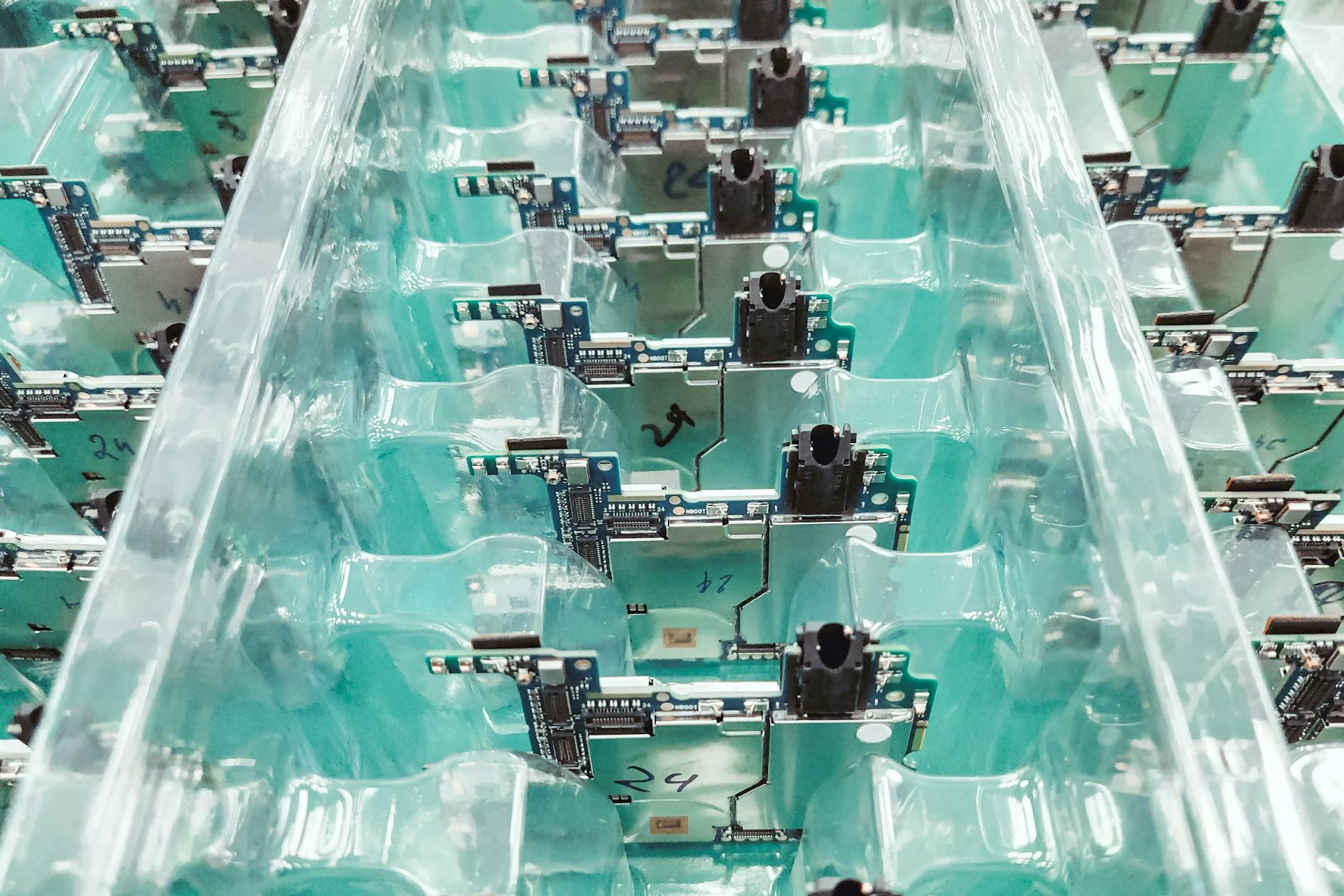
The semiconductor sector exemplifies the alliance’s practical focus. Taiwan produces over 60% of the world’s semiconductors and 92% of advanced chips, creating a critical vulnerability that all three nations acknowledge. Rather than compete for Taiwan’s output, the trilateral partners are investing in redundant manufacturing capacity within their own territories.
South Korea’s Samsung and SK Hynix dominate memory chip production, while Japan controls 70% of semiconductor manufacturing equipment and critical materials supply. The United States, through the CHIPS and Science Act signed in August 2022, committed $52 billion to domestic semiconductor manufacturing. By aligning these capabilities rather than fragmenting them, the three nations are constructing a supply chain architecture that reduces dependence on any single geography.
This coordination extends to rare earth elements and battery materials—sectors where China controls 80% of global processing capacity for rare earths and dominates lithium refining. Japan and South Korea have begun diversifying sourcing to Australia, Indonesia, and Vietnam, with US backing for financing and strategic coordination.
A second pillar of the alliance involves harmonizing export control regimes. The US has implemented increasingly restrictive controls on advanced semiconductor exports to China, particularly through the Commerce Department’s October 2022 rule limiting sales of chips designed for artificial intelligence and supercomputing. Japan and South Korea initially resisted similar restrictions, citing economic interests, but have gradually aligned their policies.
South Korea’s decision in December 2023 to tighten controls on semiconductor manufacturing equipment exports to China marked a significant convergence. Japan had already restricted exports of fluorine-based chemicals essential to chip production. These moves are not coordinated through formal treaties but through bilateral consultations and multilateral forums like the Quad (Quadrilateral Security Dialogue), where technology security increasingly features alongside traditional military concerns.
The alignment is incomplete and contested. South Korean semiconductor companies, particularly Samsung, derive 30-40% of revenue from the Chinese market. Excessive export restrictions risk economic retaliation or Chinese efforts to develop alternative suppliers. This creates persistent friction within the alliance, requiring constant calibration between security imperatives and commercial interests.
Beyond supply chains and exports, the three nations are establishing joint research initiatives in quantum computing, artificial intelligence, and advanced materials. The US National Science Foundation has expanded partnerships with Japanese and South Korean research institutions, while private sector collaboration between companies like Intel, Samsung, and Tokyo Electron has accelerated.
A critical but underappreciated dimension is talent mobility. The US has historically attracted top researchers from Japan and South Korea, but recent policies—including the Trump-era restrictions on Chinese researchers—have created a more selective environment. The trilateral alliance is facilitating intra-alliance researcher exchanges while restricting knowledge transfer to China. This represents an implicit technology sphere of influence, where the three nations treat human capital flows as strategic assets.
The alliance’s foundation is clear: China’s technological advances, particularly in artificial intelligence, quantum computing, and autonomous systems, pose a strategic challenge to all three nations. The US faces competition for global technological leadership. Japan and South Korea face both competitive pressure from Chinese firms and security concerns about Chinese military modernization enabled by advanced technology.
However, the alliance operates within significant constraints. South Korea shares a 248-kilometer border with North Korea and remains dependent on US security guarantees, limiting its willingness to provoke China economically. Japan faces similar pressures, with China as its largest trading partner outside the US. Both nations require Chinese cooperation on regional issues, from North Korean denuclearization to maritime disputes.
The alliance also lacks institutional depth. Unlike NATO, there is no formal treaty structure, integrated command, or binding dispute resolution mechanism. Disagreements over semiconductor export timing, battery supply chain standards, or AI regulation research priorities could fracture coordination. The Biden administration’s “friend-shoring” strategy assumes allied cohesion that remains contingent on US commitment and Chinese restraint.
The Japan-South Korea-US techno-alliance represents a durable shift in Indo-Pacific strategy, but not an unbreakable one. The three nations have aligned interests in semiconductor security, export control coordination, and research protection that will persist regardless of which political leaders hold office. However, the alliance’s effectiveness depends on three conditions:
The alliance will likely expand to include Taiwan (informally), Australia, and the Netherlands—all critical to semiconductor supply chains. The Quad’s technology working group may formalize into something resembling a technology security organization, though probably not named as such to avoid explicit China-containment framing.
What distinguishes this alliance from Cold War technology blocs is its focus on economic security and supply chain resilience rather than ideological alignment. Japan, South Korea, and the US remain capitalist democracies, but the alliance’s logic is not democratic values versus authoritarianism—it is technological sovereignty and supply chain independence. This narrower framing makes the alliance more durable against ideological shifts but also more vulnerable to economic incentives that might pull member states toward China.