Physical Address
304 North Cardinal St.
Dorchester Center, MA 02124
Physical Address
304 North Cardinal St.
Dorchester Center, MA 02124

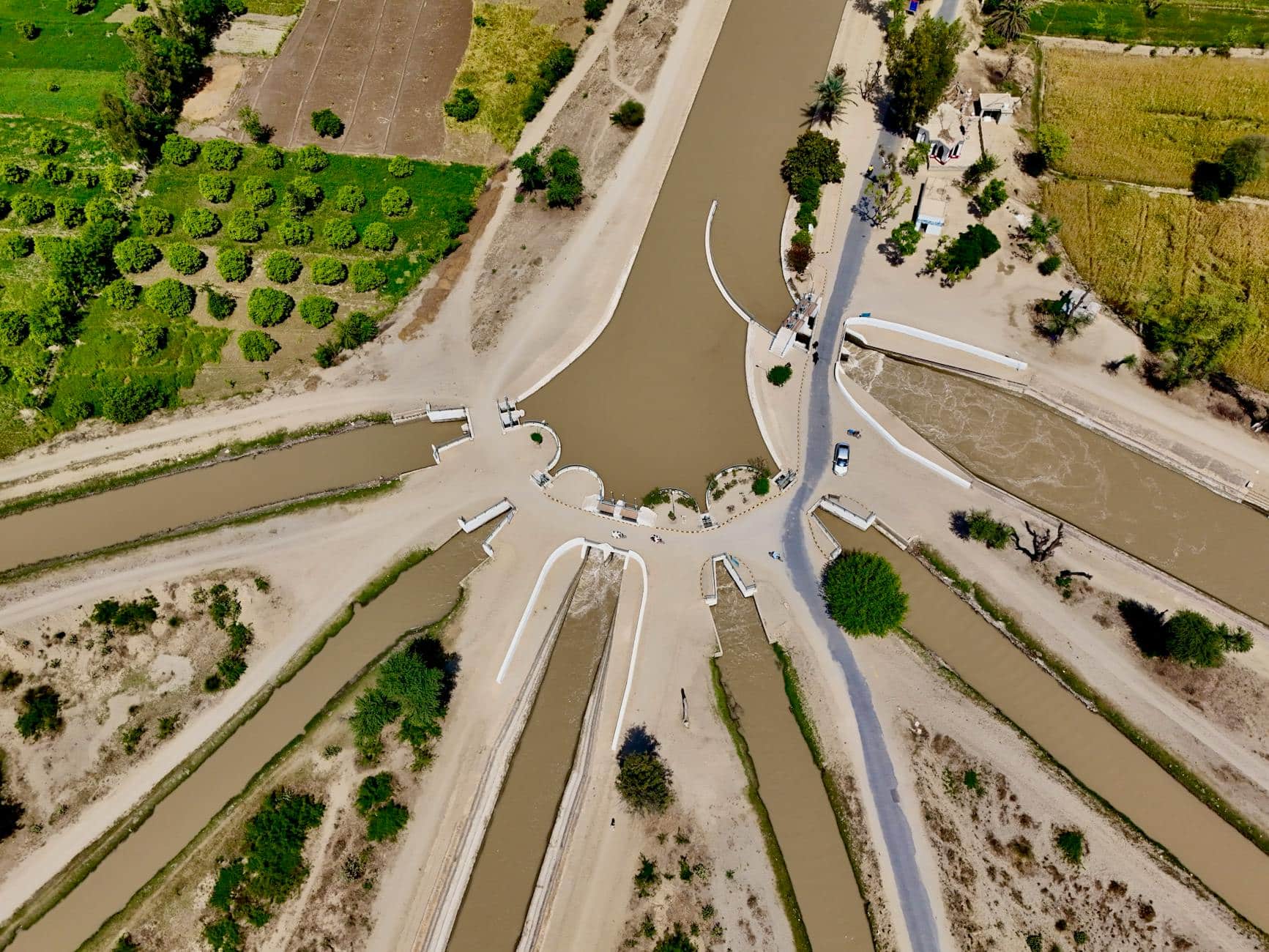
The Aral Sea's catastrophic collapse from deliberate water diversion reveals how resource mismanagement generates cascading geopolitical crises. Partial recovery efforts in Kazakhstan offer lessons for Indo-Pacific transboundary water governance amid rising competition for shared rivers.
The Aral Sea represents one of the most catastrophic environmental failures of the modern era. Once the world’s fourth-largest inland sea, spanning approximately 68,000 square kilometers across Kazakhstan and Uzbekistan, the Aral Sea has shrunk to less than 10 percent of its original surface area since the 1960s. This environmental disaster did not occur through natural processes but through deliberate Soviet-era irrigation policies that diverted the Amu Darya and Syr Darya rivers to support cotton cultivation in Uzbekistan and Turkmenistan. The consequences extend far beyond ecological damage, creating a template for understanding how resource mismanagement generates cascading geopolitical, economic, and humanitarian crises across regions sharing transboundary water systems.
The Aral Sea’s decline accelerated dramatically between 1960 and 1990, when Soviet planners prioritized cotton production as a strategic export commodity. The diversion of approximately 90 percent of inflow waters transformed the sea into a shrinking saltwater lake, with salinity levels rising from 10 grams per liter to over 100 grams per liter in some sections. This environmental engineering decision reflected a Cold War-era calculus that prioritized short-term economic outputs over long-term resource sustainability—a pattern that continues to influence Central Asian water politics today.
The ecological consequences proved irreversible within a generation. Fish stocks, which once supported a commercial fishing industry employing tens of thousands, collapsed entirely by the 1980s. The exposed seabed—now covering an area larger than the state of Vermont—became a source of salt and dust storms that contaminated agricultural lands across Central Asia and contributed to regional air quality degradation. The Aral Sea region experienced a documented increase in respiratory diseases, particularly among children, with studies linking environmental contamination to elevated rates of tuberculosis and kidney disease in Kazakhstan and Uzbekistan.
The Aral Sea crisis illustrates the political fragility of water-sharing arrangements in Central Asia. When the Soviet Union dissolved in 1991, five newly independent states—Kazakhstan, Uzbekistan, Turkmenistan, Tajikistan, and Kyrgyzstan—inherited a shared water infrastructure designed for a centralized system that no longer existed. Upstream nations, particularly Tajikistan and Kyrgyzstan, control approximately 60 percent of Central Asia’s water resources through their mountainous terrain and glacial systems. Downstream nations, especially Uzbekistan and Turkmenistan, depend on irrigation for agricultural survival.
This structural asymmetry has generated persistent tensions. Uzbekistan, under the long rule of Islam Karimov (1991-2016) and continuing under his successor Shavkat Mirziyoyev, has consistently opposed upstream dam construction projects that would reduce water availability during irrigation seasons. Tajikistan’s Rogun Dam, designed to generate hydroelectric power, remains a point of contention because it would alter seasonal water flows critical to Uzbek cotton production. These disputes have occasionally escalated to military confrontations, including border skirmishes in 2021 and 2022 between Tajikistan and Kyrgyzstan that killed hundreds of soldiers and displaced tens of thousands of civilians.
The Aral Sea’s collapse demonstrates that unilateral resource management decisions, even when technically feasible, create zero-sum political dynamics among riparian states. No amount of subsequent cooperation can fully restore what was destroyed, but the absence of cooperation guarantees continued degradation.
Beginning in the 1990s, Kazakhstan and the World Bank initiated the North Aral Sea Restoration Project, constructing a concrete dam (the Kokaral Dam, completed in 2005) to separate the northern Aral Sea from the southern basin. This engineering intervention succeeded in stabilizing water levels in the north, allowing some fish stocks to recover and supporting a modest fishing industry that provided livelihoods for approximately 6,000 workers by 2010. The northern sea’s salinity declined from 70 grams per liter to approximately 30 grams per liter, creating conditions suitable for native carp species.
However, this partial success masks the broader failure to address the southern Aral Sea, which continues to deteriorate. The southern basin, straddling the Kazakhstan-Uzbekistan border, has fragmented into smaller bodies of water with salinity levels exceeding 100 grams per liter. Recovery efforts in the south remain limited by competing water demands and the absence of political consensus between Astana and Tashkent on resource allocation priorities.
While the Aral Sea lies in Central Asia, its lessons apply directly to Indo-Pacific water security challenges. The region contains several transboundary river systems—the Mekong, Salween, Brahmaputra, and Ganges—that support over 400 million people across Southeast Asia and South Asia. China’s dam-building programs on the Mekong and upper Brahmaputra rivers create downstream impacts in Thailand, Laos, Cambodia, Vietnam, and Bangladesh analogous to Soviet-era water diversions. The 2019-2020 Mekong drought, exacerbated by Chinese dam operations, caused agricultural losses exceeding $1 billion across Southeast Asia and demonstrated how upstream water management decisions translate into regional economic disruption.
The Aral Sea precedent indicates that reactive environmental management—attempting restoration after collapse—proves far more difficult and expensive than proactive governance frameworks. Institutional mechanisms like the Mekong River Commission, established in 1995, provide forums for dialogue but lack enforcement mechanisms comparable to binding international water treaties. The absence of such frameworks increases the probability of unilateral resource decisions that maximize individual state benefits while externalizing costs to downstream neighbors.
The Aral Sea’s partial recovery in the north, combined with the southern basin’s continued deterioration, demonstrates that technical solutions alone cannot resolve transboundary water crises. Sustainable outcomes require political commitment to multilateral governance structures that balance upstream development interests with downstream security requirements.
For Central Asia specifically, the 2009 Framework for Cooperation on Shared Waters, though limited in scope, represents a modest step toward institutionalizing dialogue. Kazakhstan’s recent emphasis on environmental restoration, reflected in President Kassym-Jomart Tokayev’s 2022 announcement of expanded North Aral Sea conservation investments, signals recognition that environmental degradation generates long-term political instability.
For the Indo-Pacific region, the Aral Sea experience argues for strengthening transboundary water governance mechanisms before crises occur. The Mekong River Commission requires enhanced enforcement authority and binding water-sharing protocols that constrain upstream dam operations during dry seasons. Bilateral agreements between India and Bangladesh on Ganges water allocation, while imperfect, offer a model for institutionalizing cooperation at scale.
The central strategic lesson is unambiguous: water scarcity in regions with shared river systems generates interstate conflict unless managed through transparent, binding governance frameworks. The Aral Sea’s near-total collapse resulted not from inevitability but from policy choices that prioritized short-term extraction over long-term sustainability. Preventing similar outcomes in the Indo-Pacific requires accepting that water security is inseparable from regional stability.