Physical Address
304 North Cardinal St.
Dorchester Center, MA 02124
Physical Address
304 North Cardinal St.
Dorchester Center, MA 02124

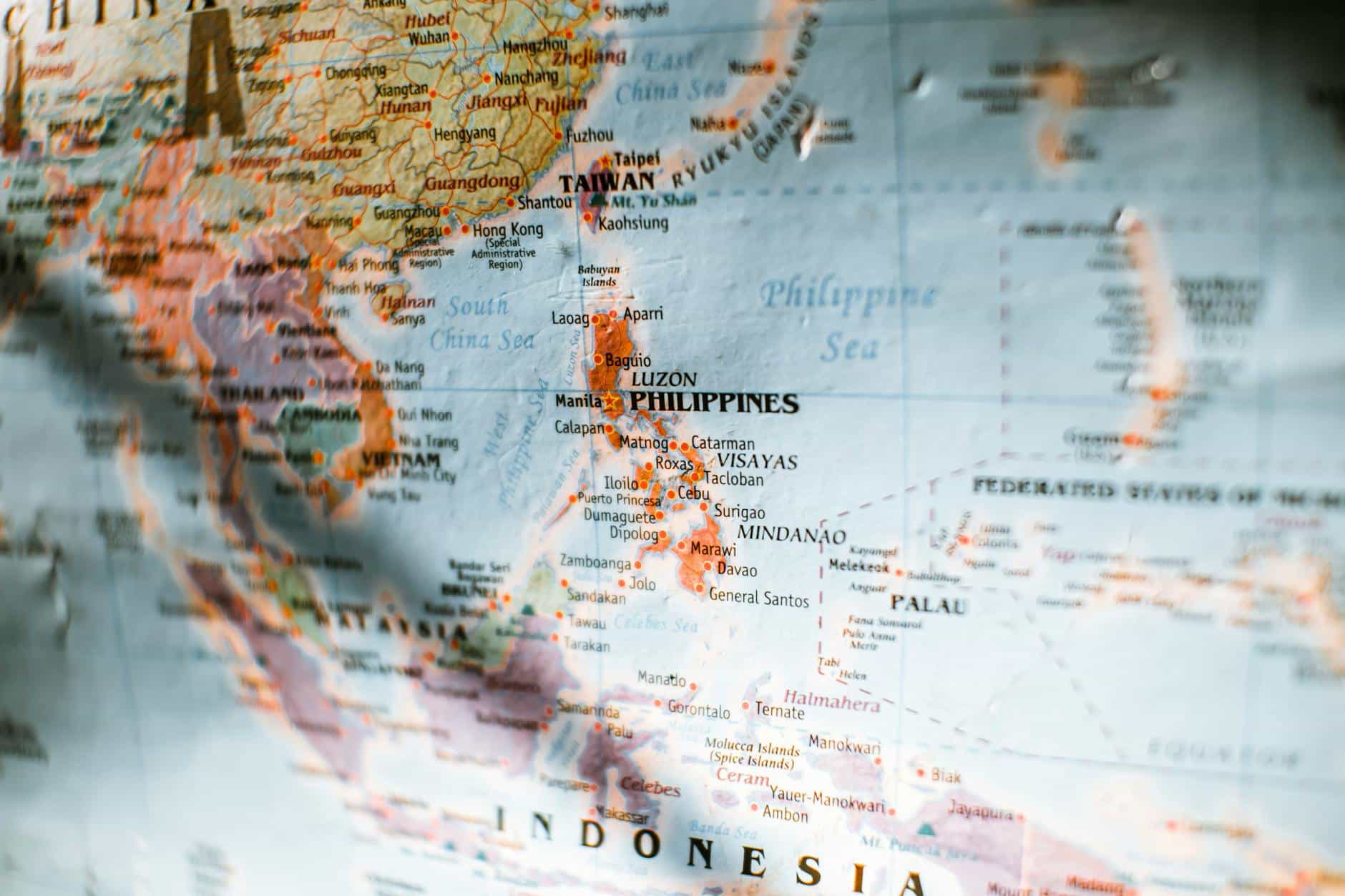
President Ferdinand Marcos Jr.'s openness to joint oil exploration with China in the South China Sea is constrained by the Philippine Constitution, which mandates state control of resource extraction. This constitutional framework creates structural barriers to agreements that might satisfy Beijing's sovereignty claims while maintaining Philippine legal authority.
President Ferdinand Marcos Jr.’s recent openness to resuming joint oil exploration with China in the disputed South China Sea represents a significant diplomatic overture, yet one constrained by domestic constitutional frameworks that limit Manila’s negotiating flexibility. This apparent willingness masks deeper structural tensions between Philippine sovereignty imperatives and the economic incentives of resource cooperation in contested waters—tensions that will shape Indo-Pacific energy security and maritime governance for years to come.
The South China Sea remains one of the world’s most strategically significant maritime zones, with estimated proven and probable reserves of 11 billion barrels of oil and 190 trillion cubic feet of natural gas according to the U.S. Energy Information Administration. For the Philippines, access to these hydrocarbon resources represents a critical component of long-term energy independence and fiscal revenue, particularly as the nation pursues rapid economic development and industrialization.
Marcos Jr.’s conditional statement—that any joint exploration must comply with the Philippine Constitution—reflects the fundamental legal and political constraints that have historically complicated Manila’s approach to South China Sea resource development. The 1987 Philippine Constitution, particularly Article XII on National Resources, contains explicit provisions asserting state ownership of natural resources and mandating that exploration and exploitation of these resources must be conducted by the state or through Philippine nationals.
This constitutional framework creates a critical binding constraint on any bilateral agreement with China. Unlike some Southeast Asian neighbors that have negotiated joint development agreements in contested waters, the Philippines faces domestic legal obstacles that prevent ceding effective control or revenue-sharing arrangements that would appear to compromise sovereign jurisdiction. The Constitution’s language requires that resource extraction occur under Philippine law and with Philippine control—a requirement that directly conflicts with China’s historical position that joint exploration in disputed areas should reflect Beijing’s claimed sovereignty over the South China Sea.
The invocation of constitutional compliance is therefore not merely rhetorical positioning. It represents Manila’s attempt to signal openness to Beijing while maintaining a legal firewall against arrangements that could be challenged domestically as unconstitutional or as surrendering national sovereignty. This approach allows Marcos Jr. to pursue diplomatic engagement without creating domestic political vulnerability to opposition parties and civil society groups that have consistently opposed agreements perceived as compromising Philippine territorial claims.
Joint oil and gas exploration between the Philippines and China has a troubled history. The two countries conducted preliminary joint seismic surveys in the Reed Bank area (known as Recto Bank in the Philippines) during the early 2000s, but these efforts stalled amid broader tensions over maritime jurisdiction and China’s increasingly assertive stance in the South China Sea. The 2016 Hague arbitration award, which invalidated China’s nine-dash line claim and affirmed Philippine rights under the UN Convention on the Law of the Sea (UNCLOS), further complicated bilateral resource negotiations by strengthening Manila’s legal position while hardening Beijing’s resistance to arrangements that might implicitly recognize the tribunal’s findings.
Marcos Jr.’s predecessor, Rodrigo Duterte, had pursued a more accommodative approach toward China on South China Sea issues, including discussions on joint resource development. However, even Duterte’s administration could not overcome the constitutional barriers to an agreement that would satisfy both Beijing’s sovereignty claims and Manila’s constitutional requirements. The failure to produce a binding agreement despite political willingness from the executive demonstrates the structural difficulty of this negotiating problem.
Despite constitutional constraints, the Philippines faces genuine energy security pressures that create incentives for resource cooperation. The country’s electricity demand is projected to grow at 5-6 percent annually through 2030, driven by rapid industrialization and urbanization. Current domestic oil production is minimal—the Philippines produced approximately 5,000 barrels per day in 2022, a decline from historical levels—making the nation increasingly dependent on energy imports. This dependency creates both fiscal vulnerability to global oil price fluctuations and strategic exposure to supply disruptions.
Access to South China Sea hydrocarbon reserves could substantially alter this trajectory. Conservative estimates suggest the Philippines could develop 2-3 billion barrels of recoverable reserves in its undisputed exclusive economic zone (EEZ) alone, potentially providing decades of domestic supply. Joint exploration with China in disputed areas could access additional reserves, though at the cost of political complications.
This energy imperative explains why Marcos Jr. has signaled openness to negotiations despite constitutional constraints. The administration recognizes that energy independence is central to long-term development goals and that the window for developing South China Sea resources may narrow as regional tensions intensify and international investment in contested areas becomes riskier.
If Manila and Beijing were to negotiate a constitutionally compliant joint exploration arrangement, it would likely require one of several approaches. First, the agreement could be structured as a production-sharing contract under Philippine law, with the Philippine state retaining operational control and China participating as a minority investor or technical partner. This model would satisfy constitutional requirements by ensuring Philippine nationals and the state maintain primary authority.
Second, the agreement could be limited to preliminary seismic surveys and resource assessment rather than actual extraction, deferring the more politically fraught questions of exploitation rights and revenue-sharing. This approach would allow both parties to gather geological data and assess commercial viability without immediately confronting sovereignty questions.
Third, any arrangement could be structured as a temporary agreement with explicit sunset clauses and provisions for renegotiation, allowing both parties to claim that the arrangement does not prejudice their underlying territorial claims—a formula that has been used in other disputed maritime areas.
However, each of these approaches faces obstacles. China has historically resisted arrangements that appear to subordinate Beijing’s position to Philippine law or that treat Chinese participation as secondary. The Philippines, conversely, cannot accept arrangements that critics could characterize as implicitly recognizing Chinese sovereignty or surrendering constitutional authority.
Marcos Jr.’s conditional openness to joint exploration represents a genuine policy position, but one that confronts fundamental structural obstacles rooted in the Philippine Constitution and the broader South China Sea sovereignty dispute. The gap between Manila’s willingness to negotiate and its ability to deliver an agreement that satisfies both Beijing’s expectations and domestic constitutional requirements remains substantial.
The Philippines’ constitutional framework is not incidental to this negotiation—it is central to understanding why joint resource development remains so difficult despite mutual economic incentives. Any agreement must navigate the reality that the Philippine state cannot legally cede the degree of control or revenue-sharing that China has historically demanded in joint development arrangements.
For regional stability and energy security, this constitutional constraint is not necessarily negative. It provides a legal mechanism through which the Philippines can pursue resource development while maintaining the jurisdictional clarity and sovereign authority that international law and the UNCLOS framework establish. However, it also means that Manila’s options for bilateral cooperation with China on South China Sea resources remain limited to arrangements that preserve Philippine legal primacy—a condition that Beijing has not historically found acceptable.
The most likely scenario involves continued diplomatic engagement producing preliminary agreements on seismic surveys and data-sharing, but no comprehensive joint exploitation framework. This outcome would allow both parties to claim diplomatic progress while deferring the more intractable questions of sovereignty and resource control. For the Philippines’ long-term energy security, this suggests that domestic exploration and development of undisputed EEZ resources, combined with diversified regional energy partnerships, will remain more strategically viable than contested joint ventures with China.