Physical Address
304 North Cardinal St.
Dorchester Center, MA 02124
Physical Address
304 North Cardinal St.
Dorchester Center, MA 02124

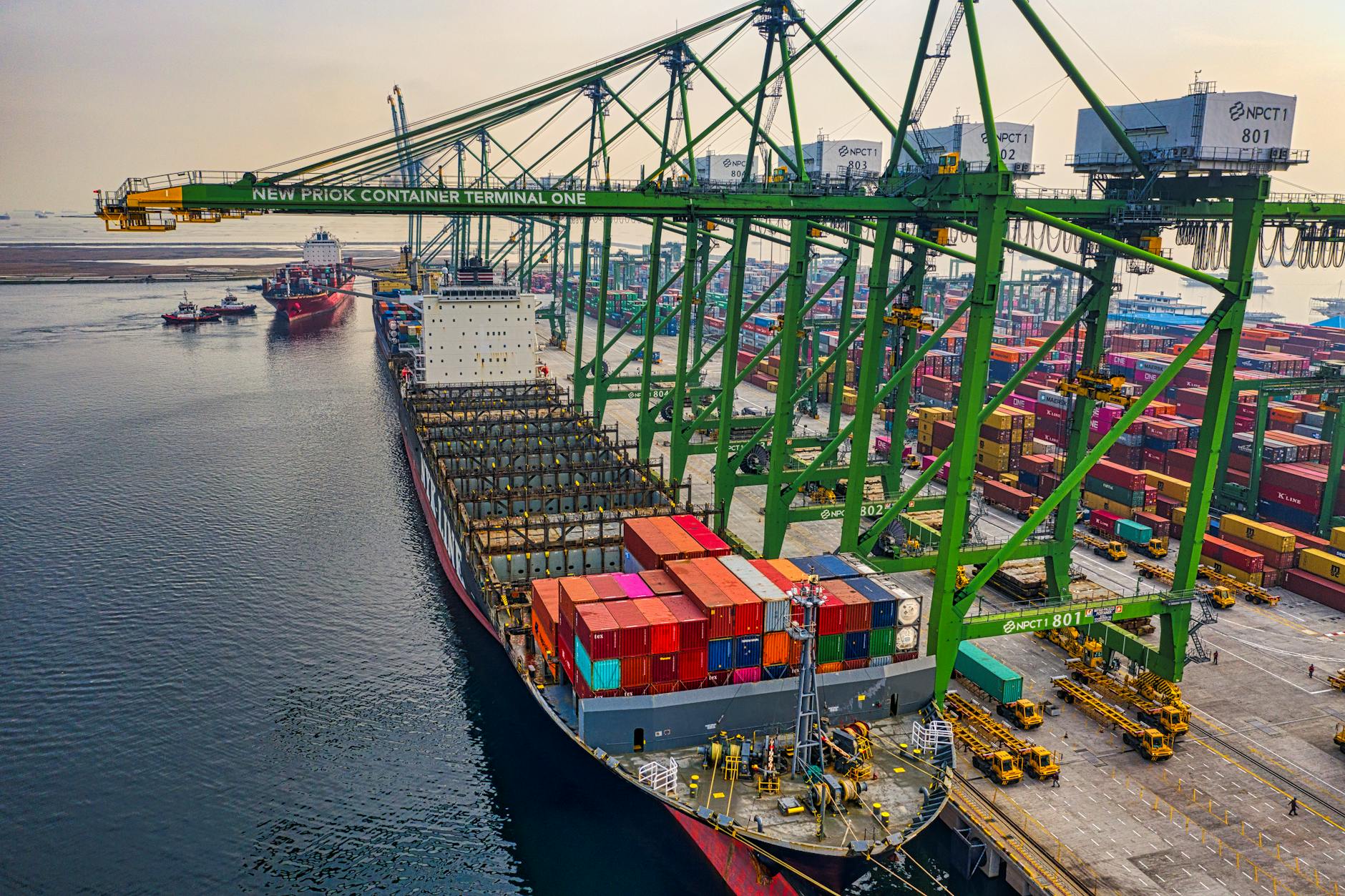
ASEAN's rules of origin framework requires urgent modernisation to reflect contemporary supply chain realities and geopolitical competition. Current ATIGA provisions constrain regional trade integration and leave ASEAN vulnerable to strategic marginalisation as competing regional agreements advance.
ASEAN’s ASEAN Trade in Goods Agreement (ATIGA), which consolidated the Common Effective Preferential Tariff (CEPT) scheme in 2009, has served as the institutional backbone of regional trade integration for over a decade. However, the agreement’s rules of origin (ROO) provisions—the technical criteria determining which goods qualify for preferential tariff treatment—increasingly fail to reflect the realities of modern supply chain dynamics and geopolitical fragmentation. As major powers compete for influence over Indo-Pacific manufacturing networks and ASEAN members pursue distinct industrial strategies, the framework governing regional trade requires substantive revision to remain economically viable and politically cohesive.
ATIGA’s rules of origin regime, inherited largely from the CEPT framework, employs a dual criterion system: goods must either achieve 40 percent local content or satisfy specific product-based criteria to qualify for preferential treatment. This threshold was calibrated for an era of relatively straightforward, regionally-concentrated manufacturing. Today, it creates friction across ASEAN’s increasingly complex and geographically dispersed value chains.
The 40 percent cumulative regional content requirement presents particular challenges for intermediate goods and components. A semiconductor component manufactured in Vietnam using inputs from South Korea, Japan, and Thailand—a common scenario in electronics manufacturing—may struggle to meet the threshold, forcing producers to either absorb tariffs or restructure supply relationships. This artificially incentivises the use of non-ASEAN inputs over more efficient regional sourcing, directly undermining ASEAN’s stated goal of deepening intra-regional trade integration.
Moreover, ATIGA’s product-specific rules contain outdated classifications that fail to accommodate emerging sectors. The framework contains minimal provisions for digital goods, renewable energy components, and advanced manufacturing—precisely the sectors where ASEAN members claim competitive advantage in post-pandemic industrial strategies. This regulatory lag creates uncertainty for investors and incentivises offshoring of high-value manufacturing to jurisdictions with clearer rules.
ASEAN’s internal cohesion faces mounting pressure from competing industrial strategies and deepening geopolitical alignments. Vietnam, Cambodia, and Laos have pursued closer integration with Chinese supply chains, particularly in electronics and textiles. Indonesia and Thailand have positioned themselves as alternative manufacturing hubs, explicitly courting multinational corporations seeking to diversify away from China. The Philippines has emphasised semiconductor assembly and semiconductor packaging, while Malaysia targets high-value electronics components.
These divergent trajectories create a paradox: ASEAN members benefit individually from their distinct industrial positioning, yet lack a unified framework to govern trade between themselves. A Vietnamese electronics manufacturer exporting to Thailand faces identical tariff treatment as one exporting to Japan. This neutrality, while theoretically equitable, fails to account for the reality that regional value chains increasingly require differentiated treatment based on content origin and production complexity.
The rise of US-China strategic competition compounds this challenge. The US Indo-Pacific Economic Framework (IPEF), launched in 2022, explicitly encourages supply chain diversification away from China. ASEAN members participating in IPEF (Indonesia, Malaysia, Philippines, Singapore, Thailand, Brunei, and Vietnam) face implicit pressure to restructure sourcing patterns. Yet ATIGA contains no mechanisms to facilitate this transition or to recognise the strategic rationale for preferential treatment of inputs from allied suppliers. A Thai manufacturer sourcing critical minerals from Australia versus China faces no ATIGA incentive to choose the strategic partner.
Effective ATIGA modernisation requires three interconnected reforms:
ASEAN should introduce diagonal cumulation mechanisms, allowing inputs from dialogue partners (Japan, South Korea, Australia, India) to count toward regional content thresholds under specified conditions. This would align ATIGA with precedent set by other regional agreements: the USMCA permits 25 percent non-member content in automotive products, and the CPTPP allows extended cumulation across member states. A 50-55 percent ASEAN+dialogue partner cumulation threshold would maintain meaningful regional preference while accommodating modern supply chain realities. This reform would particularly benefit capital-intensive sectors—semiconductors, renewable energy, automotive—where ASEAN lacks comprehensive domestic supply capacity.
ASEAN should establish dedicated ROO regimes for strategic sectors: renewable energy components (solar panels, battery cells, electric vehicle batteries), semiconductor manufacturing, and digital goods. These sectors warrant simplified rules reflecting their current production geography. For example, renewable energy components could employ a 35 percent ASEAN content threshold with accelerated phase-in to 45 percent over five years, recognising that ASEAN’s manufacturing ecosystem in these sectors remains nascent but strategically important.
ASEAN should establish a dedicated working group to maintain real-time mapping of regional value chains, with annual reviews of ROO adequacy. Singapore’s trade ministry and the ASEAN Secretariat possess sufficient technical capacity to administer this function. Transparent, data-driven reviews would depoliticise ROO adjustments and ground reform in empirical supply chain realities rather than protectionist lobbying.
ATIGA modernisation faces genuine political obstacles. Indonesia, as ASEAN’s largest economy, has consistently resisted rules perceived as eroding domestic manufacturing protection. The textile and apparel sector—politically sensitive across multiple ASEAN members—currently benefits from restrictive ROO that would loosen under cumulation reforms. Thailand’s automotive sector, similarly protected, would face adjustment pressures.
Conversely, Singapore and Vietnam—economies more integrated into global value chains—favour liberalisation. This distributional conflict explains why ATIGA has remained essentially static since 2009 despite multiple calls for modernisation. Successful reform requires negotiated side-payments: perhaps accelerated tariff elimination in sectors where protectionist members hold comparative advantage, or development assistance for industrial transition in vulnerable sectors.
The ASEAN Secretariat’s limited institutional capacity presents a secondary constraint. Unlike the USMCA Secretariat or the CPTPP Commission, ASEAN’s institutional architecture lacks independent rule-making authority. Reforms require consensus, and enforcement mechanisms remain weak. Any ROO modernisation must therefore be designed for minimal administrative overhead and clear, objective implementation criteria.
ASEAN’s failure to modernise ATIGA risks strategic irrelevance. As the CPTPP deepens integration among its 11 members and the IPEF establishes parallel supply chain governance, ASEAN risks becoming a residual forum for trade management rather than a driver of regional value chain architecture. Vietnam, Singapore, and Thailand—all CPTPP members—increasingly operate under more sophisticated ROO frameworks than ATIGA provides.
Conversely, strategic modernisation of ATIGA could position ASEAN as the Indo-Pacific’s preferred manufacturing hub. The agreement already covers a market of 650 million people with combined GDP exceeding $3 trillion. Enhanced ROO clarity, particularly around dialogue partner cumulation and emerging sectors, would signal to multinational corporations that ASEAN offers stable, transparent, and sophisticated trade governance. This positioning becomes increasingly valuable as supply chain diversification accelerates and geopolitical risk premiums on China-concentrated sourcing rise.
The window for reform is narrowing. As ASEAN members deepen bilateral relationships with external powers and pursue divergent industrial strategies, consensus-building becomes progressively harder. A modernised ATIGA, negotiated and implemented within the next two years, could serve as a binding mechanism reinforcing ASEAN centrality. Delayed reform risks cementing fragmentation, with individual members pursuing bilateral arrangements that undermine regional cohesion without delivering equivalent economic gains.