Physical Address
304 North Cardinal St.
Dorchester Center, MA 02124
Physical Address
304 North Cardinal St.
Dorchester Center, MA 02124

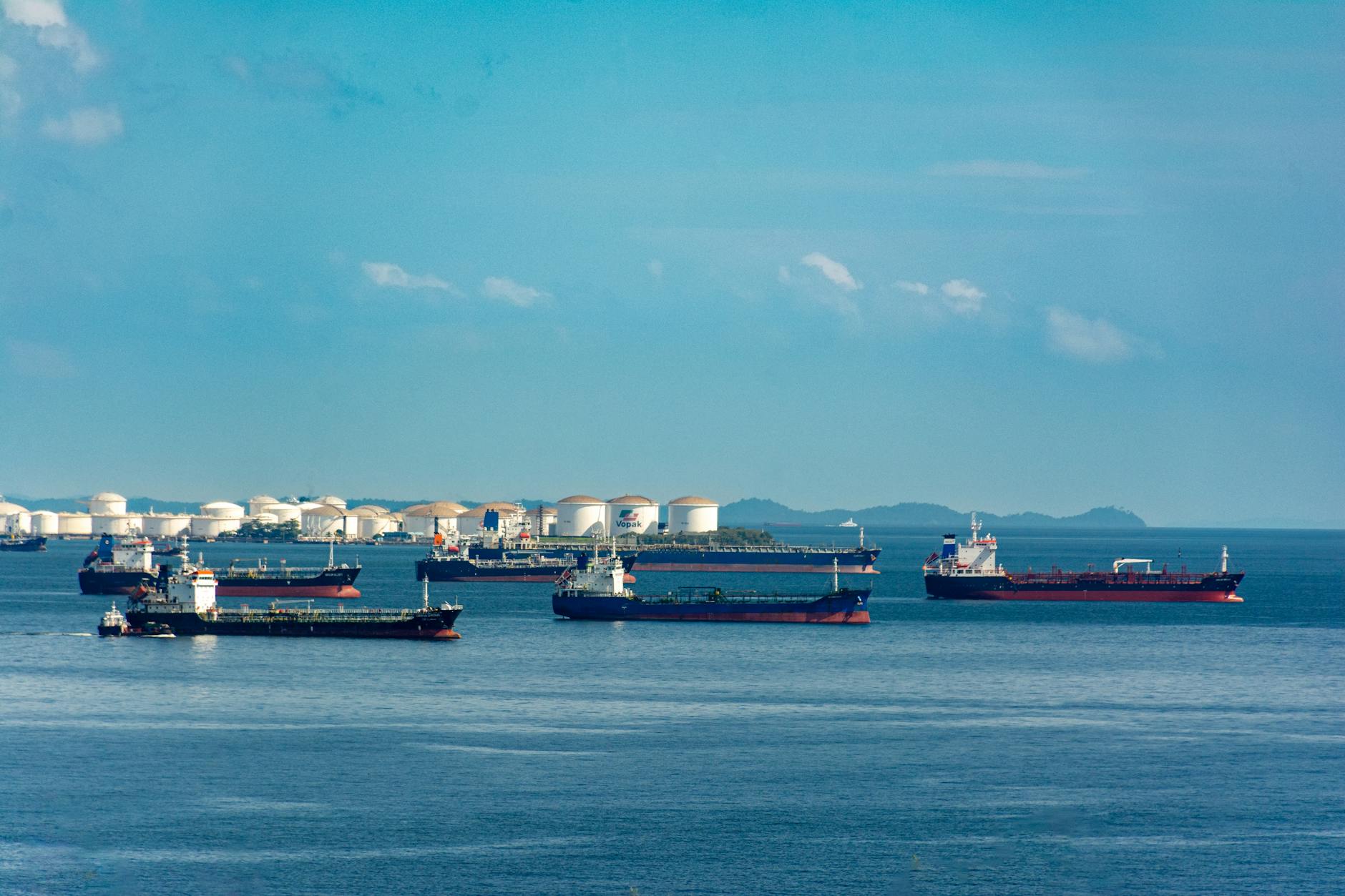
ASEAN economies face mounting economic pressure from Middle East tensions threatening Hormuz Strait oil supplies. The region's heavy import dependence, inflationary pressures, and sectoral vulnerabilities reveal structural weaknesses that require coordinated policy responses and long-term energy security reforms.
The escalation of tensions in the Middle East, particularly around the Strait of Hormuz, presents a direct economic threat to Southeast Asian economies that remain heavily dependent on stable oil supplies and predictable energy costs. Approximately 21% of global oil trade transits through the Hormuz Strait annually—a chokepoint whose disruption carries immediate consequences for ASEAN member states. Unlike resource-rich producers such as Indonesia and Brunei, the majority of ASEAN economies—including Thailand, Vietnam, the Philippines, and Singapore—import substantial portions of their crude oil requirements, making them acutely vulnerable to supply-side shocks originating in the Persian Gulf.
The economic implications extend beyond simple import costs. Elevated oil prices compress profit margins across transportation, manufacturing, and logistics sectors that form the backbone of ASEAN’s export-oriented industries. For countries with limited fiscal buffers, such as Cambodia and Laos, sustained elevated energy costs can rapidly translate into inflationary pressures that erode purchasing power and reduce competitiveness in global markets. The region’s vulnerability reflects a structural dependency that regional policymakers have struggled to address through diversification efforts.
Rising oil prices feed directly into broader inflationary dynamics across ASEAN. Central banks face a difficult policy calculus: tighten monetary conditions to combat imported inflation, or maintain accommodative stances to support growth amid external headwinds. The Association of Southeast Asian Nations comprises economies at different stages of development and inflation cycles, making coordinated regional responses impractical. Thailand’s central bank and Indonesia’s Bank Indonesia have already navigated multiple rate adjustment cycles over the past 18 months, reflecting domestic inflation concerns that predate Middle East tensions but are now compounded by energy price volatility.
For Vietnam and the Philippines—economies that have attracted significant foreign direct investment in recent years—inflation-driven rate hikes risk dampening investment appetite at a critical moment. Manufacturing competitiveness depends partly on stable input costs; when oil-driven inflation forces governments to raise interest rates, capital becomes more expensive, potentially slowing factory expansion and employment growth in labor-intensive sectors.
ASEAN’s manufacturing sector, which represents approximately 23% of regional GDP and employs tens of millions across supply chains, faces direct margin compression from elevated fuel and logistics costs. Companies operating in electronics assembly, automotive component production, and textile manufacturing operate on thin margins where a 10-15% increase in energy costs can eliminate profitability. Vietnam’s electronics manufacturers, which have increasingly captured market share from China-based competitors, face particular pressure as their cost advantage narrows.
The tourism sector, which contributes significantly to GDP in Thailand, Cambodia, and the Philippines, faces dual headwinds: higher aviation fuel costs translate into elevated ticket prices that reduce tourist arrivals, while simultaneously reducing margins for airlines and hospitality operators. Thailand’s tourism sector, which generated approximately $60 billion in revenue in 2022, remains sensitive to international travel demand fluctuations triggered by economic uncertainty in key source markets.
Regional trade faces friction from elevated shipping costs. ASEAN’s intra-regional trade, while growing, remains below optimal levels due to infrastructure constraints and tariff barriers. Higher fuel surcharges on container vessels increase the cost of moving goods between ASEAN ports, further disadvantaging regional trade relative to trade with China or India, where supply chains are more established and shipping routes more efficient.
ASEAN is not a monolithic economic bloc; member states face markedly different economic circumstances and policy options. Indonesia, as OPEC’s only Southeast Asian member and a significant oil exporter, benefits from elevated crude prices—a factor that improves its fiscal position and current account balance. Conversely, oil-importing nations face deteriorating terms of trade. Singapore, with its advanced refining and petrochemical sectors, experiences complex dynamics where higher crude costs are partially offset by higher refining margins and increased demand for energy-intensive services.
The Philippines and Vietnam, which have emerged as growth leaders in recent years with 6-7% annual GDP growth rates, face the greatest downside risk from sustained oil price elevation. Both economies have limited foreign exchange reserves relative to import requirements and depend on continued foreign investor confidence. A prolonged period of elevated energy costs could trigger capital outflows if investors reassess growth prospects.
The Hormuz crisis exposes a fundamental vulnerability in ASEAN’s energy architecture: the region lacks sufficient strategic petroleum reserves and diversified supply sources to buffer against supply disruptions. Thailand maintains limited strategic reserves; most ASEAN nations maintain minimal buffer stocks. Contrast this with Japan’s comprehensive strategic petroleum reserve system or South Korea’s coordinated energy security approach, and ASEAN’s energy preparedness appears inadequate for a region hosting 650 million people and serving as a critical global manufacturing hub.
The crisis underscores the strategic imperative for ASEAN to accelerate renewable energy transitions and regional energy infrastructure integration. The ASEAN Power Grid initiative, while conceptually sound, remains underdeveloped with limited cross-border transmission capacity. Renewable energy capacity additions across ASEAN have accelerated, but coal remains the dominant fuel source in several member states, reflecting both infrastructure lock-in and political economy constraints.
Geopolitically, ASEAN’s vulnerability to Middle East supply disruptions reinforces the region’s strategic dependence on stable global order and freedom of navigation through critical sea lanes. This reality constrains ASEAN’s foreign policy autonomy and explains the organization’s persistent emphasis on multilateral frameworks and non-aligned positioning—strategies designed to maintain relationships with multiple great powers rather than align exclusively with any single actor.
ASEAN’s economic outlook for 2024-2025 will depend substantially on whether Middle East tensions stabilize or escalate further. A return to stable oil prices in the $70-85 per barrel range would allow regional central banks to stabilize inflation expectations and support continued growth. However, if geopolitical escalation drives sustained prices above $100 per barrel, ASEAN faces a scenario of slower growth, higher inflation, and potential capital flight from vulnerable economies.
The immediate policy priority for ASEAN governments should be coordinated communication with major oil producers and consumers to signal commitment to Hormuz stability, coupled with accelerated domestic energy security measures including strategic reserve buildups and renewable energy investment. Longer-term, ASEAN must address the structural vulnerability that makes the region economically hostage to distant geopolitical events. This requires both energy diversification and the development of regional financial mechanisms that can provide liquidity support to member states facing external shocks—capabilities that the ASEAN Regional Forum and ASEAN Plus Three framework have discussed but never fully operationalized.