Physical Address
304 North Cardinal St.
Dorchester Center, MA 02124
Physical Address
304 North Cardinal St.
Dorchester Center, MA 02124

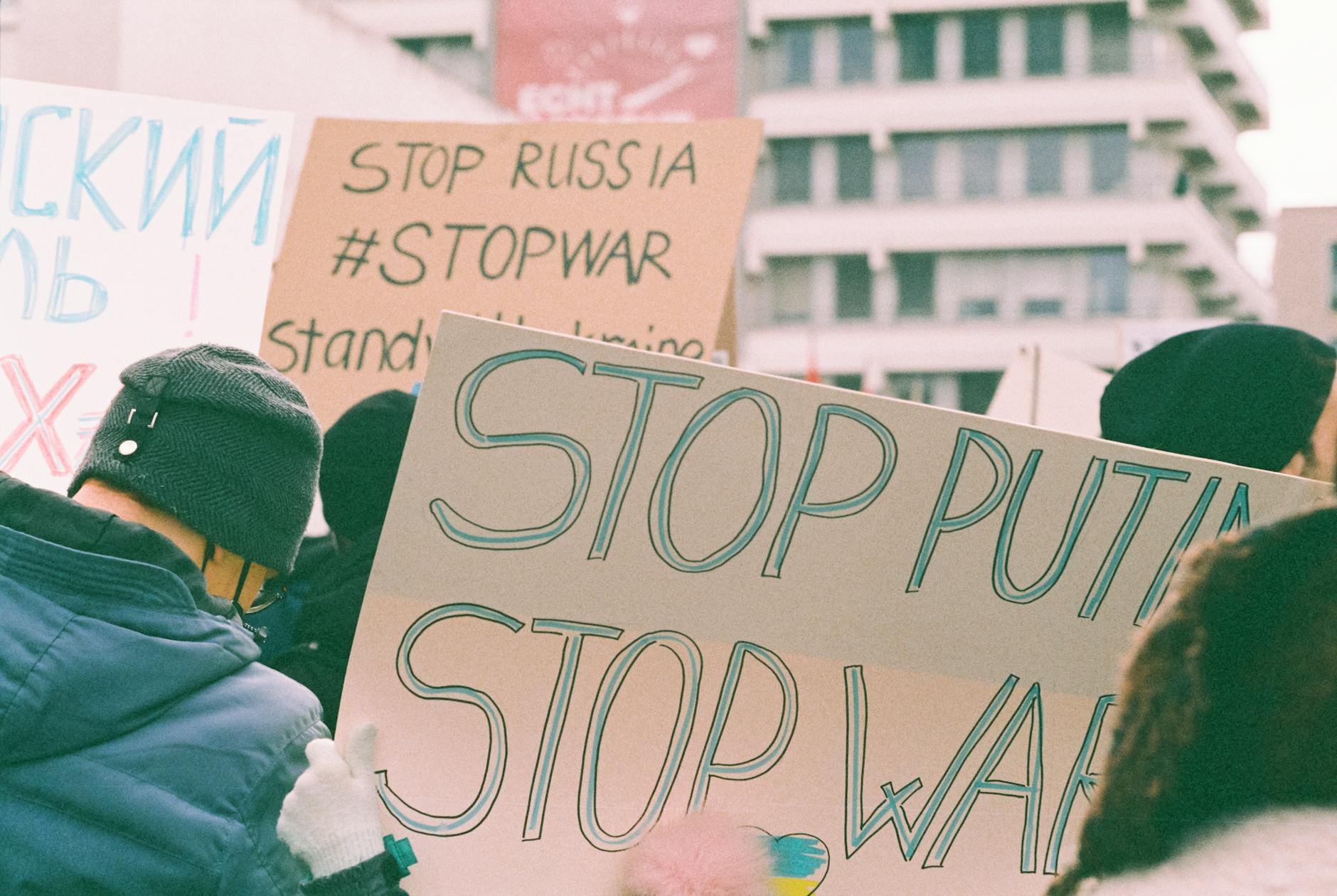
China's May 2026 declaration with Russia consolidates Beijing's strategic support for Moscow's war against Ukraine, using diplomatic language that erases Russian responsibility while deepening military, economic, and information coordination. The agreement signals China's fundamental challenge to the rules-based international order and carries direct implications for Indo-Pacific security.
In May 2026, Chinese President Xi Jinping and Russian President Vladimir Putin signed a comprehensive declaration on deepening China-Russia strategic coordination in Beijing. The timing was deliberate and consequential: it arrived just days after Russia launched 600 drones and 90 missiles against Kyiv on the night of May 23-24, killing numerous civilians and striking residential buildings, schools, markets, water infrastructure, and government facilities across the Ukrainian capital. This juxtaposition reveals the true strategic meaning of the declaration—not as a routine diplomatic document, but as a war-era manifesto that formalizes Beijing’s structural support for Moscow’s military aggression.
The declaration spans five sections and addresses dozens of policy domains, from energy and finance to artificial intelligence, Arctic shipping, and space cooperation. On its surface, it presents itself as a routine great-power partnership agreement emphasizing sovereignty, non-interference, and international law. Read from the perspective of Kyiv under sustained bombardment, however, the document exposes a fundamental contradiction: China and Russia invoke principles of territorial integrity and sovereign equality while simultaneously erasing Ukraine from that framework entirely.
The declaration’s treatment of Ukraine reveals how diplomatic language can systematically obscure aggression. Rather than naming Russia as an aggressor or acknowledging the violation of Ukraine’s internationally recognized borders, the document consistently refers to the “Ukraine crisis”—a deliberately chosen formulation that Beijing has preferred since 2022. This terminology performs critical rhetorical work: a crisis is tragic but multi-causal, complicated, and amenable to management. A war of aggression, by contrast, demands accountability and responsibility.
By framing the conflict as a “crisis,” the declaration removes agency from Moscow and embeds the war within a broader narrative of European security anxieties, Western pressure, NATO expansion, sanctions, and alleged external destabilization. The repeated invocation of “root causes” deepens this distortion. While conflict resolution theory recognizes that wars have underlying conditions, in the China-Russia vocabulary, “root causes” functions as a euphemism for Russia’s historical denial of Ukrainian nationhood and Ukraine’s status as an independent state. The declaration never acknowledges Ukraine’s territorial integrity or demands its restoration. It never uses the word “invasion” or “aggression.”
This linguistic precision matters strategically. By normalizing the language of crisis management rather than aggressor accountability, the declaration signals to Russia that its fundamental denial of Ukrainian sovereignty will not be challenged by Beijing—and signals to the international community that China views the conflict as a manageable geopolitical condition rather than a fundamental breach of international law.
The declaration’s economic sections are the most consequential when analyzed in the context of Russia’s ongoing war. The document praises bilateral trade expansion, investment deepening, energy cooperation, local currency settlement arrangements, customs cooperation, transport infrastructure development, railway logistics, Arctic shipping routes, agricultural trade, and formal coordination between China’s Belt and Road Initiative and Russia’s Eurasian Economic Union.
These passages read as technical economic cooperation. Strategically, they describe the infrastructure of Russian resilience under sanctions. In a war of attrition, the ability to redirect trade flows away from Western markets, sustain energy exports to non-Western buyers, utilize non-Western financial channels that bypass SWIFT restrictions, and build alternative logistics routes is inseparable from Russia’s capacity to absorb economic pressure and continue military operations. China’s commitment to these economic linkages directly enables Russia’s strategic autonomy in prosecuting the war.
Notably, major projects such as Power of Siberia 2—a proposed gas pipeline from Russia to China—remain stalled due to Western sanctions and financing constraints. Yet the declaration’s economic language commits Beijing to deepening integration regardless. This represents a long-term strategic commitment by China to construct a non-Western economic and political order in which Russia remains a necessary continental partner. For Moscow, this economic architecture provides the foundation for sustained resistance to Western pressure. For Beijing, it advances a broader vision of Eurasian integration that challenges Western economic dominance.
Beyond economics, the declaration commits China and Russia to deepen military trust, expand joint exercises and patrols, strengthen coordination in bilateral and multilateral frameworks, and cooperate across strategic domains including space, artificial intelligence, and Arctic operations. This language describes long-term consolidation with an aggressor state—precisely the kind of military-strategic partnership that previous eras of international order sought to prevent through deterrence and isolation.
President Volodymyr Zelenskyy and Ukrainian diplomats have made repeated personal appeals to Beijing to use its leverage to isolate Russia or impose strategic costs on Moscow’s war effort. The declaration suggests the opposite: China is not leveraging its relationship to constrain Russian aggression but rather deepening military and strategic coordination that validates Russia as a great power and provides political cover for its continued military operations. This represents a deliberate strategic choice by Beijing to support rather than constrain Moscow.
The declaration’s silence on Russia’s nuclear signaling is particularly striking. Belarus, Russia’s key strategic ally, has hosted recent nuclear drills involving training for tactical nuclear weapons employment. Belarus continues to host Russian tactical nuclear arms on its territory. The declaration makes no mention of these escalatory developments, suggesting that Beijing’s stated commitment to “stability” does not extend to constraining Russia’s nuclear posturing or escalation dynamics in the Ukraine theater.
The declaration includes specific provisions for deepening media cooperation, supporting exchanges between mainstream outlets, expanding digital diplomacy, countering what Beijing and Moscow describe as “false information,” and resisting “external interference” in information spaces. In ordinary diplomatic language, this appears as cultural and media exchange. In the context of Russia’s war, these provisions point to narrative discipline and propaganda consolidation.
Ukraine’s voice has been severely limited in China’s controlled information environment, often filtered through state censorship. The declaration’s commitment to media coordination between Beijing and Moscow creates structural barriers to Ukrainian perspectives reaching Chinese audiences. This information architecture serves Russia’s strategic interests by limiting international awareness of Russian military operations, civilian casualties, and war crimes while amplifying narratives that justify Russian actions as defensive responses to Western encroachment.
The declaration’s historical memory sections invoke World War II, defense of “historical truth,” opposition to Nazism and militarism, and the legitimacy of the post-1945 international order. These references function as political grammar through which Moscow justifies its war—framing Ukraine as a Nazi-influenced state requiring military intervention—while Beijing signals agreement with this historical framing. This shared narrative architecture binds the two powers together in a common ideological project.
The China-Russia declaration reveals that Beijing has made a strategic decision to support rather than constrain Russian aggression. This decision has direct implications for Indo-Pacific security architecture. China’s willingness to provide economic, diplomatic, military, and information support to Russia—despite Russia’s violation of international law and sustained assault on a sovereign state—signals Beijing’s fundamental challenge to the rules-based international order that underpins regional stability in the Indo-Pacific.
The declaration demonstrates that China views the Ukraine conflict not as a violation of principles it claims to uphold, but as a geopolitical opportunity to advance a non-Western international order in which great-power spheres of influence supersede universal principles of sovereignty and territorial integrity. This has direct relevance for Taiwan, the South China Sea, and the broader regional security environment. If China supports Russia’s denial of Ukrainian sovereignty and provides the economic and military infrastructure for Russia to sustain its war, it signals that Beijing’s own regional ambitions will not be constrained by international legal norms or the principle of territorial integrity.
The declaration also reveals the limits of diplomatic engagement as a tool for constraining Chinese support for Russian aggression. Despite sustained Ukrainian and Western diplomatic efforts, Beijing has not been persuaded to isolate Russia or impose strategic costs on Moscow. Instead, China has deepened its strategic partnership with Russia precisely at the moment when Russia faces international isolation and economic pressure. This suggests that future diplomatic appeals to Beijing regarding Taiwan, the South China Sea, or other regional disputes will face similar resistance if they conflict with China’s broader strategic interests.
For Australia and New Zealand, the declaration underscores the necessity of strengthening regional partnerships, deepening defense cooperation with like-minded states, and building economic resilience independent of Chinese trade relationships. The China-Russia consolidation represents a long-term strategic challenge to the international order that both ANZUS partners have historically depended upon. Responding effectively requires sustained commitment to regional security partnerships, investment in military capabilities that can operate in contested environments, and diplomatic coordination with allies that share commitment to sovereignty, territorial integrity, and rules-based international order.