Physical Address
304 North Cardinal St.
Dorchester Center, MA 02124
Physical Address
304 North Cardinal St.
Dorchester Center, MA 02124

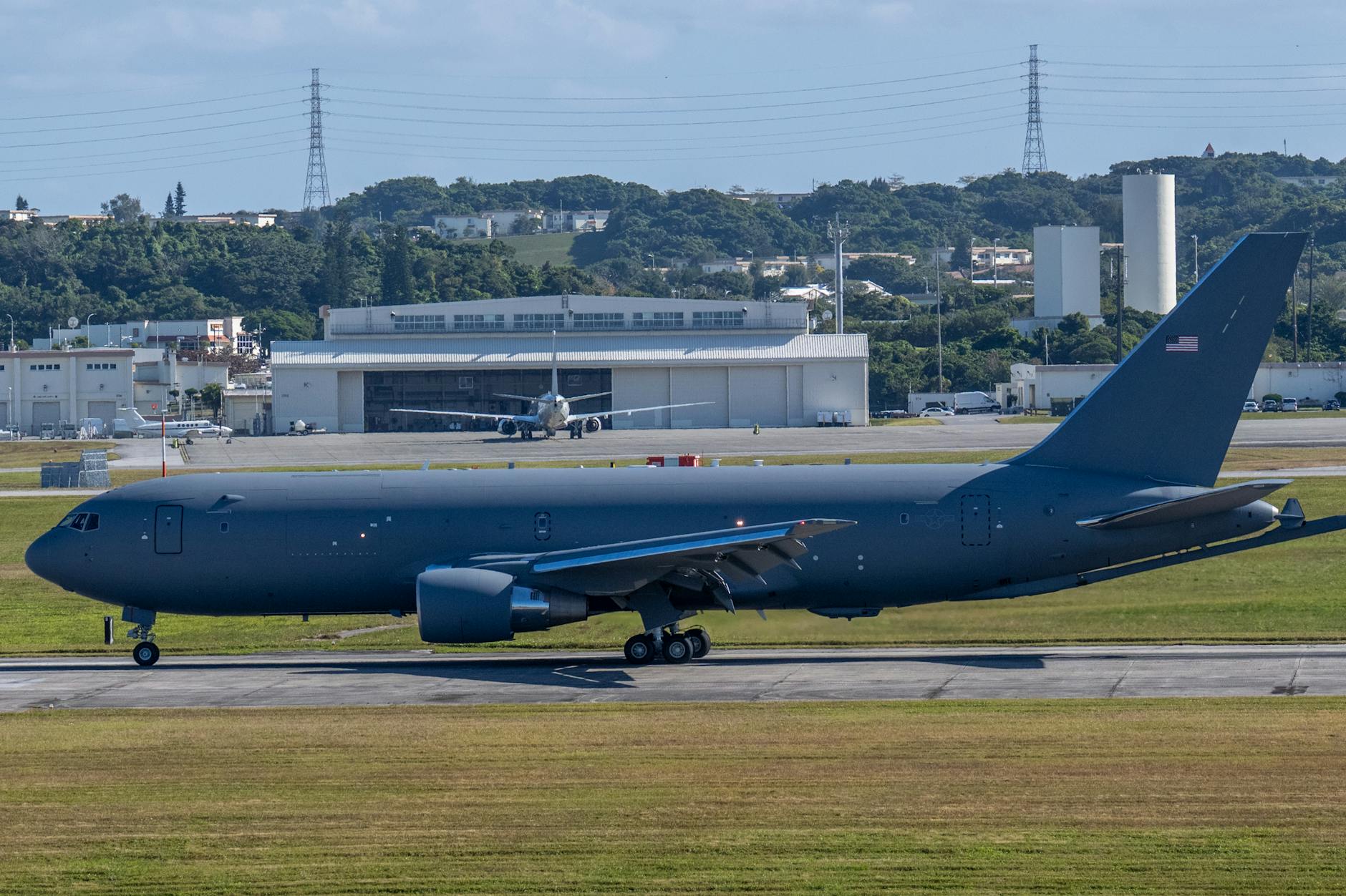
Okinawa hosts 70% of US military bases in Japan despite comprising less than 1% of the nation's land area. Yet scholarly analysis and military assessments increasingly question whether this concentration provides proportional deterrence value or instead creates strategic vulnerability.
Japan hosts 76 exclusive-use US military bases under the 1960 Treaty of Mutual Cooperation and Security, a cornerstone of the post-war security architecture in East Asia. However, the distribution of this military footprint is strikingly uneven. Despite comprising less than 1 percent of Japan’s total land area, Okinawa Prefecture hosts approximately 70 percent of all US military facilities in the country. This concentration—31 bases across the islands—creates a significant strategic paradox: the regions bearing the heaviest burden of the alliance do not necessarily provide proportional deterrence value.
When Japanese Prime Minister Takaichi Sanae met with US President Donald Trump in March 2026, she reaffirmed Tokyo’s commitment to deepening the Japan-US alliance. Yet beneath this diplomatic consensus lies a persistent tension between national security strategy and local grievances. Okinawan residents contend with military crimes, aircraft noise pollution, environmental degradation, and the loss of developable waterfront real estate—costs that are geographically concentrated rather than shared across the nation.
A rigorous examination of US military capabilities in Japan reveals that the primary elements of deterrence are not located in Okinawa, but rather on the mainland and beyond. Yokosuka Naval Base in Kanagawa Prefecture hosts the largest US Navy installation overseas, with more than 50 ships and submarines, including the only US nuclear-powered aircraft carrier permanently homeported outside the continental United States. This facility represents the backbone of US naval deterrence in the Western Pacific.
Similarly, Yokota Air Base in Tokyo serves as headquarters for US Forces Japan (USFJ) and the Fifth Air Force, providing command and control architecture essential to regional operations. Camp Zama, also in Kanagawa, houses the US Army’s Japan headquarters and supports approximately 4,000 soldiers and their families. These mainland installations, combined with a network of defensive missile systems and the US nuclear umbrella extended to Japan since the Cold War, constitute the primary deterrent against potential adversaries.
Japan’s reliance on extended nuclear deterrence—the assurance that the United States would employ its nuclear arsenal to defend Japan against a nuclear-armed aggressor—has been a cornerstone of Tokyo’s security strategy for decades. This commitment, rather than the presence of 31 bases in Okinawa, provides the ultimate security guarantee.
Among Okinawa’s military installations, Kadena Air Base stands apart. The Pentagon designates it the “Keystone of the Pacific,” and it hosts the largest combat wing in the US Air Force. Kadena’s historical significance is undeniable—it served as the launch point for operations during the Korean War and the Vietnam War. Its strategic value in potential East China Sea contingencies justifies its continued operation in Japanese and American strategic calculations.
However, even this critical facility underscores the broader concentration problem. As Okinawa International University professor Maedomari Hiromori has noted, Japanese politicians treat Kadena as “off limits” in discussions about reducing the military footprint, viewing any challenge to its presence as tantamount to questioning the Japan-US Security Treaty itself. This political reality effectively locks in place the entire Okinawan base structure, regardless of the strategic utility of the other 30 facilities.
The US Marine Corps constitutes the most visible military presence in Okinawa, occupying 130 square kilometers across 13 bases, including Futenma Air Station situated in the middle of Ginowan City. Yet scholarly analysis increasingly questions whether this substantial footprint delivers proportional deterrent value. The marines were forcibly relocated to Okinawa from mainland Japan during the 1950s due to public protests, establishing a presence that has persisted for seven decades despite evolving strategic circumstances.
Professor Mike Mochizuki of George Washington University’s Elliott School of International Affairs has argued that Japanese policymakers’ claims regarding marine deterrence lack specificity, and that the roles of the US Air Force and Navy—plus the nuclear umbrella—are more strategically significant. Yanagisawa Kyōji, former head of Japan’s National Institute of Defense Studies, contended that US nuclear weapons and conventional missile defense systems provide more powerful deterrent effects than marine deployments. He emphasized that “the US Marine Corps troops are ready to be deployed anywhere in the world. By the nature of their mission, they are not to stay and defend a specific region.”
Paul O’Shea of the Center for East and Southeast Asian Studies at Lund University conducted the most comprehensive assessment of marine deterrence in Okinawa, concluding that “the Marines’ role in deterrence is overstated at best, and relatively insignificant at worst.” O’Shea identified a critical operational constraint: the marines’ transport ships are stationed on mainland Japan, making rapid deployment to an East China Sea contingency unlikely or difficult. When compared to the deterrent effects created by US Air Force and Navy capabilities and joint operations with the Japanese Self-Defense Forces (SDF), the stationing of marine forces in Okinawa contributes marginally to overall deterrence.
The US Army presence in Okinawa is similarly limited in strategic purpose. A handful of facilities support army operations, but the primary mission involves maintaining fuel supplies for other services and managing Naha Military Port—which is rarely used, representing a waste of valuable waterfront real estate. The US Navy operates five facilities in Okinawa, including a shared port at White Beach, where no vessels are permanently stationed.
The concentration of military infrastructure in Okinawa creates a vulnerability that US military planners have recognized for decades. In the mid-1950s, even as the United States was expanding its facilities on the islands, the chairman of the Joint Chiefs of Staff warned that the bases were “sitting ducks—difficult if not impossible to defend, likely to be knocked out completely in a one-shot operation.” This assessment proved prescient as geopolitical circumstances evolved.
The development of nuclear arsenals by the Soviet Union and China elevated the risks inherent in geographic concentration. Operational accidents compounded these dangers: a 1959 Nike Hercules missile misfired at Naha Air Base, and a hydrogen bomb was lost from the USS Ticonderoga in 1965. Natural hazards—typhoons, earthquakes, and tsunami—pose additional threats to densely packed installations.
Contemporary military assessments have renewed these concerns. In 2020, the US Indo-Pacific Command informed Congress that “it is not strategically prudent, nor operationally viable to physically concentrate on large, close-in bases that are highly vulnerable to a potential adversary’s strike capability.” This statement reflected growing awareness of China’s advanced missile capabilities and its demonstrated willingness to conduct strike exercises against mock-ups of Kadena Air Base in its western deserts.
The 2023 Congressional Research Service assessment of military infrastructure was more explicit. Specialists quoted in the report characterized Kadena Air Base as “uniquely ill-positioned for permanently basing large numbers of American aircraft,” and recommended rotating and dispersing US forces throughout the region. This professional military judgment stands in stark contrast to the political consensus that treats Kadena as immovable and the broader Okinawan base structure as fixed.
The Okinawan base concentration represents a historical artifact of Cold War geopolitics that has become strategically suboptimal in the contemporary security environment. The islands host 31 facilities that provide marginal deterrent value while absorbing disproportionate costs in terms of environmental degradation, quality of life, and local economic development. Kadena Air Base remains strategically essential, but the broader structure requires reconsideration.
Japanese and American policymakers face a strategic choice: continue defending an inherited basing arrangement that military professionals assess as vulnerable and operationally inefficient, or undertake a comprehensive review of force posture in Japan. Such a review would likely involve dispersing marine and other non-critical forces to mainland Japan or other regional locations, reducing Okinawa’s burden while enhancing overall operational resilience.
The political obstacles to such rationalization are substantial. Japanese officials fear that challenging the base structure could undermine the broader alliance framework. Okinawan residents, meanwhile, lack sufficient political leverage to compel change at the national level. Yet the convergence of military professional judgment—from the Indo-Pacific Command, Congressional analysts, and academic experts—suggests that the current arrangement is neither strategically sound nor politically sustainable indefinitely. The question is whether Japan and the United States will undertake strategic adaptation proactively or only in response to a future crisis.