Physical Address
304 North Cardinal St.
Dorchester Center, MA 02124
Physical Address
304 North Cardinal St.
Dorchester Center, MA 02124

Australian PM Anthony Albanese's April 2024 energy diplomacy tour across Southeast Asia sought oil and fuel guarantees but misunderstood regional energy structures, leading to public corrections from Malaysia and failed negotiations. Australia must shift from diplomatic requests to capital investment in regional infrastructure.
In April 2024, Australian Prime Minister Anthony Albanese embarked on a high-profile diplomatic tour across East and Southeast Asia seeking guarantees of crude oil, diesel, and fertilizer supplies. The mission, accompanied by Foreign Minister Penny Wong’s subsequent visits to Japan, China, and South Korea, was framed as essential to Australia’s economic resilience amid Middle Eastern supply disruptions caused by U.S.-Iran tensions. However, the tour exposed a fundamental misunderstanding of regional energy markets and trading structures—one that undermines Australia’s credibility as a reliable partner and reveals dangerous gaps in strategic energy planning.
The timing of Albanese’s mission was particularly awkward. On April 19, 2024, Channel News Asia reported that Malaysia, Indonesia, the Philippines, and Vietnam were simultaneously negotiating crude oil supplies directly with Russia, despite the ongoing Ukraine conflict. This revealed that Southeast Asian nations themselves faced acute supply shortages. Australia’s attempt to secure supplies from the same region—without offering equivalent investment or long-term partnerships—demonstrated a transactional approach that regional powers quickly rejected or reframed.
The most visible failure came within days of Albanese’s announcements. On April 22, Malaysian Prime Minister Anwar Ibrahim’s office issued a public correction to claims that Malaysia was supplying 200 million litres of diesel to Australia. The PMO statement clarified that the diesel in question originated from a Viva Energy and BP Australia commercial contract and was merely stored in Malaysian facilities before shipment. As the statement emphasized: “The diesel does not originate from Malaysia’s natural resources.”
This distinction matters strategically. Albanese had claimed to have secured diesel shipments from Malaysia following discussions with Anwar Ibrahim, who controls Petronas, Malaysia’s national oil company. Yet Anwar had only facilitated commercial negotiations between Australian buyers and private traders—not committed Malaysia’s own reserves. The public correction signaled that Malaysia was unwilling to be portrayed as prioritizing Australian supply needs over its own resource management. For a nation already in talks with Russia for crude supplies, the implicit message was clear: Australia could not assume preferential access to Southeast Asian energy resources.
Albanese’s meeting with Singapore Prime Minister Lawrence Wong revealed deeper conceptual confusion about regional energy architecture. Australia and Singapore agreed to “ensure a continued flow of gas from Australia and petrol from Singapore.” Wong’s government pledged not to restrict oil trading to Australia—a commitment that Australian media outlets reported as a supply guarantee secured through Albanese’s diplomatic skill.
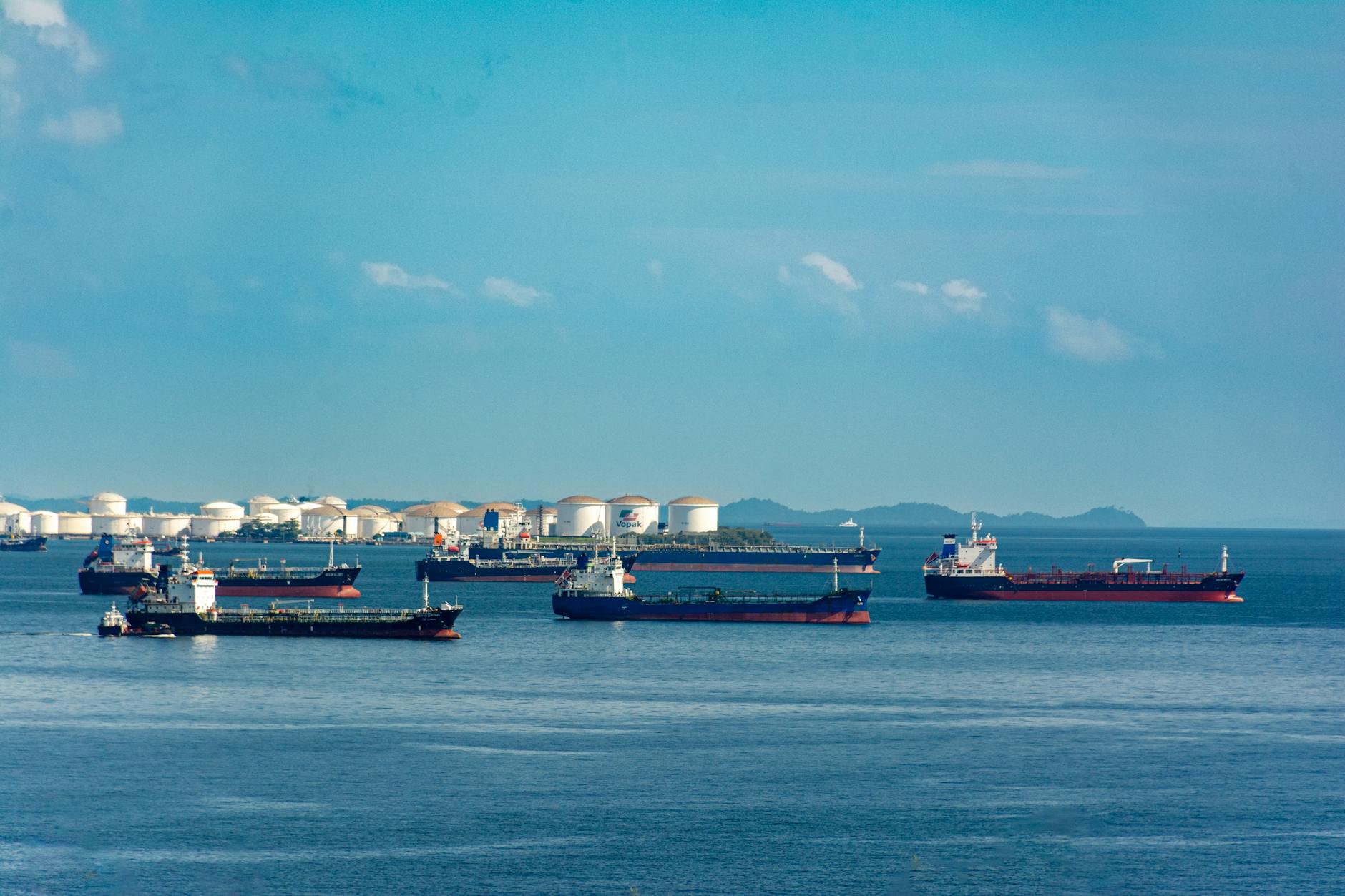
This characterization fundamentally misrepresents Singapore’s role. Singapore is not an oil and gas producer; it possesses no national oil company and no crude reserves to allocate. Instead, Singapore functions as the world’s premier oil and petrochemical trading hub, where major international oil companies—including Petronas, Shell, and Vitol—buy, sell, and trade refined products. When Wong promised continued trade with Australia, he was merely confirming that Singapore would maintain its status quo as a neutral trading platform. This is not a diplomatic victory; it is the baseline expectation of how Singapore operates.
Notably, there are no reports of Albanese or Wong meeting with the major oil traders headquartered in Singapore—the entities that actually control refined product flows. This omission suggests the Australian delegation did not understand that securing Singapore’s cooperation requires engaging with private sector traders, not just government officials. Singapore’s government has historically avoided interfering with market operations, and Wong gave no indication he would make an exception for Australia.
Albanese’s meeting with Brunei’s Sultan Hassanal Bolkiah followed a similar pattern. While the Sultan controls Brunei’s oil and gas sectors, the substantive commercial operations are managed by Brunei Shell Petroleum, the upstream and downstream operator. There are no reports of Albanese meeting with BSP representatives, meaning discussions remained at the political level without engaging the companies that actually control production and marketing decisions.
The South Korean component of the tour also lacked strategic depth. While Penny Wong carried Australia’s message about needing reliable fuel and fertilizer supplies to Japan, China, and South Korea, the framing itself undermined Australia’s negotiating position. By explicitly declaring that Australia faced supply shortages and required buyer support to maintain its export economy, Wong signaled weakness rather than strength. In Asian business culture, admitting vulnerability is rarely a winning negotiating tactic. Suppliers that acknowledge their own supply constraints cannot credibly position themselves as reliable partners. Conversely, buyers in Japan, China, and South Korea can diversify their sourcing—they already do so extensively—and need not depend on Australian assurances.
The most revealing gap in Australia’s energy diplomacy was the complete absence of engagement with India’s energy sector. India’s Reliance Industries operates the Jamnagar refinery complex, which has a Nelson Complexity Index (NCI) of 21.1—the highest of any single-site refinery globally. This facility processes 216 different grades of crude oil, giving it unparalleled flexibility in sourcing and refining capacity. Critically, 65-70 percent of India’s crude imports originate from non-Middle Eastern sources, with approximately 70 percent arriving via routes that bypass the Strait of Hormuz—the chokepoint vulnerable to U.S.-Iran tensions.
Reliance’s refined products flow through Singapore’s trading hub and into Asian markets, including Australia. The company trades in Russian crude without facing serious objections from Western governments, demonstrating both its market power and geopolitical flexibility. Yet there is no evidence that Albanese or Wong attempted to engage Prime Minister Narendra Modi or Reliance Industries to secure long-term supply arrangements. This omission suggests the Australian government either was unaware of Reliance’s pivotal role in regional energy supply or failed to recognize that India represents a more reliable and diversified energy partner than Southeast Asian transit hubs.
The fundamental lesson Albanese and Wong missed is that securing energy supplies in Asia requires capital commitment, not diplomatic declarations. Japan has recently established a $10 billion fund to help Southeast Asian countries manage current oil crises—an investment-based approach that carries far more weight than political promises. This initiative, welcomed by Ho Ching (wife of former Singapore Prime Minister Lee Hsien Loong), demonstrates that Asian business respects cash investments above all other considerations.
Malaysian, Korean, and Japanese companies have invested billions in Australian liquefied natural gas projects to secure long-term supplies. These firms expect reciprocal investment from Australia if it seeks equivalent guarantees in Asia. A jointly owned, high-complexity refinery in Southeast Asia—capable of processing diverse crude grades and serving both regional and Australian markets—would represent the kind of structural commitment that generates binding supply relationships. Such infrastructure would require Australia to commit capital, technology, and operational expertise over decades, not merely to request favorable treatment during supply crises.
Additionally, Australia must accelerate development of its own upstream oil and gas reserves and expand storage capacity in Western Australia. Albanese did show some recognition of this reality when discussing additional LNG fields coming online with Lawrence Wong. However, this understanding was not reflected in the broader strategy, which relied on securing external supplies rather than expanding domestic production and storage resilience.
Australia’s April 2024 energy diplomacy mission revealed a disconnect between political ambition and strategic reality. The government attempted to secure supply guarantees through high-level diplomatic engagement with nations that either lack control over their own energy resources (Singapore), faced their own supply shortages (Malaysia, Indonesia, Philippines, Vietnam), or expected reciprocal investment rather than political requests (South Korea, Japan).
To address genuine energy security vulnerabilities, Australia must pursue a three-part strategy. First, accelerate domestic upstream oil and gas development and build strategic storage capacity in Western Australia. Second, commit capital to joint infrastructure investments in Southeast Asia and India—particularly high-complexity refineries that create binding commercial relationships. Third, deepen engagement with India’s energy sector, recognizing that Reliance Industries and other Indian players offer more diversified, resilient supply chains than Southeast Asian trading hubs dependent on Middle Eastern crude.
The current approach—seeking supply guarantees without offering investment or demonstrating understanding of regional energy structures—will continue to yield embarrassing reversals and damaged credibility. Australian policymakers must recognize that energy security in Asia is purchased through capital commitment and operational partnership, not secured through diplomatic missions that misrepresent transit trade as supply guarantees or treat trading hubs as production sources.