Physical Address
304 North Cardinal St.
Dorchester Center, MA 02124
Physical Address
304 North Cardinal St.
Dorchester Center, MA 02124

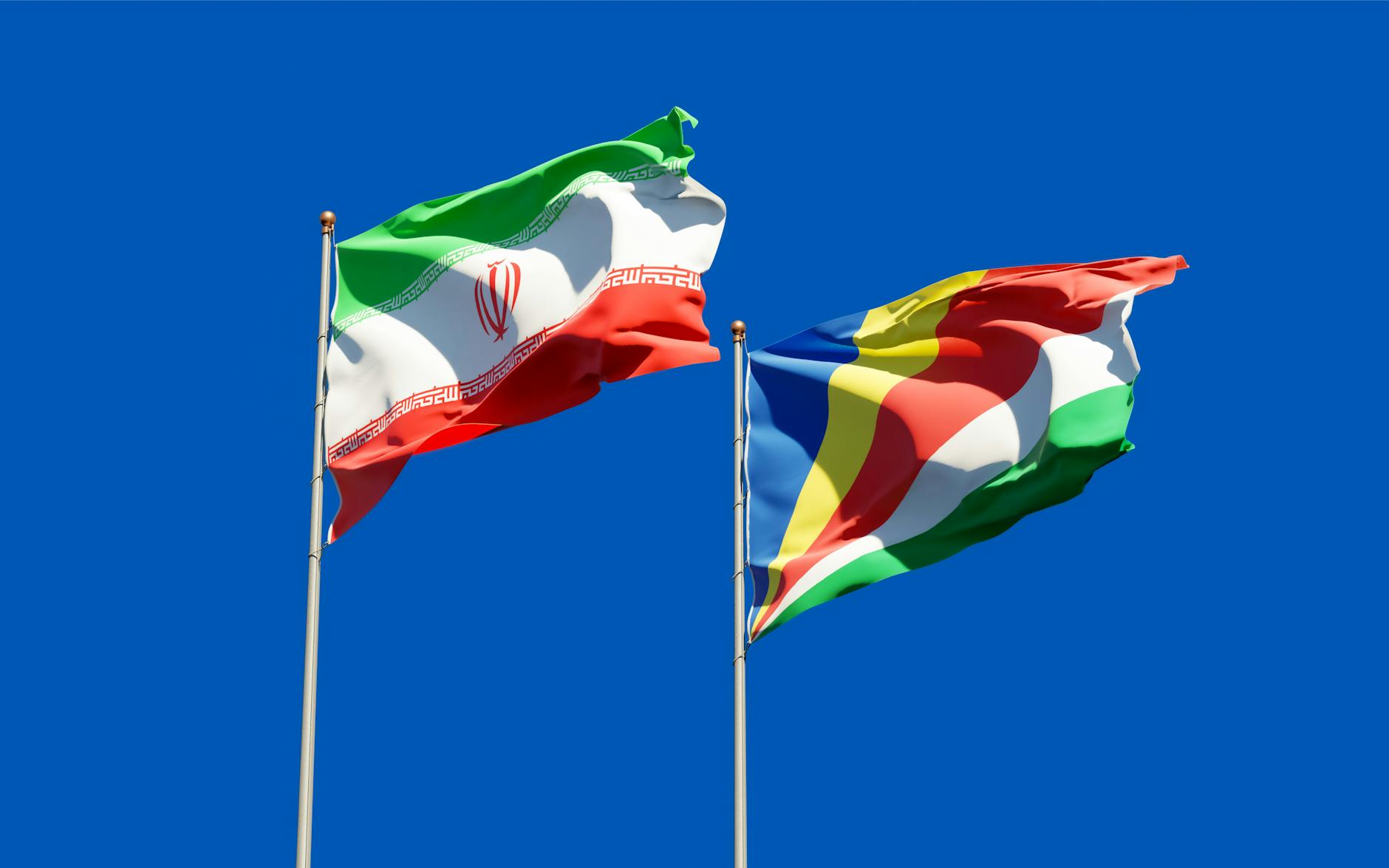
The Iran crisis exposes fundamental contradictions within BRICS' multipolar model. Divergent strategic interests among Russia, China, India, and South Africa reveal that the bloc lacks the institutional mechanisms to coordinate effective responses to major regional conflicts, raising questions about its viability as an alternative to Western-led security architecture.
The escalating tensions surrounding Iran present a defining challenge to BRICS’ foundational premise: that a coalition of major emerging economies can effectively coordinate responses to global crises without Western institutional frameworks. As conflict dynamics in the Persian Gulf intensify, the bloc’s ability to forge consensus on Iran policy reveals fundamental fractures in its multipolar model. Unlike issues of direct economic interest to member states, the Iran question forces BRICS to navigate competing strategic interests, historical alignments, and geopolitical red lines that its existing institutional architecture was not designed to manage.
For BRICS—comprising Brazil, Russia, India, China, and South Africa—the Iran crisis represents more than a regional security issue. It tests whether the organisation can function as a genuine alternative to Western-led multilateralism or whether it remains a collection of states with divergent strategic priorities that happen to share anti-Western sentiment. The answer has significant implications for the bloc’s credibility as a counterweight to existing international institutions and for regional stability in the Middle East and beyond.
BRICS’ internal composition creates inherent tensions over Iran policy that no amount of institutional reform can easily resolve. Russia maintains deep strategic alignment with Iran, viewing the Islamic Republic as a critical counterweight to Western influence and a partner in regional power projection, particularly following international sanctions over its Ukraine invasion. China, while maintaining economic and energy ties to Iran, prioritises stability in global energy markets and freedom of navigation through the Strait of Hormuz—interests that can conflict with Iranian regional assertiveness.
India occupies an even more complex position. New Delhi maintains substantial energy imports from Iran but has also deepened its strategic partnership with the United States and Israel through the Abraham Accords framework and broader Indo-Pacific security arrangements. India’s Quad membership and its growing defence relationship with Washington create diplomatic constraints that BRICS coordination cannot override. South Africa, as the bloc’s African representative and current BRICS chair (as of 2023), faces pressure to maintain its non-aligned posture while managing its own economic vulnerabilities and international isolation risks.
Brazil, geographically distant from Middle Eastern dynamics, has historically pursued pragmatic engagement with Iran based on commercial interests rather than strategic alignment. Under President Luiz Inácio Lula da Silva, Brazil has sought to position itself as a mediator in global conflicts, but this stance requires careful distance from any bloc position that might be perceived as taking sides in regional disputes.
BRICS lacks the institutional depth and decision-making mechanisms that enable NATO, the EU, or even ad-hoc Western coalitions to respond rapidly to regional crises. The bloc has no equivalent to NATO’s Article 5 collective defence clause, no permanent secretariat with operational capacity, and no established protocols for coordinating military or diplomatic responses to emerging threats. The BRICS Contingency Reserve Arrangement and New Development Bank address financial cooperation, but they are fundamentally ill-suited to security crisis management.
When the United States, Israel, or European powers need to coordinate responses to Iranian actions—whether ballistic missile tests, drone strikes, or nuclear programme developments—they operate through established command structures, intelligence-sharing agreements, and decades of operational experience. BRICS members, by contrast, must negotiate positions from scratch each time a crisis emerges, with no binding enforcement mechanisms or shared threat perception to accelerate consensus.
This institutional deficit becomes particularly acute when events demand rapid response. A significant escalation in the Strait of Hormuz, a major Iranian military provocation, or an Israeli military action would require BRICS coordination within days or hours. The bloc’s consensus-based decision-making model, while theoretically democratic, is practically incompatible with the speed required for effective crisis management. Russia and China could act unilaterally, but doing so would undermine BRICS’ legitimacy as a unified actor.
BRICS was constructed partly on the premise that emerging economies could offer alternative pathways to conflict resolution and international cooperation. The bloc’s rhetoric emphasises respect for sovereignty, rejection of Western interventionism, and multipolarity as a stabilising force. Yet the Iran crisis demonstrates that offering an alternative is not the same as offering a superior one.
When regional conflicts escalate, states require mechanisms to enforce agreements, verify compliance, and impose costs on violations. The UN Security Council, despite its flaws, provides this function through binding resolutions and enforcement authority. BRICS has no equivalent. The bloc can issue statements expressing concern or calling for dialogue, but these carry no enforcement weight and often lack internal agreement on diagnosis or remedy.
Russia and China have used BRICS as a platform to block Western-led initiatives on Iran in the Security Council, but blocking is not the same as leading. A constructive alternative to Western-led multilateralism would require BRICS to broker agreements, monitor compliance, and credibly threaten enforcement—functions that require far greater institutional capacity and member-state consensus than currently exists. The Iran crisis exposes this gap between BRICS’ aspirations and its actual operational capabilities.
The Iran tensions will likely accelerate a trend already visible within BRICS: selective alignment on specific issues rather than bloc-wide coordination. Russia and China may coordinate on Iran policy while India and South Africa pursue independent approaches. Brazil may engage in parallel diplomacy. This is not necessarily a failure—international relations routinely involve flexible coalitions on specific issues—but it contradicts BRICS’ self-presentation as a unified alternative to Western-led order.
The consequence is a more fragmented global system in which major powers coordinate on some issues while remaining adversarial on others, without any overarching institutional framework to manage the resulting instability. This is arguably more destabilising than either a bipolar system with clear alignments or a functioning multipolar system with robust coordination mechanisms. BRICS may inadvertently be creating the worst of both worlds: enough great power competition to generate conflict, but insufficient coordination to manage it.
BRICS faces a choice. It can attempt to develop genuine security coordination mechanisms—joint intelligence-sharing, military liaison arrangements, agreed protocols for crisis management—but this would require member states to subordinate national interests to bloc interests in ways they have not yet demonstrated willingness to do. Alternatively, BRICS can accept its limitations and redefine itself as a forum for economic cooperation and political coordination on non-security issues, abandoning pretences to be a comprehensive alternative to Western institutions.
The Iran crisis suggests that without significant institutional development, BRICS will struggle to manage major regional conflicts that implicate multiple member-state interests. This does not mean the bloc will dissolve—the economic rationale for cooperation remains strong—but it does mean that BRICS will not emerge as a credible alternative security architecture. Regional stability in the Middle East, South Asia, and the Indo-Pacific will continue to depend primarily on bilateral relationships, ad-hoc coalitions, and Western-led institutional frameworks, with BRICS playing a marginal role in actual crisis management.
For Australia and New Zealand, this assessment suggests that while engaging BRICS members bilaterally remains important, relying on BRICS as a stabilising force in regional security is premature. The bloc’s internal contradictions on Iran policy are emblematic of deeper structural limitations that will constrain its effectiveness across multiple security domains. Policy planners should focus on strengthening bilateral relationships with individual BRICS members, particularly India and Brazil, while maintaining primary security coordination through established partnerships and institutions that have demonstrated operational capacity.