Physical Address
304 North Cardinal St.
Dorchester Center, MA 02124
Physical Address
304 North Cardinal St.
Dorchester Center, MA 02124

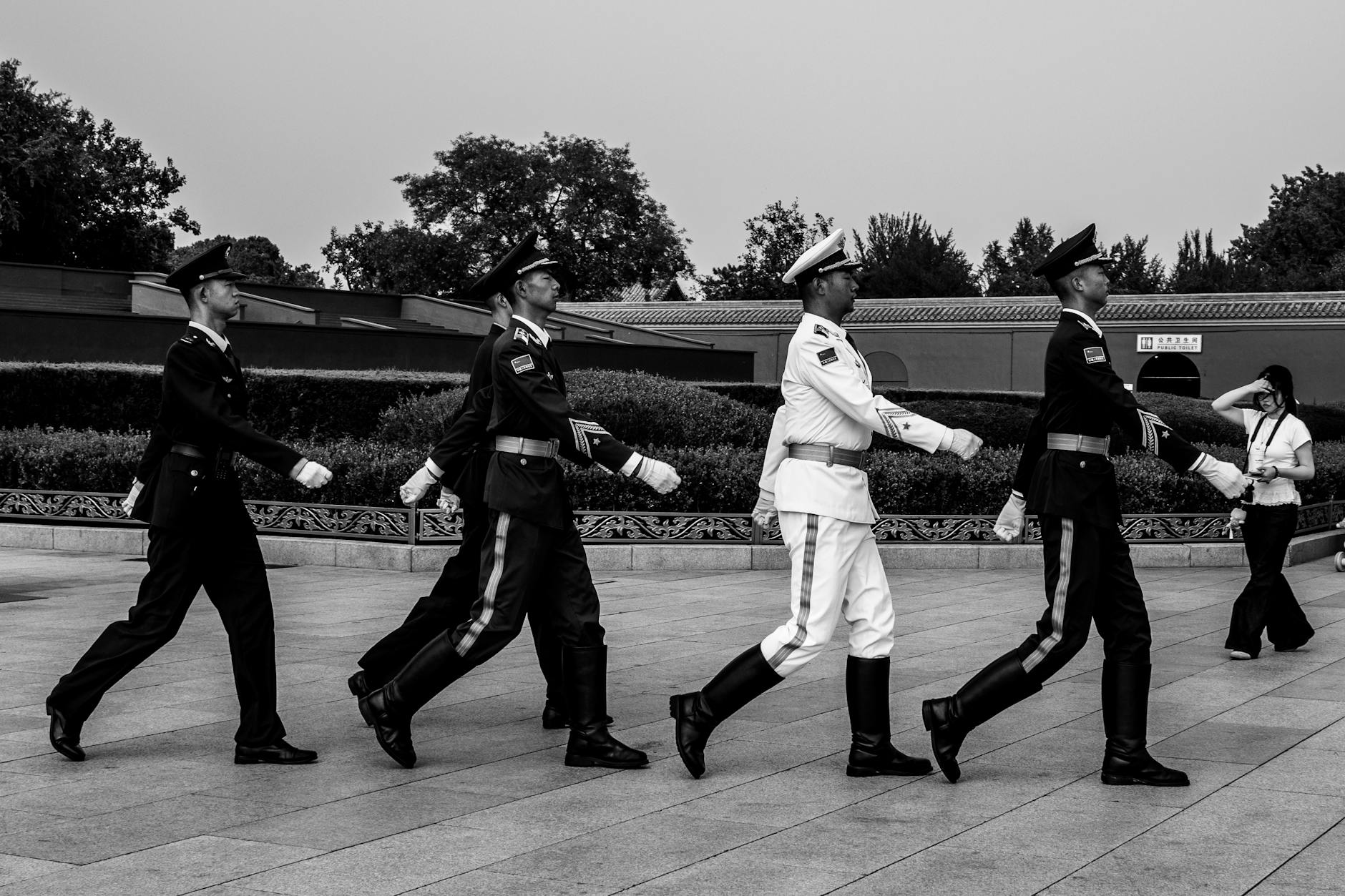
The removal of Zhang Youxia from China's Central Military Commission signals Xi Jinping's tightening control over the military establishment, with direct implications for Taiwan's security and Indo-Pacific stability.
The removal of Zhang Youxia from China’s Central Military Commission (CMC) represents a significant recalibration of power within Beijing’s defence establishment. As Vice Chairman of the CMC under Xi Jinping, Zhang Youxia occupied one of the most influential positions in China’s military apparatus. His departure signals not merely a routine personnel rotation but a deliberate consolidation of authority that carries direct implications for military modernization trajectories and cross-strait dynamics.
This leadership change occurs at a critical juncture. China’s military modernization programme remains central to Xi Jinping’s strategic vision, and the CMC’s composition directly shapes defence priorities, resource allocation, and operational doctrine. For regional security analysts, understanding Zhang’s removal requires examining the factional dynamics within China’s military establishment and the strategic implications for Taiwan and broader Indo-Pacific stability.
Zhang Youxia, a career military officer and engineer by training, brought technical expertise to the CMC’s strategic planning. His background in military modernization made him instrumental in overseeing China’s ongoing transformation from a conscript-heavy force to a technologically advanced, professional military capable of power projection across the Indo-Pacific. As Vice Chairman since 2018, Zhang influenced acquisition priorities, force structure reforms, and the integration of emerging technologies into operational doctrine.
His particular focus on naval modernization and the People’s Liberation Army Navy (PLAN) expansion proved consequential. Under CMC oversight that included Zhang, China accelerated carrier construction, expanded submarine capabilities, and developed advanced surface combatants. These programmes directly enabled China’s ability to project power toward Taiwan and across the South China Sea.
Zhang’s removal raises questions about continuity in these modernization initiatives. While major programmes rarely reverse course due to personnel changes, the leadership transition may alter implementation timelines, resource prioritization between services, and the strategic rationale underpinning specific weapons systems.
Zhang’s departure must be understood within Xi Jinping’s broader project of centralizing authority over China’s military apparatus. Since becoming Chairman of the CMC in 2012, Xi has systematically removed potential rivals and installed loyalists throughout the defence establishment. The 2015-2016 military reforms, which abolished seven military regions in favour of five theatre commands, exemplified this consolidation strategy.
The CMC’s composition reflects Xi’s inner circle. By removing Zhang and reshaping the military leadership, Xi ensures that strategic decisions—particularly those regarding Taiwan—remain under his direct control without institutional constraints from long-serving military figures with independent power bases. This pattern mirrors Xi’s approach to civilian governance, where term limits have been eliminated and factional rivals progressively sidelined.
The timing of Zhang’s removal, coming amid discussions about potential cross-strait military action, suggests Xi is tightening control over the military decision-making apparatus precisely when strategic choices about Taiwan may become more acute. A military leadership entirely composed of Xi loyalists reduces the likelihood of institutional pushback against aggressive policy options.
For Taiwan, Zhang’s removal carries dual implications. On one level, the leadership transition may cause temporary disruptions in operational planning or coordination between different military services. The PLAN, in particular, loses a senior figure with deep involvement in its modernization trajectory. This could create brief windows where institutional knowledge gaps emerge or where new leadership requires time to establish authority over subordinate commands.
However, the broader implication points toward increased military readiness rather than diminished capability. Xi’s consolidation of control typically accelerates decision-making on contentious issues. A military leadership entirely responsive to Xi’s strategic vision removes institutional friction that might otherwise slow preparations for military contingencies. The removal of figures like Zhang—who, despite loyalty, represented institutional interests separate from Xi’s personal authority—streamlines the command structure for rapid execution of orders.
The Taiwan question remains central to Xi’s political legitimacy. Military modernization explicitly targets the capability to coerce or militarily defeat Taiwan. With Zhang’s departure, the CMC becomes more homogeneous in its composition and more responsive to Xi’s strategic timeline. This does not necessarily mean imminent military action, but it does mean reduced institutional resistance to aggressive posturing or rapid military escalation should Xi determine political circumstances favour such action.
Zhang’s removal occurs against the backdrop of intensifying great power competition in the Indo-Pacific. The United States, Australia, and regional partners monitor China’s military leadership transitions closely because they signal strategic intent and decision-making structures. A more centralized, Xi-dominated CMC may pursue more assertive policies in the South China Sea, increase pressure on Taiwan, and accelerate military modernization programmes targeting American military advantages.
The removal also reflects potential tensions within China’s elite regarding the pace and scope of military modernization. Zhang, as a technical expert, may have advocated for measured modernization focused on capability development. His replacement with figures more ideologically aligned with Xi’s nationalist vision could accelerate programmes focused on demonstrating Chinese military superiority and challenging American regional presence.
For Australia and New Zealand, the implications are indirect but significant. A more assertive Chinese military posture increases pressure on allied defence partnerships and regional security arrangements. The Quad (Australia, India, Japan, United States), AUKUS, and bilateral defence relationships with Pacific Island nations all operate in the context of Chinese military modernization and strategic intent. Leadership changes in Beijing that signal accelerated military assertiveness complicate regional stability calculations.
Zhang Youxia’s removal exemplifies the ongoing centralization of power within China’s military establishment under Xi Jinping’s leadership. The immediate consequence is a CMC more responsive to Xi’s strategic vision and less constrained by institutional interests or long-serving officials with independent power bases. For Taiwan, this translates to a Chinese military apparatus increasingly capable of rapid mobilization and execution of aggressive strategies without institutional friction.
The key analytical question is whether Zhang’s replacement accelerates or moderates specific modernization programmes. Early indicators suggest Xi’s consolidation of military control is designed to enable, not constrain, assertive strategic options. The removal of a senior figure with technical expertise in military modernization, combined with the installation of more ideologically aligned leadership, suggests the CMC will pursue more aggressive modernization timelines and more assertive operational postures.
For policymakers in Canberra, Wellington, and allied capitals, Zhang’s departure warrants close monitoring of subsequent CMC decisions regarding military exercises, weapons procurement, and statements regarding Taiwan. The personnel change itself is less significant than the strategic direction it enables. A military leadership entirely composed of Xi loyalists, operating under streamlined decision-making structures, represents a system optimized for rapid strategic action rather than institutional deliberation. Regional security planning must account for this structural reality.