Physical Address
304 North Cardinal St.
Dorchester Center, MA 02124
Physical Address
304 North Cardinal St.
Dorchester Center, MA 02124

From Crisis Response to Operational Normalcy: China’s Manned Space Program Navigating MMOD Threats with Strategic Resilience and Future Vision
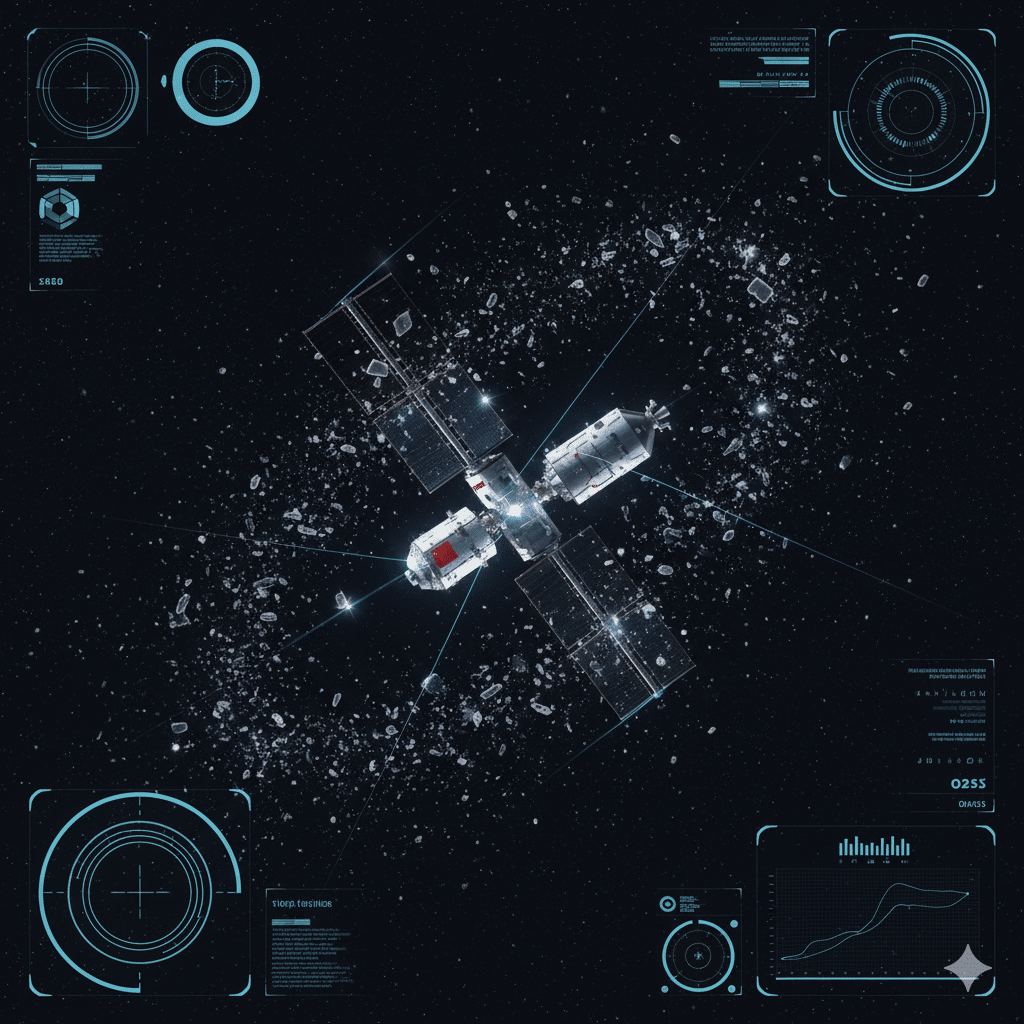
State media reports confirm China’s plan to launch the uncrewed Shenzhou-22 (SZ-22) spacecraft to the Tiangong Space Station (CSS) on November 25, 2025. This mission is highly unusual, as it is not a routine crew rotation but an emergency contingency triggered by suspected Micrometeoroid and Orbital Debris (MMOD) damage to the Shenzhou-20 return module, rendering it unsafe for astronaut return. SZ-22 will serve as a critical rescue vehicle and return option for the Shenzhou-21 crew currently onboard the CSS, in addition to delivering essential supplies.
This swift deployment not only showcases China’s robust system redundancy and rapid response capabilities in managing orbital contingencies but also underscores the escalating and severe threat posed by MMOD in Low Earth Orbit (LEO), challenging the long-term safety and operational viability of all space stations.
The design philosophy of the Shenzhou program mandates a docked spacecraft to serve as a “lifeboat” for the crew. The SZ-20 incident highlights:
The suspected MMOD impact on SZ-20 serves as a tangible warning to the global space community, particularly for operators of LEO space stations.
This crisis management exercise is a crucial test for China’s manned space program as it transitions from its “construction phase” to “routine operational phase.”
This event will undoubtedly accelerate China’s investment and deployment in its space security doctrine:
As a direct affected party by MMOD threats, China gains heightened leverage on the international stage to advocate for and shape Space Traffic Management (STM) international norms. This includes specific calls for debris mitigation measures and data sharing concerning mega-constellations (e.g., Starlink), aiming to safeguard its own and global orbital security interests.
| Forecast Area | Trend and Specific Prediction | Strategic Impact |
| Space Operations | Shift towards “Smart Redundancy”: China will move beyond merely building backup vehicles to integrating AI-driven predictive maintenance and in-situ diagnostic tools for orbital assets. This will enable more efficient resource allocation and proactive threat mitigation. | Enhanced long-term operational sustainability for the CSS and future orbital platforms, reducing reliance on costly emergency launches. |
| Technology Development | OSAM as a National Priority: Significant, sustained investment will be directed towards modular spacecraft design, robotic repair arms, and in-orbit assembly capabilities. China aims to achieve operational OSAM capabilities for routine maintenance by the early 2030s. | Reduced logistical footprint and increased lifespan of space assets; critical for future deep-space missions where “replacement” is not an option. |
| International Relations | Assertive STM Advocacy: China will become a more vocal and proactive advocate for binding international STM regulations, particularly for LEO operators. This will involve proposing specific, stringent guidelines for constellation deployment, tracking, and de-orbiting. | Increased friction with nations pursuing large-scale commercial LEO constellations; China positioned as a leader in orbital environmental stewardship, strengthening its diplomatic standing in space governance. |
| Domestic Industrial Impact | Integration of Civil-Military Space Industries: Lessons learned from the emergency response will further blur the lines between China’s civil and military space sectors, particularly in areas of rapid prototyping, advanced materials, and launch readiness. | Accelerated transfer of cutting-edge research to operational capabilities; potential for enhanced military-civil fusion in critical space technologies. |
The emergency launch of Shenzhou-22 represents a successful response to an unforeseen orbital challenge and a significant milestone in China’s journey to becoming a leading space power. It not only validates the design flexibility and operational maturity of the CSS system but also serves as a global alert to the escalating MMOD threat.
Policy Recommendations: