Physical Address
304 North Cardinal St.
Dorchester Center, MA 02124
Physical Address
304 North Cardinal St.
Dorchester Center, MA 02124
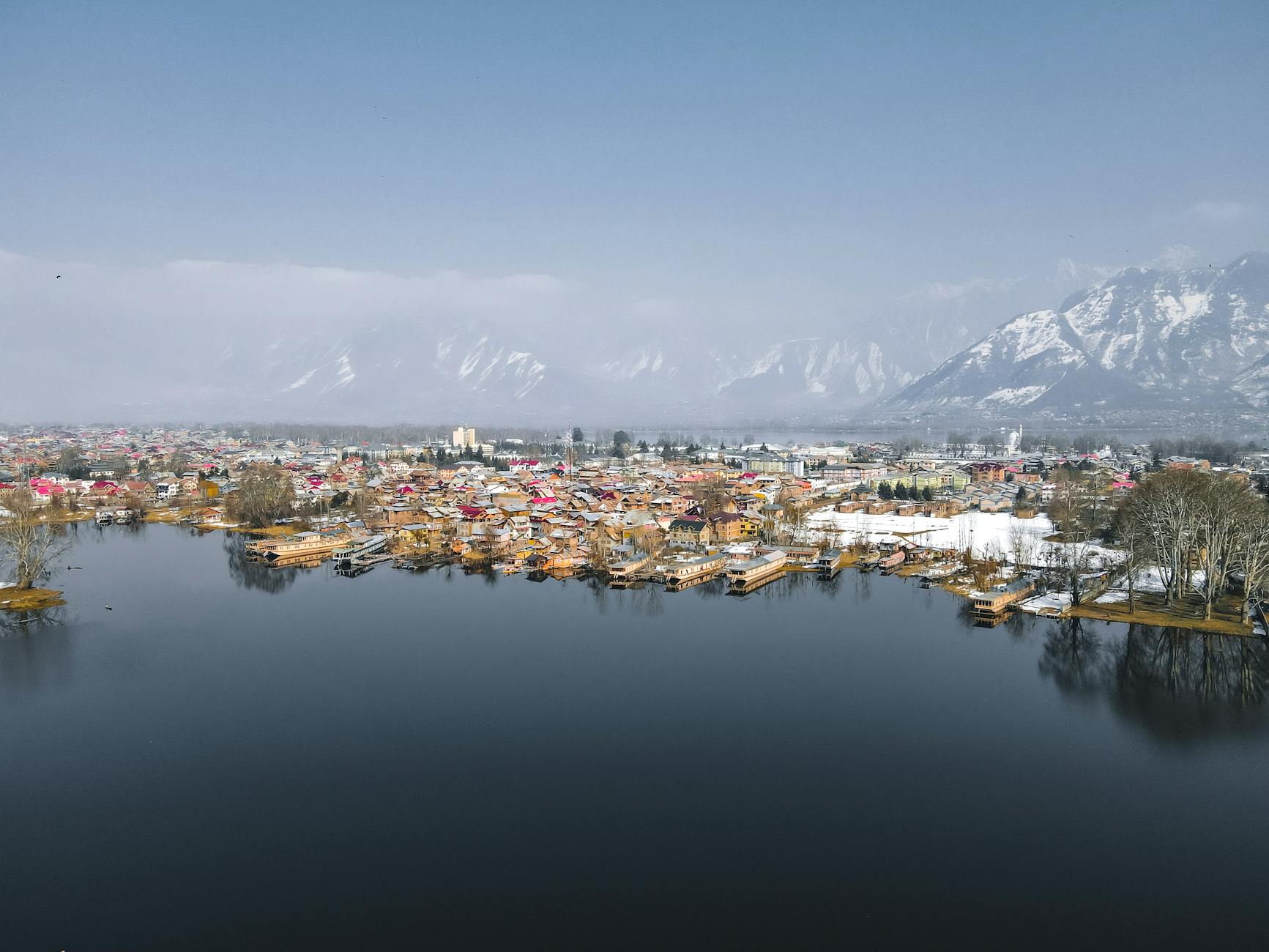
India's governance approach in Jammu and Kashmir has shifted toward legislative mechanisms designed to remove opposition figures from elected office, bypassing conventional democratic processes. This strategy raises significant questions about institutional legitimacy and regional stability in a strategically sensitive border region.
India’s approach to governance in Jammu and Kashmir has undergone a significant institutional transformation, marked by a deliberate shift away from collaborative frameworks with locally elected representatives. Rather than engaging substantively with the legislative bodies established in the union territory, New Delhi has pursued legislative mechanisms designed to remove opposition figures from elected office. This strategic recalibration represents a departure from conventional democratic practices and raises fundamental questions about the trajectory of institutional development in the region.
The union territory of Jammu and Kashmir, which comprises approximately 12.3 million people across an area of 222,236 square kilometers, has experienced repeated cycles of administrative reorganisation since India’s independence. The most consequential recent restructuring occurred in August 2019, when the central government revoked Article 370 of the Indian Constitution, which had granted the former state special autonomy. This action simultaneously dissolved the state of Jammu and Kashmir and reconstituted it as a union territory under direct federal administration.
The current approach involves drafting and implementing legislation explicitly designed to disqualify or remove elected opposition members from office. This mechanism operates independently of electoral processes or constituency-based accountability. Rather than allowing local democratic institutions to function through standard legislative procedures—where opposition parties can present alternative policy positions, challenge executive decisions, and represent constituent interests—the central government has opted for direct legislative intervention at the union level.
This represents a fundamental inversion of federal democratic practice. In conventional parliamentary systems, opposition parties retain their seats and parliamentary rights regardless of central government preferences. Removal from office typically occurs through electoral defeat, voluntary resignation, or established constitutional procedures (such as disqualification for criminal conviction or violation of constitutional oaths). The Jammu and Kashmir model bypasses these mechanisms entirely.
The question of statehood status has remained unresolved for Jammu and Kashmir since the 2019 administrative restructuring. Prior to this reorganisation, Jammu and Kashmir held the constitutional status of a state, with an elected state assembly and a Chief Minister as the head of government. The union territory designation represents a subordinate administrative status, with significantly reduced autonomy and decision-making authority vested in local institutions.
The central government has not provided a definitive timeline or pathway for restoring statehood. This indefinite postponement creates structural uncertainty for regional political actors and elected officials. Without clarity on whether and when statehood might be restored, local democratic institutions operate under constrained authority and reduced legitimacy. The absence of a restoration mechanism effectively locks the region into a subordinate administrative status, fundamentally altering the balance between central and local authority.
The displacement of opposition figures through centrally drafted legislation creates several analytically significant problems for democratic governance. First, it eliminates a core democratic function: the ability of elected representatives to serve as institutional checks on executive power. Opposition parties provide scrutiny, propose alternative policies, and represent constituencies that voted against the government. Their removal undermines this accountability function.
Second, the mechanism erodes institutional legitimacy at the local level. When elected bodies cannot function autonomously—when their members can be removed by central decree rather than through electoral processes—voters rationally perceive these institutions as subordinate administrative bodies rather than genuine representative assemblies. This perception reduces political participation and weakens the social contract between citizens and local government.
Third, the approach creates incentives for political actors to view democratic participation as ineffective. If opposition parties cannot retain elected positions through democratic means, they have reduced incentive to engage constructively within electoral systems. This can drive political activity toward non-institutional channels, potentially destabilising the region further.
Jammu and Kashmir occupies a strategically sensitive position in South Asia. The region shares international borders with Pakistan and China, and has experienced significant security challenges including armed insurgency, cross-border terrorism, and periodic military escalation. The legitimacy of governance institutions is directly relevant to security outcomes. When local populations perceive governance as imposed rather than representative, they are more likely to support non-state actors and resist central authority.
The displacement of elected opposition figures may reduce immediate political friction with New Delhi, but it does not address underlying grievances regarding autonomy, representation, and political voice. These grievances have deep historical roots and cannot be resolved through administrative mechanisms alone. Sustainable stability requires institutional arrangements that local populations perceive as legitimate and representative.
The parallel to other conflict-affected regions is instructive. In Kashmir’s historical context, periods of perceived democratic exclusion have preceded increases in militancy and security incidents. Conversely, periods of relative political openness and local autonomy have generally corresponded with reduced insurgent activity. The current approach inverts this pattern by reducing local political space.
The displacement of opposition figures through centrally drafted legislation represents a significant departure from India’s federal democratic model. While it may provide short-term political advantages by reducing parliamentary obstruction, it creates long-term institutional vulnerabilities. The legitimacy of governance depends fundamentally on local populations’ perception that their representatives genuinely represent them and retain meaningful authority.
The indefinite postponement of statehood restoration, combined with mechanisms for removing opposition legislators, suggests a governance model based on direct central administration rather than devolved democracy. This model may be sustainable in regions with strong state capacity, weak opposition mobilisation, and limited external support for dissidents. Jammu and Kashmir possesses none of these characteristics. The region has experienced sustained security challenges, significant opposition mobilisation, and proximity to external actors with interests in regional instability.
A sustainable governance framework would require either genuine restoration of statehood with meaningful autonomy, or transparent acknowledgment that the union territory model represents permanent status and explicit definition of local authority within that framework. The current arrangement—indefinite union territory status combined with mechanisms for displacing opposition—creates institutional ambiguity that serves neither effective governance nor political stability.
For policymakers in New Delhi, the strategic question is whether short-term political control justifies the long-term institutional costs. For regional actors, the question is whether meaningful political voice can be achieved within the current framework. These questions will substantially shape Kashmir’s political trajectory over the coming decade.