Physical Address
304 North Cardinal St.
Dorchester Center, MA 02124
Physical Address
304 North Cardinal St.
Dorchester Center, MA 02124

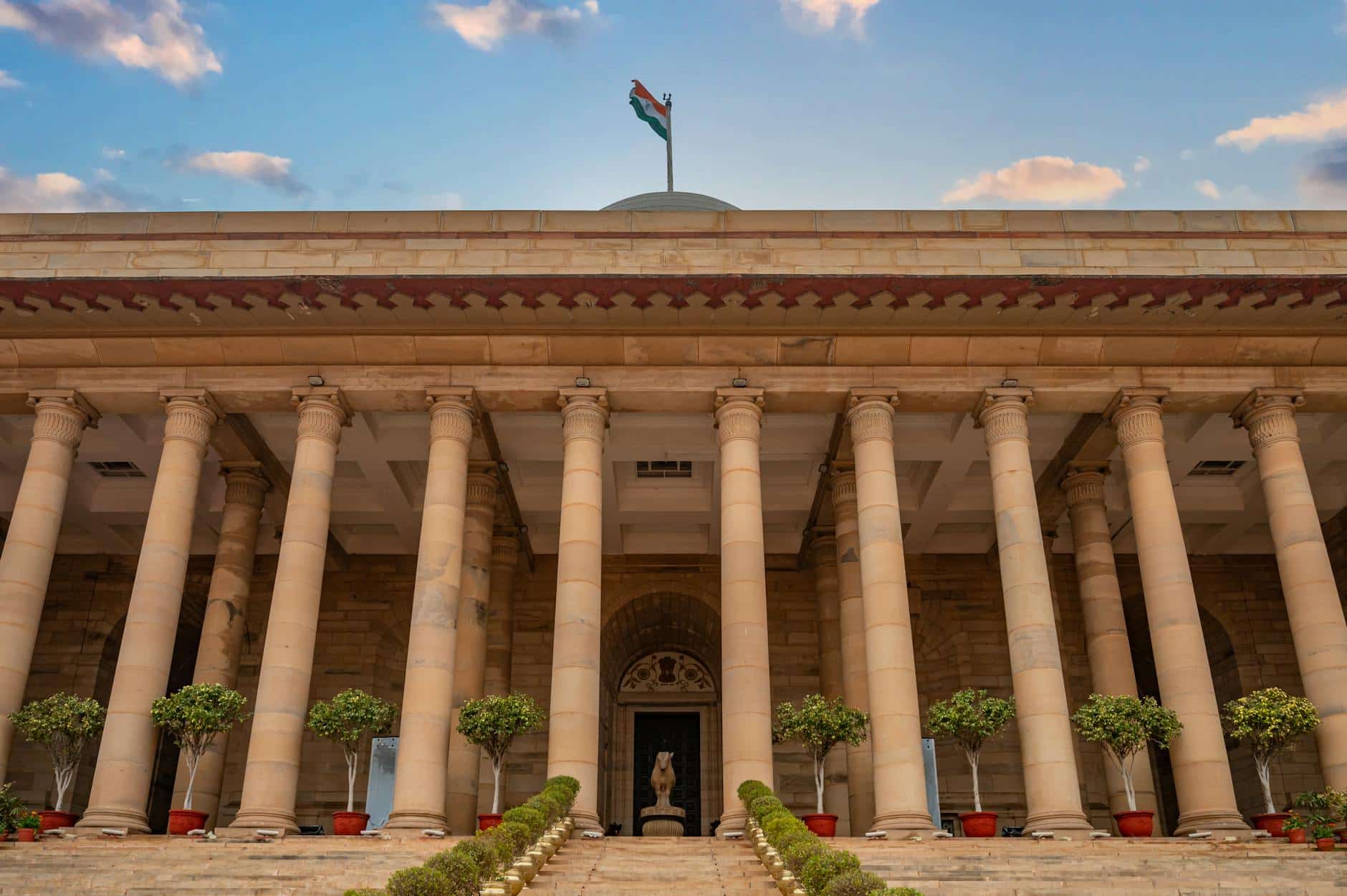
India's BRICS presidency exposes the fundamental paradox of leading a coalition united by opposition to Western dominance rather than shared strategic vision. Fractured by India-China tensions, competing regional interests, and recent membership expansion, BRICS functions as a development platform rather than a transformative geopolitical force.
India’s assumption of the BRICS presidency represents a critical test of whether a coalition built on opposition to Western dominance can function as a coherent geopolitical force. Unlike traditional multilateral institutions anchored by shared institutional frameworks or binding commitments, BRICS operates as an alliance of convenience—a grouping of Brazil, Russia, India, China, and South Africa united primarily by their status as major emerging economies and their collective skepticism toward Western-led global governance structures. This foundational weakness has become increasingly apparent as internal contradictions threaten to undermine the bloc’s effectiveness and strategic relevance.
The fundamental challenge facing India’s presidency is not merely administrative but existential: BRICS lacks a unifying positive agenda. Where NATO members share Article 5 security guarantees, where ASEAN members operate within a codified rules-based framework, and where the EU pursues integration through binding legal instruments, BRICS members are bound primarily by what they oppose rather than what they collectively seek to build. This reactive posture, effective as a protest movement against unipolarity, proves inadequate as a governing philosophy for a bloc claiming to reshape global order.
The most significant impediment to BRICS cohesion is the deteriorating India-China relationship. Since the 2020 Galwan Valley clash that killed 20 Indian soldiers and resulted in Chinese casualties, bilateral relations have remained tense, with periodic border skirmishes and fundamental disagreements over regional security architecture. India views China’s Belt and Road Initiative (BRI) expansion into South Asia and the Indian Ocean with strategic alarm, particularly given Beijing’s deepening ties with Pakistan and its infrastructure investments in Sri Lanka and Bangladesh that encircle Indian interests.
This tension directly undermines BRICS consensus-building. India has consistently blocked or watered down BRICS statements on issues where Chinese interests diverge from Indian preferences. The 2023 BRICS summit in Johannesburg revealed these fissures when discussions on expanding the bloc’s membership and establishing alternative financial mechanisms became entangled in broader geopolitical disputes. China’s advocacy for stronger BRICS positions on Western sanctions regimes—motivated by its own isolation over Taiwan and technology restrictions—conflicts with India’s preference for strategic autonomy and its reluctance to be locked into an explicitly anti-Western coalition.
Brazil and South Africa occupy increasingly uncomfortable positions within BRICS, each pursuing distinct regional and global interests that do not align neatly with the bloc’s trajectory. Brazil, under President Luiz Inácio Lula da Silva, has signaled interest in restoring diplomatic balance between Washington and Beijing rather than deepening anti-Western positioning. Lula’s government prioritizes Amazon protection, regional stability in South America, and maintaining strong trade relationships with the United States—objectives that sit uneasily with BRICS’ increasingly confrontational stance toward Western institutions.
South Africa faces its own pressures. As the bloc’s African representative and a nation deeply integrated into Western economic structures, South Africa has resisted BRICS attempts to weaponize the organization against the International Criminal Court or Western sanctions regimes. The country’s economy, heavily dependent on Western markets and investment, cannot afford the kind of strategic decoupling that Russia and increasingly China advocate. This creates persistent friction within BRICS decision-making processes, where consensus is theoretically required but rarely achieved without significant compromise that satisfies no one.
BRICS’ 2023 decision to expand membership by inviting Argentina, Egypt, Ethiopia, Iran, Saudi Arabia, and the United Arab Emirates exemplifies the bloc’s strategic confusion. While expansion was presented as evidence of BRICS’ growing appeal and the shift toward multipolarity, it actually demonstrates the organization’s inability to maintain coherent strategic direction. The new members bring their own regional conflicts, competing interests, and varying levels of commitment to BRICS’ stated objectives.
Iran’s inclusion, for instance, complicates relationships with India, which maintains complex ties with the United States and Israel while also managing its strategic partnership with Iran. Saudi Arabia and the UAE—both historically aligned with Washington and locked in their own regional competition—now sit alongside Russia and China at the BRICS table. This expansion has not strengthened BRICS unity; rather, it has increased the number of veto points and made consensus even more elusive. The organization risks becoming a forum where members attend to voice their individual grievances rather than advance collective interests.
One of BRICS’ most publicized initiatives has been the development of alternative financial mechanisms, particularly the New Development Bank (NDB) established in 2014 and discussions around creating a BRICS currency or payment system to reduce dependence on the US dollar. While these initiatives appeal to members seeking greater financial autonomy, they cannot succeed without the strategic alignment and institutional trust that BRICS currently lacks.
India’s approach to these mechanisms reveals the bloc’s fundamental problem: New Delhi supports the NDB’s expansion of lending capacity and infrastructure financing in the Global South, but it opposes rapid moves toward a common currency or payment system that would require surrendering monetary policy autonomy. This reflects India’s broader strategic calculation that BRICS is useful as a platform for advancing specific interests—infrastructure financing, development cooperation, representation in global governance—but not as an exclusive bloc requiring strategic alignment on security matters.
The reality is that BRICS members conduct most of their significant financial transactions outside the BRICS framework. Trade between BRICS members accounts for a modest portion of their total international commerce, and bilateral disputes often prevent the kind of deepened economic integration that might create structural incentives for political cooperation. Without such economic interdependence, BRICS remains vulnerable to political fragmentation whenever members’ interests diverge.
India’s presidency, which extends through 2024, inherits these structural problems without possessing the leverage to resolve them. India cannot compel China to moderate its assertiveness in the Indo-Pacific or pressure Russia to align with Indian preferences on global governance. Conversely, India’s own strategic autonomy—its refusal to formally align with either Washington or Beijing—limits its ability to offer BRICS members a compelling alternative vision of global order.
The Indian presidency has focused on expanding BRICS’ development agenda, emphasizing infrastructure financing, technology transfer, and capacity building in the Global South. These are legitimate and valuable initiatives, but they do not address BRICS’ core strategic incoherence. Expanding the NDB’s lending portfolio or launching new development initiatives cannot substitute for the shared strategic vision that BRICS fundamentally lacks.
India’s approach reflects a broader calculation: the bloc is useful for India as a forum for advancing development cooperation and amplifying the voice of emerging economies in global governance, but it cannot be allowed to constrain India’s strategic flexibility or force alignment with China on security matters. This instrumental view of BRICS is pragmatic but ultimately limits the organization’s potential as a transformative force in global politics.
The trajectory of BRICS under Indian leadership suggests the organization will increasingly function as a platform for advancing specific shared interests rather than as a unified bloc capable of challenging Western-led institutions. This represents a significant scaling back of earlier aspirations that BRICS would fundamentally reshape global governance structures and create genuine alternatives to Western-dominated multilateralism.
The organization will likely persist because member states derive value from participation—access to development finance, a forum for coordinating on specific issues like UN Security Council reform, and a venue for expressing dissatisfaction with the existing global order. However, BRICS will remain constrained by the absence of a unifying positive agenda, the persistence of bilateral conflicts among members, and the competing strategic interests that prevent deeper integration.
For India specifically, BRICS serves primarily as a tool for advancing development cooperation, amplifying the voice of the Global South, and maintaining strategic autonomy between Washington and Beijing. India’s presidency reflects this instrumental approach: advancing concrete initiatives on development and infrastructure while avoiding deeper strategic commitments that would compromise Indian strategic flexibility. This pragmatic but limited vision is likely to characterize BRICS’ evolution for the foreseeable future, positioning the organization as a useful but ultimately secondary actor in Indo-Pacific geopolitics.