Physical Address
304 North Cardinal St.
Dorchester Center, MA 02124
Physical Address
304 North Cardinal St.
Dorchester Center, MA 02124

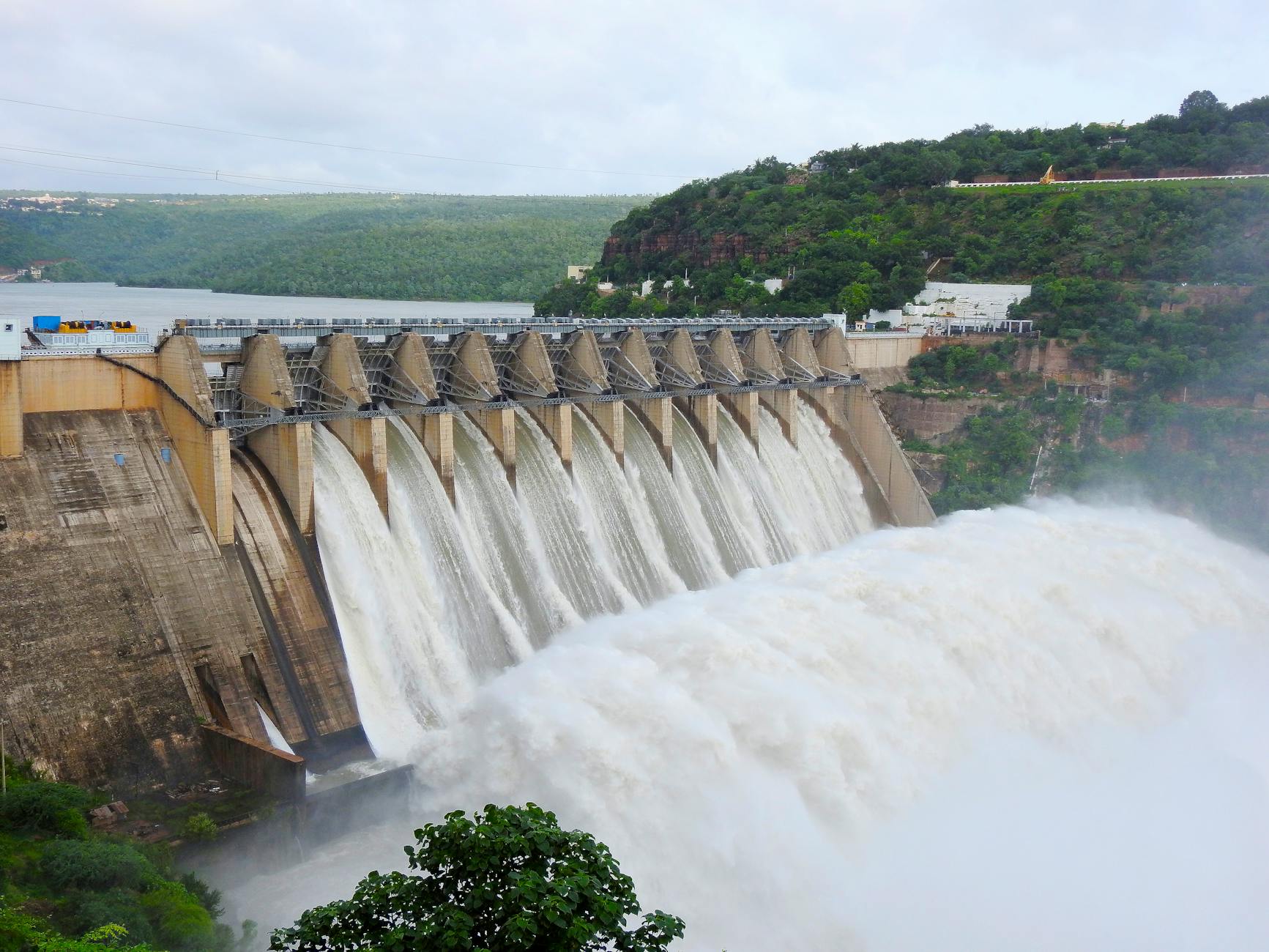
India's shift toward reciprocal dam development on the Brahmaputra fails to address China's structural upstream advantage. Effective water security requires negotiated bilateral frameworks similar to the Indus Waters Treaty, not competitive infrastructure projects.
The Brahmaputra River, Asia’s fourth-largest by discharge volume, flows 2,896 kilometres from the Tibetan plateau through northeastern India before entering Bangladesh. Yet this vital transnational waterway has become a flashpoint for Sino-Indian strategic competition rather than a site of cooperative management. India’s recent pivot toward a “dam-for-dam” development strategy—essentially mirroring China’s upstream hydroelectric infrastructure projects—signals a fundamental breakdown in diplomatic approaches to shared water resources and raises serious questions about regional hydrological stability.
The strategic significance of Brahmaputra management extends beyond water security. Control over the river’s flow directly affects agricultural productivity across northeastern India and Bangladesh, influences monsoon patterns, and shapes the geopolitical balance in one of Asia’s most strategically contested regions. India’s shift away from negotiated frameworks toward competitive infrastructure development represents a critical inflection point in Indo-Pacific water security governance.
China controls the Brahmaputra’s source region in Tibet, where it is known as the Yarlung Tsangpo. Since the 1990s, Beijing has systematically developed hydroelectric capacity along the upper reaches, constructing multiple dams that fundamentally alter downstream water flows. The Zangmu Dam (completed 2015) and the Dapeng Dam (operational since 2016) represent China’s assertion of unilateral water management authority over a transnational river system.
India’s response has been characteristically delayed and fragmented. Rather than pursuing bilateral or trilateral water-sharing agreements—the diplomatic instruments that have governed other shared South Asian waterways—New Delhi has adopted a tit-for-tat infrastructure development approach. This strategy involves accelerating hydroelectric projects within Indian territory, particularly in Arunachal Pradesh and Assam, under the assumption that dam construction provides leverage in an asymmetric water security relationship.
This approach fundamentally misunderstands the hydrological and geopolitical realities. China’s upstream position provides structural advantages that cannot be offset through downstream dam construction. India’s dams cannot regulate water flows originating from Chinese territory; they can only manage water already flowing into Indian jurisdiction. The logic of reciprocal dam-building is therefore strategically incoherent, even if politically expedient.
India and China have maintained limited information-sharing arrangements on Brahmaputra hydrology since 2013, when the two countries signed a memorandum of understanding on trans-border rivers. However, these mechanisms lack enforcement mechanisms, binding commitments on minimum flow rates, or provisions for seasonal water allocation. The agreement functions primarily as a data-sharing protocol rather than a substantive water management framework.
The absence of a comprehensive bilateral treaty—comparable to the 1960 Indus Waters Treaty between India and Pakistan, which has survived three wars and remains one of the world’s most successful transnational water agreements—reflects deeper Sino-Indian strategic mistrust. Beijing views water management as a sovereignty issue and resists multilateral oversight of its upstream development. New Delhi, lacking leverage, has defaulted to unilateral infrastructure development as a substitute for negotiated agreements.
This diplomatic vacuum has practical consequences. Seasonal flow variations, flood prediction accuracy, and drought mitigation strategies all suffer from insufficient data transparency and coordination. Bangladesh, positioned at the Brahmaputra’s mouth, faces acute vulnerability to both Chinese upstream development and Indian dam operations, yet has minimal formal input into management decisions that directly affect its 170 million citizens.
India’s dam-for-dam strategy contains several embedded strategic miscalculations. First, it assumes that hydroelectric capacity provides equivalent leverage to upstream control—a false equivalence in hydrology. Second, it prioritizes short-term energy generation over long-term water security planning, as dam construction timelines (typically 5-10 years) far exceed the diplomatic windows available for negotiated settlements. Third, it ignores the environmental and agricultural costs of competitive dam development, which fragments the river’s ecosystem and reduces agricultural productivity across the Brahmaputra basin.
The proliferation of dams also creates technical vulnerabilities. Multiple cascade dams along a single river system increase risks of catastrophic failure during extreme weather events. The 2023 monsoon season demonstrated this vulnerability when excessive rainfall overwhelmed dam management systems across northeastern India, resulting in significant flooding in Assam and Arunachal Pradesh. Uncoordinated dam operations between Indian states and between India and China amplify these risks.
Moreover, the dam-for-dam approach essentially concedes the strategic advantage to China. By pursuing reciprocal infrastructure development, India accepts a framework in which both countries optimize for unilateral benefit rather than collective hydrological stability. This is precisely the outcome Beijing prefers—it maintains upstream control while India exhausts resources on downstream projects that cannot alter the fundamental power asymmetry.
The Indus Waters Treaty provides a contrasting model. Negotiated in 1960 between India and Pakistan with World Bank mediation, the treaty allocates three eastern rivers (Sutlej, Chenab, Ravi) to Pakistan and three western rivers (Indus, Jhelum, Beas) to India. Critically, it established the Permanent Indus Commission as a joint institutional mechanism with technical expertise, dispute resolution procedures, and provisions for data sharing and site inspections. The treaty has survived the 1965 and 1971 wars, demonstrating that even adversaries can maintain water cooperation through robust institutional design.
The Mekong River Commission, established in 1995 among Thailand, Laos, Cambodia, and Vietnam, offers another precedent. Though imperfect and challenged by China’s upstream dam development, the MRC provides a framework for environmental impact assessment, flood management coordination, and seasonal flow planning. It demonstrates that multilateral water governance is possible even among countries with significant political differences.
India should pursue a similar institutional approach with China on the Brahmaputra, potentially including Bangladesh as a third party given its downstream vulnerability. Such a framework would require China to accept international oversight of its upstream development—a significant political concession that would require sustained diplomatic pressure from India, backed by strategic incentives and multilateral support.
India’s dam-for-dam strategy will not resolve the underlying asymmetry in Brahmaputra management. It will not compel China to accept binding constraints on its upstream development, nor will it improve water security for Indian farmers or Bangladesh’s vulnerable delta regions. Instead, it perpetuates a cycle of competitive infrastructure development that increases environmental degradation, hydrological unpredictability, and the risk of water-related conflict.
The strategic imperative is to shift from competitive infrastructure development toward negotiated institutional governance. This requires India to articulate a clear diplomatic position that emphasizes the shared vulnerability of all Brahmaputra basin states to hydrological extremes—both droughts and floods. It requires engaging China through multilateral forums where upstream development carries reputational costs and diplomatic consequences. It requires building a coalition with Bangladesh and ASEAN partners to establish international norms for transnational river management.
Water security in the Indo-Pacific will increasingly define regional stability. The Brahmaputra case demonstrates that unilateral infrastructure strategies are insufficient substitutes for diplomatic frameworks. India must recognize that genuine water security emerges not from dam-for-dam competition, but from binding agreements that constrain all parties equally and establish transparent mechanisms for managing the river’s shared benefits and burdens.