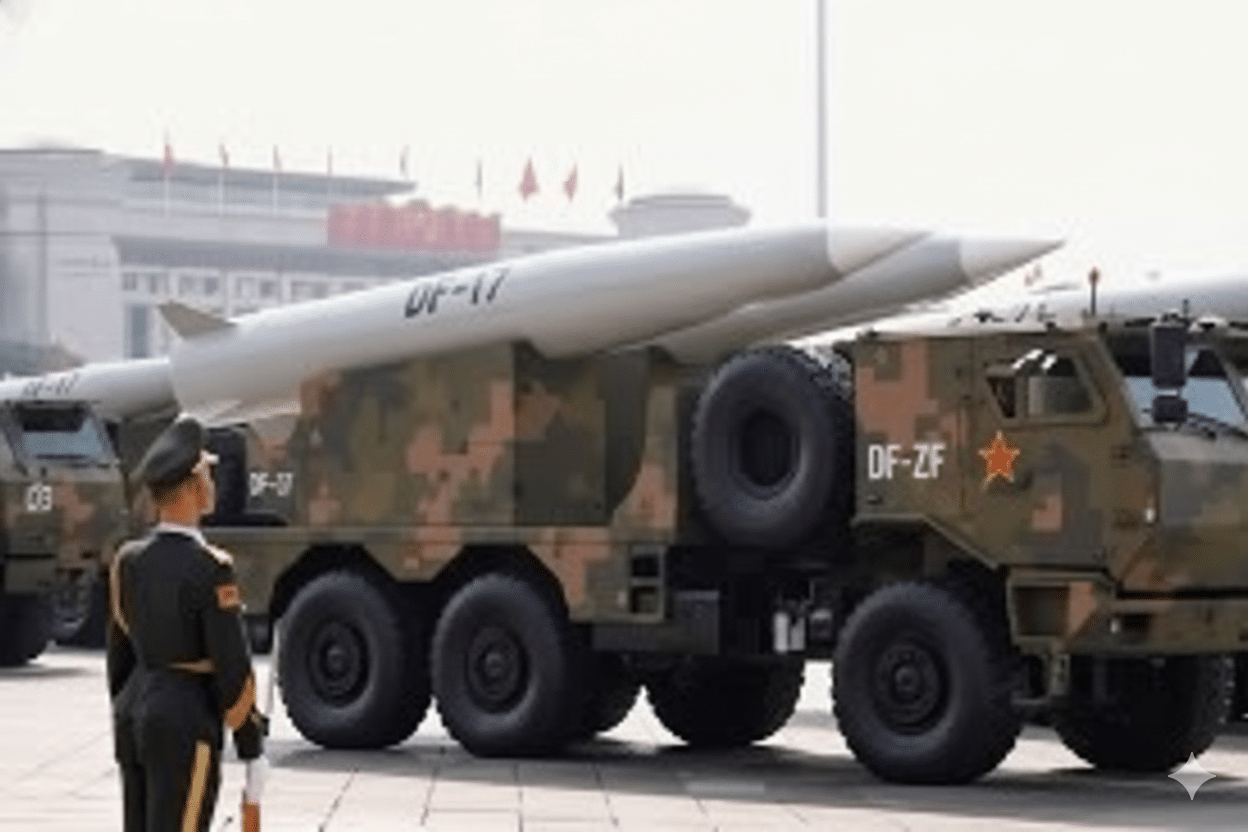
A recent report by the Stockholm International Peace Research Institute (SIPRI) reveals a critical strategic anomaly: despite Beijing’s consistently growing defense budget and intense push for military modernization, the revenues of China’s major military industrial corporations plummeted by 10% last year. This decline stands in sharp contrast to the record global growth (5.9%) in the arms market, which was fueled by geopolitical tensions. This analysis concludes that the drop is a direct operational consequence of the Central Government’s sweeping anti-corruption purge targeting the military and its industrial base. The short-term impact—manifesting as postponed contracts, cancelled procurements, and structural friction within the production chains of state giants like Norinco, AVIC, and CASC—introduces significant uncertainty into the timeline of China’s military modernization goals.
I. Data Quantification: A Structural Anomaly in Global Trends
The SIPRI data provides a quantitative perspective on the internal shock experienced by China’s defense industry:
Unique Revenue Contraction: Asia-Oceania was the only region globally to post a decline in top arms firm revenues, a trend entirely driven by the collective slump among China’s three major state-owned defense conglomerates.
Gap with Competitors: China’s 10% revenue decline contrasts sharply with major strategic rivals; the U.S. saw revenues rise by 3.8%, while regional players like Japan and Germany surged by 40% and 36% respectively. This underscores that China’s internal upheaval is actively eroding its relative strength in the global arms trade and strategic competition.
Differentiated Corporate Impact: While all major firms were affected, the land-systems producer Norinco recorded the most dramatic drop, shrinking by an astonishing 31% to $14 billion, indicating a severe freeze in procurement or project lifecycles.
II. Asymmetry Between Strategic Intent and Operational Fallout
The anti-corruption drive targeting the defense industrial complex—particularly following the purge of the Rocket Force and the expulsion of top generals, including the former number-two general He Weidong—has a clear political mandate: ensuring absolute loyalty to the top leadership and eradicating corruption that compromises equipment quality and combat readiness.
However, this campaign of political purification has generated severe and asymmetric operational consequences:
Procurement Gridlock: The widespread corruption investigations and high-level personnel changes have injected extreme caution into the procurement decision-making process between the military and defense firms. To avoid scrutiny, approval processes have slowed, leading to the postponement or cancellation of major arms contracts. This state of gridlock directly impacts the order books and cash flow of companies like Norinco and CASC.
Risk of Key Program Delays: The report explicitly links corruption-related personnel changes to government reviews and “project delays.” For companies such as AVIC, which is crucial for delivering advanced military aircraft, any slowdown could derail the People’s Liberation Army’s (PLA) established modernization schedule, specifically concerning force projection in theaters like the Taiwan Strait and the South China Sea.
III. Long-Term Implications for the PLA’s Modernization Objectives
China’s military modernization trajectory aims for fundamental modernization by 2035 and achieving “world-class” status by 2049. The short-term efficiency sacrifice imposed by the current purge introduces significant strategic uncertainty into these timelines:
Deterrence Capability Volatility: Delays in the delivery of key military capabilities can create volatility in deterrence perception. Regional rivals will closely monitor how these delays affect China’s Anti-Access/Area Denial (A2/AD) capabilities and long-range power projection.
Supply Chain Restructuring and Cost Inflation: To establish a more “purified” procurement system, defense firms will be forced to dismantle operational models long reliant on informal relationships and grey areas. This transition will lead to a significant increase in compliance and auditing costs in the future, potentially reducing the military value received for every yuan spent on the defense budget.
Risk of Systemic Stagnation: While anti-corruption is designed to foster quality, excessive political scrutiny and punishment mechanisms may encourage decision-makers to adopt a “risk-averse” or “non-committal” stance. In modern military technology competition, such systemic stagnation in innovation and rapid iteration capacity could pose a greater long-term threat than corruption itself.
Conclusion: The central leadership is engaging in a painful trade-off between loyalty and efficiency. While the purge is politically necessary, from a military-strategic standpoint, the resulting internal friction is temporarily diminishing China’s global market share and casting a shadow over its ambitious military modernization trajectory. Monitoring how Beijing successfully or unsuccessfully redesigns its defense procurement and oversight mechanisms will be key to assessing the future trajectory of China’s military rise.