Physical Address
304 North Cardinal St.
Dorchester Center, MA 02124
Physical Address
304 North Cardinal St.
Dorchester Center, MA 02124

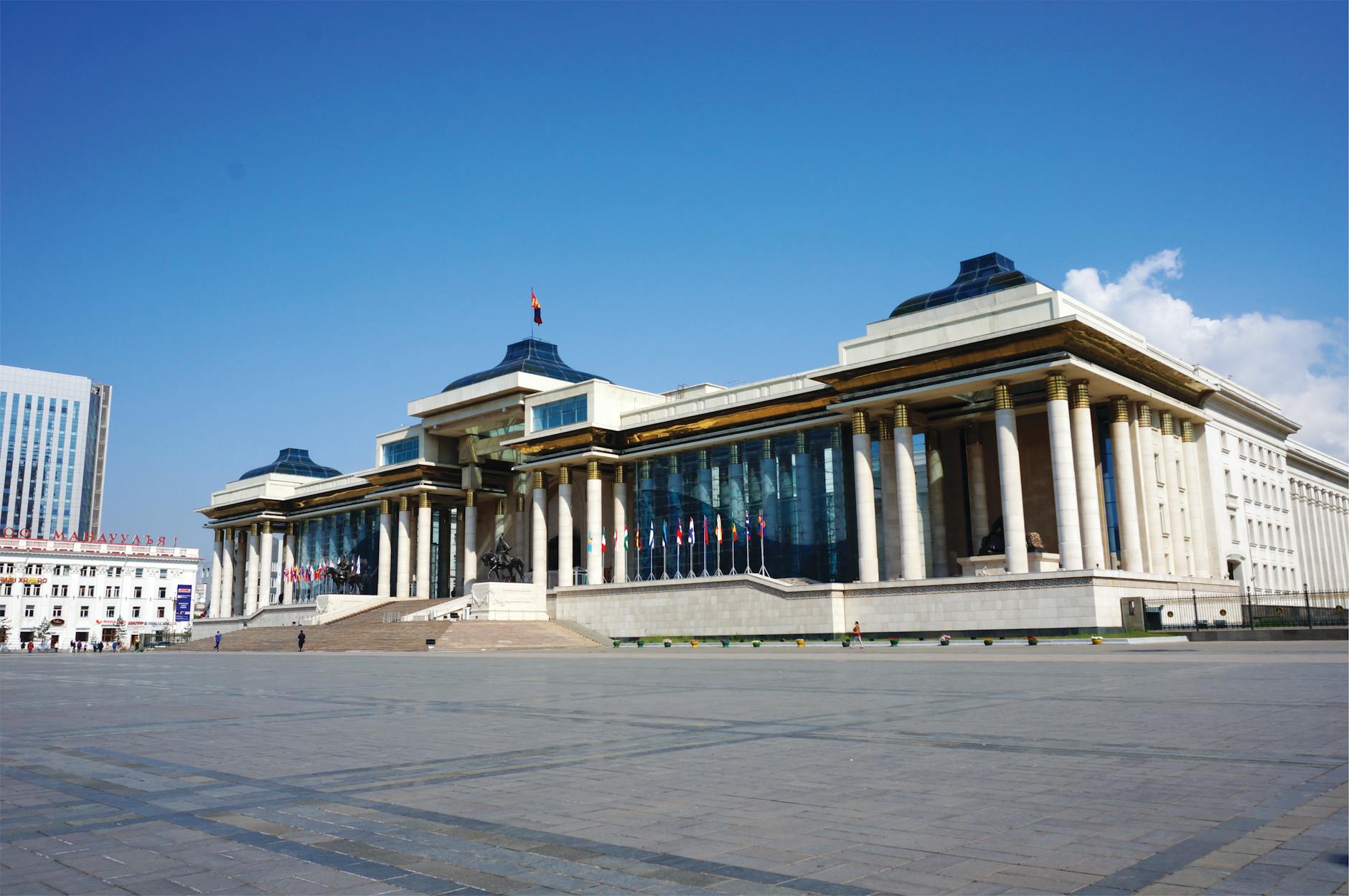
Mongolia's leadership transition tests the resilience of its democratic institutions and balancing strategy between great-power competition. The success or failure of this political moment carries implications for regional stability and institutional governance in Central Asia.
Mongolia faces a critical juncture in its political development following the recent leadership transition. The appointment of a new prime minister signals both continuity and uncertainty in a nation navigating complex great-power pressures from China and Russia while maintaining democratic institutions. For Indo-Pacific analysts, Mongolia’s internal political stability carries outsized significance given its geographic position as a buffer state and its role in regional supply chains, particularly rare earth minerals and energy resources.
Mongolia’s political system has demonstrated resilience since its transition to democracy in 1990, but recent leadership changes expose vulnerabilities in institutional depth. The rise of younger, less-established political figures to executive positions reflects generational shifts within Mongolia’s parliamentary structure, yet raises substantive questions about whether democratic norms can withstand pressure from entrenched interests and external actors.
The concentration of executive authority in Mongolia’s prime ministerial office, combined with the relative youth and limited tenure of recent appointees, creates governance risks. Unlike established democracies with deep institutional memory and distributed power centers, Mongolia’s political system remains dependent on individual leaders’ judgment and relationships. This structural weakness becomes particularly acute when leadership transitions occur rapidly or unexpectedly.
Mongolia’s geopolitical position demands a sophisticated balancing strategy that few nations execute consistently. Bordered by China to the south and Russia to the north, with significant economic dependence on both neighbors, Mongolia cannot afford sustained alignment with either power without triggering destabilization. The country’s coal exports to China represented approximately 70% of total exports in recent years, while Russian energy supplies remain critical to Mongolia’s winter survival.
Leadership transitions in Ulaanbaatar inevitably raise questions about continuity in this delicate equilibrium. A prime minister with insufficient political capital or experience may struggle to resist pressure from Beijing or Moscow to shift Mongolia’s foreign policy orientation. Conversely, aggressive assertion of Mongolian independence risks economic coercion from either neighbor. The appointment of new leadership thus reverberates across Central Asian and Indo-Pacific security calculations.
Mongolia’s democratic system has weathered multiple political transitions since 1990, yet structural weaknesses persist. The parliament, or Great Khural, comprises 76 seats distributed among competing parties and coalitions. This fragmentation, while reflecting genuine political competition, complicates legislative coherence and executive stability. When prime ministers lack commanding parliamentary majorities, their ability to implement policy agendas becomes constrained.
The 2024 parliamentary dynamics reveal persistent polarization between the Mongolian People’s Party (historically dominant during the Soviet era) and the Democratic Party, alongside smaller parties claiming representation of regional or demographic interests. Leadership changes often reflect factional disputes within these parties rather than broad policy disagreements, suggesting that Mongolia’s democratic competition operates at a personality-driven level rather than through programmatic differentiation.
Mongolia’s recent political cycles have been marked by anti-corruption campaigns and governance reform efforts. These initiatives, while necessary for democratic legitimacy, create uncertainty for investors and international partners. A leadership transition provides opportunity for either accelerating institutional reforms or reverting to patronage-based governance models. The direction taken signals whether Mongolia’s democratic trajectory remains genuine or faces potential backsliding.
Mongolia’s economy remains heavily dependent on commodity exports, particularly coal, copper, and rare earth minerals. This resource concentration creates both opportunities and vulnerabilities. Chinese demand for Mongolian minerals has sustained economic growth but also deepened economic asymmetry. A new prime minister must navigate resource nationalism pressures from domestic constituencies while maintaining investor confidence and avoiding Chinese economic retaliation.
The Oyu Tolgoi copper mine, operated by Rio Tinto with Mongolian state ownership, exemplifies these tensions. Disputes over tax obligations, environmental standards, and profit-sharing have periodically destabilized Mongolia’s relationship with its largest foreign investor and largest trading partner simultaneously. Leadership changes often coincide with renegotiation of these arrangements, introducing additional uncertainty into Mongolia’s investment climate.
Mongolia maintains formal neutrality status, enshrined in its constitution and recognized by the United Nations. This neutrality, however, faces practical constraints given the country’s strategic location and resource significance. Russia views Mongolia as part of its post-Soviet sphere of influence, while China regards Mongolia’s stability as essential to its own security and resource security.
Leadership transitions in Ulaanbaatar can shift Mongolia’s positioning within regional security frameworks. Mongolia’s participation in international peacekeeping operations, defense partnerships with Japan and South Korea, and engagement with Western institutions all depend partly on leadership preferences and perceived political sustainability. A prime minister perceived as weak or insufficiently nationalist risks becoming a liability for Mongolia’s international standing.
Mongolia’s political future depends on whether its democratic institutions can mature beyond personality-driven leadership cycles. The current leadership transition presents a test case: can Mongolia’s parliament, judiciary, and civil society institutions constrain executive overreach and ensure policy continuity regardless of who holds prime ministerial office?
For the Indo-Pacific region, Mongolia’s stability matters. A Mongolia that slides toward authoritarianism or becomes a client state of Beijing or Moscow would fundamentally alter Central Asian geopolitics and regional supply chains. Conversely, a Mongolia that successfully deepens democratic institutions and maintains genuine policy autonomy would strengthen the region’s pluralistic governance models and resist great-power domination.
The sustainability of Mongolia’s current leadership depends on three factors: first, whether the new prime minister can consolidate parliamentary support without resorting to corruption or coercion; second, whether Mongolia’s economy stabilizes sufficiently to reduce external pressure; and third, whether regional powers respect Mongolia’s stated neutrality or attempt to exploit leadership vulnerabilities. The next 18-24 months will reveal whether Mongolia’s democratic experiment has achieved sufficient institutional depth to survive leadership transitions intact.