Physical Address
304 North Cardinal St.
Dorchester Center, MA 02124
Physical Address
304 North Cardinal St.
Dorchester Center, MA 02124

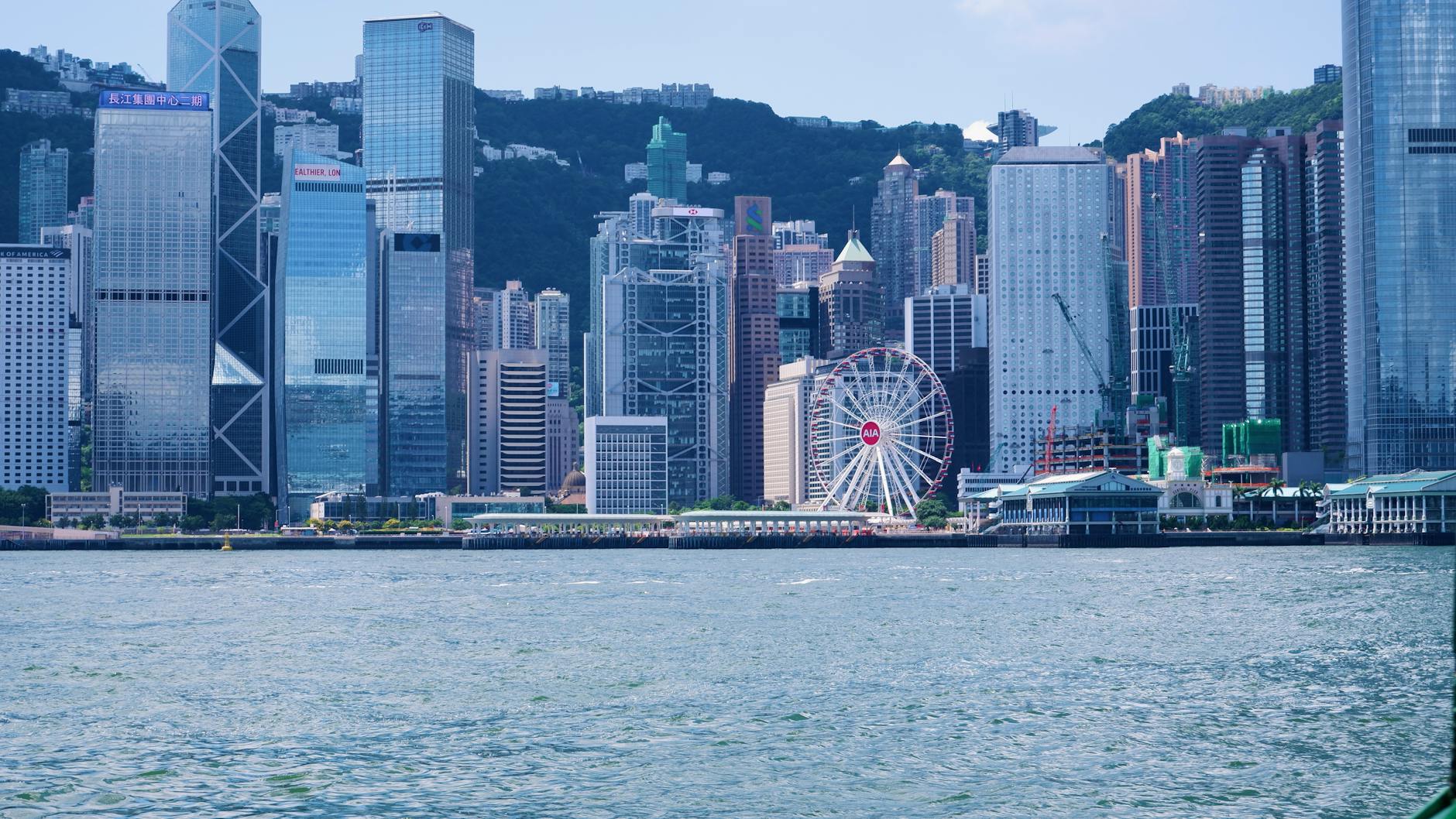
Jimmy Lai's 20-year sedition sentence marks the final institutional collapse of Hong Kong's independence. The conviction signals to international business and media that the territory is no longer a reliable hub for independent activity, with strategic consequences across the Indo-Pacific.
Jimmy Lai Chee-ying’s conviction on sedition charges and 20-year sentence in December 2024 represents a watershed moment in Hong Kong’s institutional decline. The founder of the now-shuttered Apple Daily newspaper—historically one of Asia’s most influential Chinese-language publications—was convicted under the National Security Law (NSL), a framework imposed by Beijing in 2020 that has systematically dismantled the legal protections that once distinguished Hong Kong from mainland China. This case crystallizes a broader strategic problem: Hong Kong’s transformation from a global financial and media hub into a jurisdiction where political speech carries existential legal risk.
For policymakers across the Indo-Pacific, Lai’s sentencing signals a fundamental shift in Hong Kong’s institutional character. The city’s historical competitive advantage rested on the “One Country, Two Systems” framework established in 1997—a legal and political separation that attracted multinational corporations, international media organizations, and financial institutions. That separation has now eroded to the point where international confidence in Hong Kong’s rule of law has become untenable for many global actors.
The National Security Law, enacted on June 30, 2020, criminalized four categories of conduct: secession, subversion, terrorism, and foreign collusion. The law’s vagueness—particularly the “foreign collusion” provision—has created a chilling effect that extends far beyond explicit political dissent. Lai’s prosecution exemplifies this expansive interpretation. His conviction rested partly on editorials published in Apple Daily criticizing the NSL itself and on his communications with foreign journalists and politicians. These actions, which would constitute protected speech in liberal democracies, became evidence of sedition under Hong Kong law.
The practical consequences are stark. Apple Daily ceased publication in June 2021 after police froze its assets. Stand News, another major independent outlet, shuttered in December 2021. By 2024, Hong Kong’s media landscape had contracted dramatically. The number of international correspondents working in Hong Kong declined by approximately 40% between 2020 and 2023, according to the Foreign Correspondents’ Club. Major international news organizations, including the BBC and Reuters, faced operational restrictions or withdrew editorial functions from the territory.
This represents a qualitative break from Hong Kong’s previous status as a regional media hub. During the 1980s and 1990s, Hong Kong served as the primary base for international coverage of China, Vietnam, and Southeast Asia. That role depended on freedom of movement, protection for sources, and legal predictability. The NSL has eliminated all three.
Hong Kong’s economic model has historically rested on three pillars: financial intermediation between China and global markets, international legal and professional services, and regional headquarters functions for multinational corporations. All three depend on confidence in institutional stability and rule of law. Lai’s conviction and the broader media crackdown create measurable risks for each.
The financial sector has shown resilience so far—Hong Kong’s status as a yuan-trading hub and its role in facilitating Chinese capital flows remain functionally irreplaceable. However, the legal and professional services sector faces genuine attrition. International law firms have reduced staff in Hong Kong, and recruitment of junior lawyers from common-law jurisdictions has declined. The conviction of Jimmy Lai, a prominent businessman, sends a signal to corporate executives that political speech—including private communications—carries legal liability in ways that differ fundamentally from Singapore, Tokyo, or Sydney.
For multinational corporations, the calculus has shifted. Companies that maintained regional headquarters in Hong Kong partly for the city’s independent judiciary and legal predictability now face a different risk profile. The perception that political considerations can override commercial law creates operational uncertainty. Several technology companies and media organizations have relocated regional functions to Singapore since 2021.
The contrast with Singapore is instructive. Singapore also restricts press freedom and employs sedition law, but it maintains institutional consistency and low corruption. Multinational corporations accept Singapore’s constraints because they are predictable and applied uniformly to all actors. Hong Kong’s NSL, by contrast, is applied selectively and expansively, creating the perception of political rather than legal logic.
This distinction matters for Hong Kong’s long-term competitive position. Singapore has solidified its role as Southeast Asia’s premier financial center precisely because its institutional framework, while authoritarian in media terms, is stable and legible to international business. Hong Kong’s recent trajectory suggests movement toward a model where political reliability to Beijing supersedes legal consistency—a framework that international institutions find less reliable.
Hong Kong’s institutional deterioration has broader Indo-Pacific implications. The territory’s decline as an independent media hub concentrates regional information flows through mainland Chinese state media and Singapore-based outlets. This reduces the diversity of independent analysis available to policymakers and investors across Asia-Pacific. For Australia, New Zealand, and Southeast Asian governments, the loss of Hong Kong as a regional journalism center means reduced access to independent investigation of Chinese economic and political developments.
More significantly, Hong Kong’s transformation validates a particular model of governance in which political control supersedes institutional independence. For Beijing, the demonstration that Hong Kong can be restructured from a liberal legal system to one subordinate to party interests provides a template for other territories and systems. For democratic governments in the Indo-Pacific, it represents a concrete example of how geopolitical pressure can erode institutional structures that took decades to build.
Jimmy Lai’s 20-year sentence also signals to international civil society organizations, journalists, and academics that Hong Kong is no longer a safe base for independent work on sensitive topics. This has already reduced the presence of human rights organizations and research institutions in the territory. The long-term consequence is a loss of institutional capacity for independent analysis of Chinese and Hong Kong affairs—a capacity that was historically centered in the territory.
Hong Kong’s decline as an independent institutional actor reflects a broader fragmentation of the Asia-Pacific’s liberal institutional ecosystem. Tokyo, Seoul, and Sydney remain robust centers for independent media and research, but the loss of Hong Kong removes a geographically proximate and culturally connected node from that network. For international organizations, multinational corporations, and civil society actors, this means increased reliance on institutional bases outside Asia—primarily in North America and Europe—for independent analysis of the region.
The strategic assessment is clear: Hong Kong has ceased to function as a genuinely independent international hub. The city remains economically significant as a financial intermediary, but its role as a center for independent journalism, legal innovation, and institutional autonomy has ended. Lai’s conviction was not an anomaly but a confirmation of a transformation that has been underway since 2020. For policymakers in the Indo-Pacific, the implication is that Hong Kong can no longer be relied upon as a source of independent institutional capacity or as a model of how liberal institutions can coexist with Chinese political authority. That model has been definitively superseded.