Physical Address
304 North Cardinal St.
Dorchester Center, MA 02124
Physical Address
304 North Cardinal St.
Dorchester Center, MA 02124

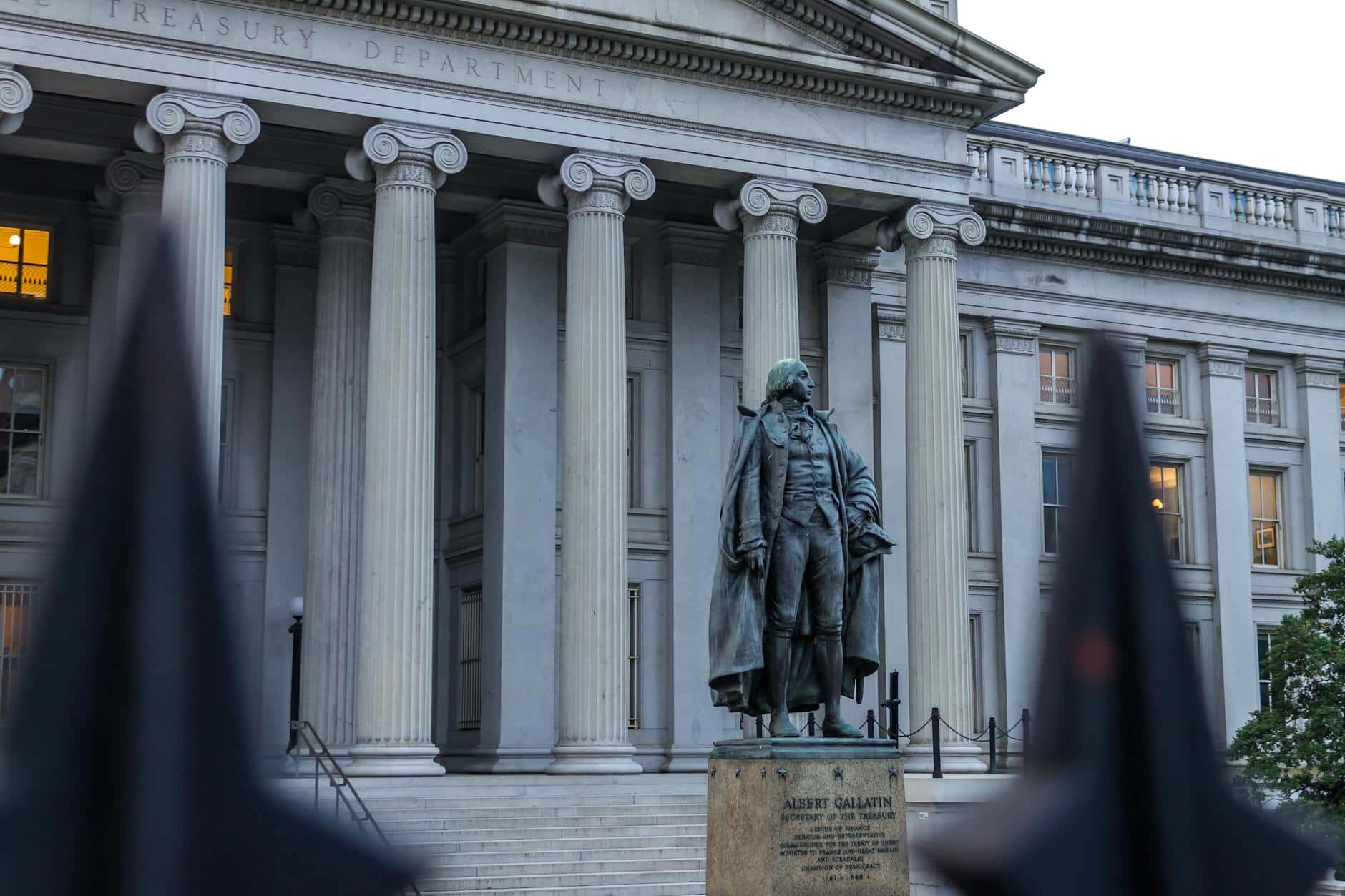
US-China trade governance requires binding institutional procedures, not just high-level dialogue. A credible Board of Trade must establish predictable review criteria, separate commercial from security oversight, and create permanent technical infrastructure to prevent routine disputes from triggering geopolitical escalation.
As U.S. President Donald Trump prepares his planned visit to China, Washington and Beijing are advancing proposals for a new China-U.S. Board of Trade. U.S. Treasury Secretary Scott Bessent and U.S. Trade Representative Jamieson Greer have championed a framework designed to delineate which transactions can proceed without triggering national security concerns. On the surface, this represents a pragmatic institutional response to bilateral economic friction. Yet the proposal, as currently conceived, addresses only the symptom of a deeper structural problem: the absence of predictable, binding procedures that prevent routine commercial disputes from metastasizing into geopolitical confrontations.
The fundamental challenge is not whether dialogue occurs, but whether the two economies can establish governance mechanisms that function independently of political cycles and summit diplomacy. Previous iterations of U.S.-China economic engagement—the Joint Commission on Commerce and Trade (established 1983), the Strategic Economic Dialogue (2006), and its various rebranded successors—demonstrate that consultation without institutional discipline fails precisely when it is most needed.
The forced unwinding of Meta’s $2 billion acquisition of Manus, a China-founded artificial intelligence company, illustrates the core governance failure. Chinese regulators, operating through the National Development and Reform Commission’s foreign investment security review mechanism, ordered the transaction reversed despite Manus having relocated operations to Singapore and secured U.S.-led financing. The company’s prior technological connections to China, its founder origins, data flows, and strategic industrial positioning were deemed sufficient grounds for intervention—but only after significant capital had been committed and knowledge transfer had begun.
This case reveals a critical asymmetry: once a cross-border transaction proceeds, unwinding is administratively possible but intellectually impossible. Code cannot be unlearned. Engineering talent cannot be unrecruited. Data flows cannot be untraced. Intellectual property cannot be unfamiliarized. Yet companies operating under ambiguous regulatory frameworks cannot know in advance which facts—headquarters location, founder nationality, prior operations, cloud infrastructure, investor composition, employee backgrounds, or code architecture—will trigger security review.
The absence of predictable review criteria creates a systematic bias toward caution. Companies cannot distinguish between legitimate security concerns and post-hoc regulatory justification. Both Washington and Beijing possess the technical capacity to articulate clear thresholds; neither has yet demonstrated the institutional will to bind itself to them.
A board that merely approves certain transactions and prohibits others will quickly devolve into political theater. Three structural gaps must be addressed:
A serious board requires a written charter specifying which sectors are covered, which measures must be notified in advance, what constitutes noncompliance, when consultation escalates to adjudication, and how temporary restrictions are narrowed or terminated. Vague boundaries are not flexibility; they are invitations to rewrite agreements after firms have invested. The Meta-Manus precedent demonstrates that without ex-ante clarity, companies operate in regulatory darkness.
Market access, customs procedures, standards, subsidies, and state-owned enterprise conduct should be governed by one institutional track. Export controls, sanctions compliance, technology restrictions, and investment screening should operate through a distinct but formally connected track. Without this separation, security exceptions will inevitably consume the entire trade system. Formal notification procedures must link both tracks, preventing either side from claiming surprise when commercial measures have security implications.
Previous frameworks collapsed partly because technical work was improvised before summits rather than embedded in standing institutions. A Board of Trade requires a permanent secretariat to monitor implementation, receive complaints, conduct sectoral reviews, and publish findings. This is not bureaucratic overhead; it is the institutional prerequisite for rendering government discretion visible and comparable. Firms must be able to seek clarification without escalating routine questions to Cabinet level.
Enforcement mechanisms must be designed before breaches occur, not negotiated during crises. Panel formation, decision timelines, confidentiality rules, standards of review, compliance periods, and permitted countermeasures should be established in advance. Escalation should proceed in stages—from consultation and formal findings to compliance plans and proportionate countermeasures—with clearly defined limits on each stage’s remedies.
Payment systems warrant particular attention. Lawful trade cannot function if settlement cannot be completed through predictable channels. The board should define approved settlement routes, documentation standards, bank verification procedures, and fallback mechanisms. Systemic failures—blocked settlements, customs obstruction, discriminatory licensing, or measures rendering legal trade practically impossible—must be distinguished from private contract disputes, which can remain subject to arbitration or courts.
The current environment creates perverse incentives. When rules are ambiguous and enforcement procedures are absent, each side assumes the other is exploiting regulatory discretion. Precaution becomes indistinguishable from retaliation, and retaliation becomes normalized practice.
Any restrictive measure—whether tariff, export control, investment screening, or sanctions-related compliance requirement—should carry three elements: a clear trigger defining the condition necessitating restriction, a mandatory review date, and an explicit exit path. This prevents restrictions from becoming permanent emergencies that gradually normalize as baseline policy.
The institutional goal is not to eliminate mistrust between Washington and Beijing, but to make mistrust governable. Both governments possess extensive tools for punishment; both lack adequate mechanisms for correction. When disputes arise, companies cannot determine which rule applies, which authority can clarify it, what evidence matters, how long review will require, or what remedy exists short of escalation.
The U.S.-China economic relationship will not become harmonious. The underlying structural differences—divergent assumptions about state power, market discipline, data control, and national security—are not negotiable away. American and Chinese capitalism operate on fundamentally incompatible premises regarding ownership, subsidy, industrial policy, and regulatory discretion.
The realistic institutional objective is not reconciliation but disciplined coexistence. This requires binding both governments to observable procedures, transparent decision criteria, and predictable remedies. It demands that obligations be defined before capital is committed, compliance be made observable after disputes arise, and revision paths exist independent of political timing or personal access.
The current trajectory is unsustainable. Each commercial interruption is treated as evidence that rules no longer function, justifying further precautionary measures. Without institutional circuit breakers separating routine disputes from geopolitical escalation, the two largest economies will continue to weaponize commerce as a substitute for clear strategy. A serious Board of Trade would not prevent conflict; it would prevent the normalization of conflict as the default mode of economic governance.