Physical Address
304 North Cardinal St.
Dorchester Center, MA 02124
Physical Address
304 North Cardinal St.
Dorchester Center, MA 02124

Public opinion surveys reveal that favourable sentiment between Japan and China has collapsed to historic lows, driven by territorial disputes, military competition, and competing historical narratives. This deterioration constrains both governments' diplomatic flexibility and raises the risk of escalation from minor incidents.
The bilateral relationship between Japan and China—the world’s second and third largest economies—has deteriorated to levels not seen in decades, as evidenced by successive surveys measuring public sentiment. This erosion of mutual trust extends beyond diplomatic disputes and military posturing; it reflects a fundamental fracturing of social bonds between two nations whose economic interdependence remains substantial yet whose populations increasingly view each other with suspicion and hostility. Understanding the depth and drivers of this sentiment shift is critical for assessing the stability of East Asian geopolitics and the Indo-Pacific region’s broader security architecture.
Recent polling data from major Japanese and Chinese research institutions demonstrates the severity of public opinion deterioration. Japanese surveys consistently show that favourable views of China have fallen to single-digit or low double-digit percentages in recent years—a dramatic reversal from the early 2000s when such sentiment hovered near 40-50%. Conversely, Chinese public opinion toward Japan similarly reflects deep mistrust, with favourable ratings in comparable low ranges.
These figures are not merely statistical abstractions. They indicate that majorities in both countries now hold negative views of their neighbour, a condition that constrains diplomatic flexibility and creates domestic political pressure on leaders to adopt harder stances. When public opinion reaches these thresholds, political leaders face electoral and legitimacy costs for appearing conciliatory, effectively narrowing the negotiating space available for conflict resolution.
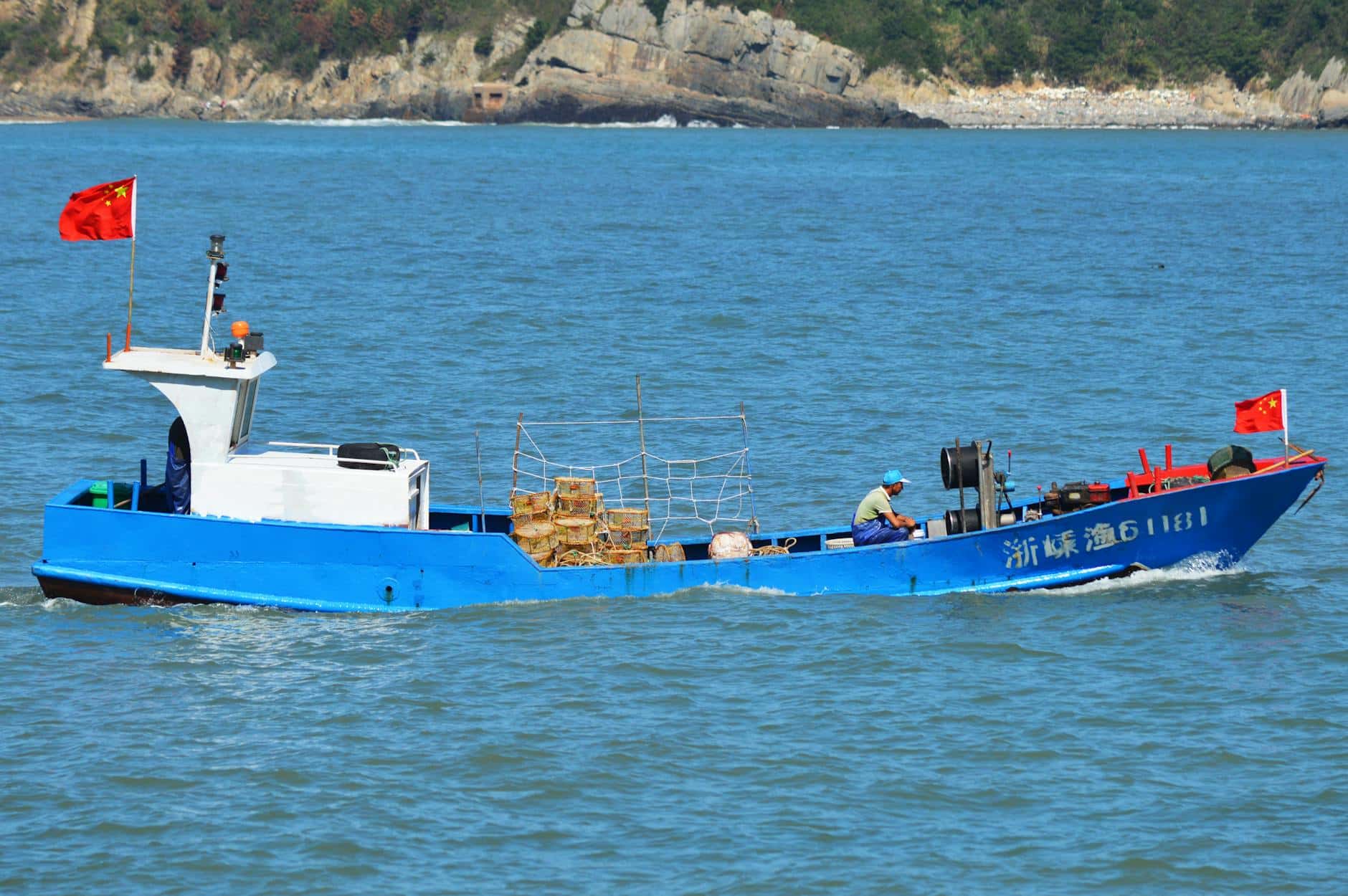
The deterioration cannot be understood without examining the historical narratives that shape contemporary attitudes. Japanese concerns centre on China’s military modernisation, particularly naval expansion in the East China Sea and around the Senkaku Islands (known as Diaoyu in China), where competing territorial claims have sparked multiple incidents. The 2010 fishing vessel collision near the Senkakus and subsequent Chinese rare-earth export restrictions demonstrated how quickly bilateral disputes can escalate.
Chinese public opinion, conversely, remains shaped by narratives of Japanese imperial aggression during the Second Sino-Japanese War (1937-1945) and the broader Japanese occupation of China. While these events occurred nearly 80 years ago, they remain potent in Chinese historical memory and education curricula. Additionally, Chinese citizens express concern about Japan’s military rearmament under Prime Minister Fumio Kishida’s administration, viewing constitutional amendments that enable expanded defence spending and military operations as threatening.
These competing historical narratives create asymmetrical grievance structures: Japanese citizens prioritise present-day security threats (Chinese military power), while Chinese citizens anchor grievances in historical injustices. Neither side’s concerns are illegitimate, but their temporal disconnect makes mutual resolution extraordinarily difficult.
Beyond historical tensions, several recent developments have actively poisoned public sentiment. The territorial disputes over the Senkaku/Diaoyu Islands have intensified, with increased Chinese coast guard patrols and incursions into Japanese territorial waters becoming routine. In 2023-2024, Chinese military aircraft conducted record numbers of incursions into Japanese air defence identification zones, forcing repeated Japanese Air Self-Defence Force scrambles.
Japanese treatment of China-related economic and technology issues has also inflamed Chinese opinion. Japan’s alignment with United States technology restrictions targeting China—particularly regarding semiconductor exports and artificial intelligence capabilities—is widely perceived in China as hostile economic coercion. When Japanese companies comply with US sanctions regimes against Chinese entities, this reinforces narratives of Japan subordinating independent foreign policy to American interests.
Conversely, Chinese state media and official rhetoric frequently employ inflammatory language describing Japan, with nationalist commentary on social media platforms amplifying anti-Japanese sentiment among younger Chinese demographics. This creates a feedback loop where official narratives and grassroots sentiment reinforce each other, making moderation politically costly for both governments.
A paradox defines the Japan-China relationship: despite plummeting public sentiment, the two economies remain deeply integrated. China is Japan’s largest source of imports and second-largest export market (after the United States), while Japan maintains significant direct investment in Chinese manufacturing and technology sectors. This economic interdependence theoretically creates incentives for restraint, yet the data suggests it is insufficient to prevent political and security competition from dominating the bilateral agenda.
This disconnect between economic ties and political sentiment reflects a structural reality: economic integration does not automatically generate political trust when security competition and historical grievances are severe. The 1930s experience of German-British economic interdependence before the Second World War offers a sobering historical precedent. Economic relationships can coexist with—and even be subordinated to—security rivalries and nationalist mobilisation.
Both Japanese and Chinese governments have incentive structures that reward nationalist positioning. In Japan, Kishida’s Liberal Democratic Party has pursued increasingly assertive defence policies, including the 2022 National Security Strategy that explicitly named China as a “strategic challenge.” This positioning resonates with Japanese public concern about Chinese military expansion and appeals to conservative constituencies. However, it also hardens Chinese perceptions of Japanese intent.
In China, the Communist Party under Xi Jinping has emphasised national rejuvenation narratives and portrayed Japan as part of a Western containment strategy. Permitting anti-Japanese sentiment serves party interests by channelling nationalist energy and demonstrating resolve against perceived external threats. State-controlled media amplifies grievances, and social media algorithms reward inflammatory content, creating an information environment hostile to reconciliation narratives.
Neither government appears willing to expend significant political capital on public opinion management that might soften anti-other sentiment. Instead, both tacitly accept or actively encourage nationalist messaging as a tool of domestic political management.
The available evidence suggests that Japanese-Chinese public opinion will remain deeply negative in the medium term. Structural factors—unresolved territorial disputes, military competition, historical narratives, and domestic political incentives—all point toward sustained mutual mistrust rather than reconciliation.
For the Indo-Pacific region, this deterioration has concrete implications. Public opinion constrains both governments’ ability to make concessions or establish crisis management mechanisms. It increases the likelihood that minor incidents (naval confrontations, air incursions, diplomatic slights) escalate into major crises, as leaders face domestic pressure to respond forcefully. The absence of deep public trust means that goodwill gestures are interpreted as weakness rather than as confidence-building measures.
The most realistic near-term objective is not reconciliation but rather institutionalised management of competition. Establishing robust crisis communication channels, defining red lines clearly, and creating mechanisms for de-escalation become essential. Japan and China must learn to compete strategically while preventing competition from becoming conflict—a difficult balance when public opinion provides little political space for restraint.
Australia and other Indo-Pacific partners should recognise that Japan-China antagonism is now a structural feature of regional geopolitics rather than a temporary diplomatic dispute. Policy frameworks must account for sustained bilateral tension, including implications for supply chain resilience, security alliance architecture, and the viability of multilateral institutions like ASEAN that depend on great power cooperation.