Physical Address
304 North Cardinal St.
Dorchester Center, MA 02124
Physical Address
304 North Cardinal St.
Dorchester Center, MA 02124

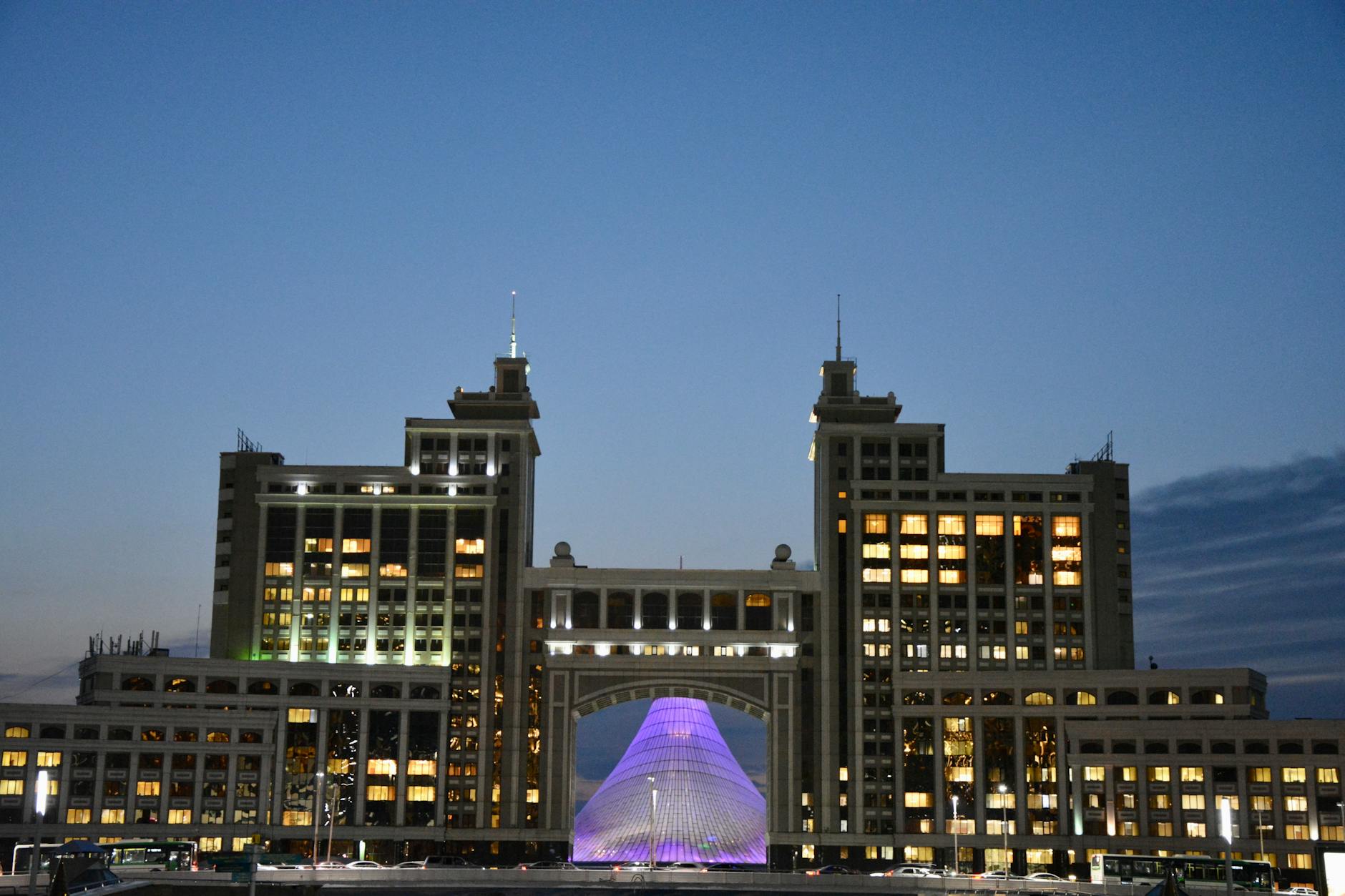
Kazakhstan's $6 billion military modernization program reflects strategic preparation for Indo-Pacific instability rather than immediate regional threats. The country is integrating unmanned systems, artificial intelligence, and diversified supplier relationships to prepare for a future where distant conflicts could disrupt critical trade corridors and destabilize Central Asia.
When President Kassym-Jomart Tokayev announced a two-year deadline for comprehensive armed forces modernization in 2024, the decision puzzled many regional analysts. Kazakhstan faces no active border disputes, no immediate external military threat, and maintains relatively stable relations with its neighbors. Yet this assessment misses the deeper strategic logic driving Astana’s defense overhaul. Kazakhstan is not preparing for conflict on its own borders—it is positioning itself for a fundamentally altered geopolitical environment in which distant conflicts, technological disruption, and supply chain vulnerabilities pose existential risks to a landlocked Central Asian state.
The modernization effort reflects Tokayev’s recognition that Kazakhstan’s security is now inseparable from the stability of the broader Indo-Pacific system. A major conflict in the Taiwan Strait, South China Sea, or East China Sea would reverberate across Central Asia through three mechanisms: the redirection of Chinese resources away from the region, the disruption of trade corridors that Kazakhstan depends upon, and the emergence of non-traditional security threats in a destabilized environment. This analysis explains why Kazakhstan is investing $6 billion in defense spending for 2026—an increase of over $700 million from 2025—despite the absence of immediate kinetic threats.
Russia’s invasion of Ukraine fundamentally altered how military analysts assess force structure requirements. The conflict has demonstrated that technological superiority in unmanned systems, precision-guided munitions, and artificial intelligence can offset conventional advantages in air power and troop numbers. Ukraine’s long-range drone strikes have inflicted severe damage on Russian airbases deep inside Russian territory, contributing to an estimated 25 percent reduction in the operational strength of the Russian Aerospace Forces (VKS) compared to pre-invasion levels. More strikingly, Ukrainian drone operations accounted for approximately four out of every five Russian casualties in 2025 alone, establishing unmanned systems as the dominant force multiplier in contemporary warfare.
Kazakhstan’s military planners have internalized these lessons. The shift toward drone procurement, artificial intelligence integration, and domestic satellite capabilities represents a move away from traditional platform-centric warfare toward system-centric warfare, where data integration and real-time information dominance determine operational outcomes. The establishment of a specialized military AI unit within Kazakhstan’s armed forces signals recognition that future conflicts will be decided by the ability to process information faster than adversaries, not by the size of standing armies.
For a country with Kazakhstan’s geography—a territory spanning over 2.7 million square kilometers with dispersed population centers and vast border regions—this technological shift offers strategic advantages. Air mobility and rapid response capabilities become force multipliers that compensate for demographic constraints. Unmanned systems can conduct persistent surveillance and strike operations across Kazakhstan’s vast territory with minimal personnel requirements, addressing the country’s relatively small standing army (approximately 62,000 active-duty personnel) while maintaining deterrent credibility.
Kazakhstan’s military procurement strategy reflects this technological imperative. A May 2026 defense industry agreement with Turkey established a facility for the production of ANKA unmanned aerial vehicles in Kazakhstan, signaling Astana’s commitment to indigenous drone manufacturing capabilities. This partnership with Ankara, formalized during Turkish President Recep Tayyip Erdogan’s visit to the Alem.AI Artificial Intelligence Center in Astana, represents more than a simple arms purchase—it reflects Kazakhstan’s strategy to diversify defense suppliers and develop domestic technological capacity.
Chinese suppliers have become equally critical to this modernization trajectory. Exports from China to Kazakhstan of unmanned aircraft weighing 25 to 150 kilograms increased from $100,000 in 2023 to $1.31 million in 2024. Smaller unmanned systems (250 grams to 7 kilograms) saw even more dramatic growth, rising from $3.7 million in 2022 to $9.7 million in 2024. In 2025, the Chinese company Yesil Technology Company, with support from Kazakhstan’s state investment fund JSC NC Kazakh Invest, pledged $12 million to establish a drone production facility in Kazakhstan. These investments position Kazakhstan to achieve technological autonomy in unmanned systems production while maintaining strategic flexibility in supplier relationships.
Kazakhstan’s military modernization cannot be separated from its economic vulnerabilities in an increasingly multipolar international system. Russia currently accounts for 88 percent of Kazakhstan’s arms imports, making the country heavily dependent on Moscow for military equipment and spare parts. The Ukraine war has exposed the fragility of this dependency: Russian defense production has shifted toward wartime requirements, reducing availability of equipment for allied states. Simultaneously, Western sanctions on Russia have complicated technology transfer and joint development projects.
Kazakhstan’s turn toward Turkish and Chinese suppliers represents a deliberate effort to reduce this dependency. According to the Stockholm International Peace Research Institute, Kazakhstan ranked 26th globally in arms imports in 2024, accounting for 0.9 percent of global arms imports. This diversification strategy—acquiring Turkish drones, Chinese unmanned systems and components, and maintaining selective partnerships with Western suppliers—reflects Tokayev’s commitment to strategic autonomy.
However, this diversification creates new vulnerabilities. Kazakhstan’s growing reliance on Chinese dual-use goods and military equipment components has raised Western concerns about proliferation risks. Exports from China to Kazakhstan of items on the U.S. Common High Priority List (CHPL)—components identified as vital for supporting the Russian war effort—increased from $610 million in 2022 to $931 million in 2025. These intermediary components include radio navigational apparatus (up from $12.93 million in 2022 to $48.18 million in 2025), semiconductor-based transducers (from $370,000 in 2023 to $20.5 million in 2025), and electronic integrated circuits (from $188,000 in 2023 to $11.6 million in 2025).
Kazakhstan’s expanding appetite for these components reflects both legitimate defense modernization needs and the country’s position as a transshipment hub for technology flowing to Russia. Astana has consistently denied deliberately circumventing Western sanctions, yet the scale of component imports and their documented use in Russian military systems creates diplomatic friction with Western capitals. This tension illustrates the strategic dilemma facing Kazakhstan: modernizing military capabilities while maintaining relationships with Russia, China, Turkey, and the West simultaneously.
The most underappreciated dimension of Kazakhstan’s military modernization is its connection to Indo-Pacific security dynamics. A major conflict in the Taiwan Strait, South China Sea, or East China Sea would transform Kazakhstan’s strategic position through two mechanisms: resource redirection and trade corridor vulnerability.
First, any significant military conflict in East Asia would force China to redirect substantial financial, military, and diplomatic resources eastward. Since 2022, Beijing has been Kazakhstan’s primary source of foreign direct investment and technology transfer, particularly in energy and infrastructure sectors. A major Indo-Pacific conflict would reduce Chinese capacity to support Central Asian development projects, increase uncertainty regarding non-traditional security threats (including transnational militant groups), and potentially undermine regional stability. Kazakhstan’s military modernization, including enhanced border surveillance and rapid response capabilities, would become essential for maintaining internal security in such an environment.
Second, and more immediately significant, a major Indo-Pacific conflict would transform Kazakhstan’s overland trade corridors into critical strategic assets. Currently, approximately 90 percent of global maritime trade transits through chokepoints including the Strait of Malacca, the Strait of Hormuz, and the South China Sea. A conflict disrupting these maritime routes would force China and other East Asian economies to reroute high-value cargo and energy supplies through alternative corridors. The Middle Corridor—connecting China and Central Asia through Kazakhstan to the Caucasus, Turkey, and Europe—would become a critical alternative to maritime routes.
Trade capacity through the Middle Corridor has already increased significantly, reaching 2.65 million tons annually as of 2025, with projections estimating capacity could reach 10 million tons annually by 2027. In the event of sustained conflict disrupting maritime trade, flows through the Middle Corridor could potentially triple or increase further. This transformation would make Kazakhstan’s territory, infrastructure, and security environment objects of great power competition. Enhanced military capabilities, particularly air defense systems and border surveillance, would become necessary to protect critical infrastructure and maintain territorial control.
Kazakhstan’s new military doctrine explicitly acknowledges this reality, recognizing that distant conflicts can generate immediate security challenges for Central Asian states. This represents a significant evolution in strategic thinking, moving beyond the traditional focus on immediate border security toward a more sophisticated understanding of how global supply chains and geopolitical disruptions affect regional stability.
Kazakhstan’s military modernization represents a rational response to genuine strategic vulnerabilities in an increasingly unstable international system. The country faces no immediate external military threat, yet it confronts multiple sources of strategic uncertainty: technological disruption of traditional military concepts, the fragility of supply chain dependencies, and the possibility of distant conflicts generating cascading effects across Central Asia.
Tokayev’s two-year modernization deadline reflects recognition that the window for military reform may be closing. If conflict erupts in the Indo-Pacific before Kazakhstan completes its technological upgrade, the country would face a much more dangerous security environment with outdated military capabilities. The emphasis on unmanned systems, artificial intelligence, and domestic production capacity positions Kazakhstan to adapt to the character of modern warfare demonstrated in Ukraine while maintaining strategic autonomy in an increasingly multipolar world.
The challenge for Astana will be managing the inherent contradictions in this strategy. Maintaining relationships with Russia, China, Turkey, and the West while simultaneously reducing dependency on any single power requires diplomatic sophistication and strategic clarity. Kazakhstan’s growing reliance on Chinese components raises Western concerns about sanctions circumvention, yet reducing this reliance would require either increased Western technology transfer (unlikely given geopolitical tensions) or further investment in indigenous production capacity (expensive and time-consuming).
The success of Kazakhstan’s modernization effort will ultimately depend on whether the country can achieve technological sufficiency—the ability to field military forces capable of defending territorial integrity and critical infrastructure—before the international system undergoes the kind of disruption that would make such preparation impossible. Whether this timeline aligns with the actual emergence of Indo-Pacific conflict remains the central uncertainty in Astana’s strategic calculus.