Physical Address
304 North Cardinal St.
Dorchester Center, MA 02124
Physical Address
304 North Cardinal St.
Dorchester Center, MA 02124

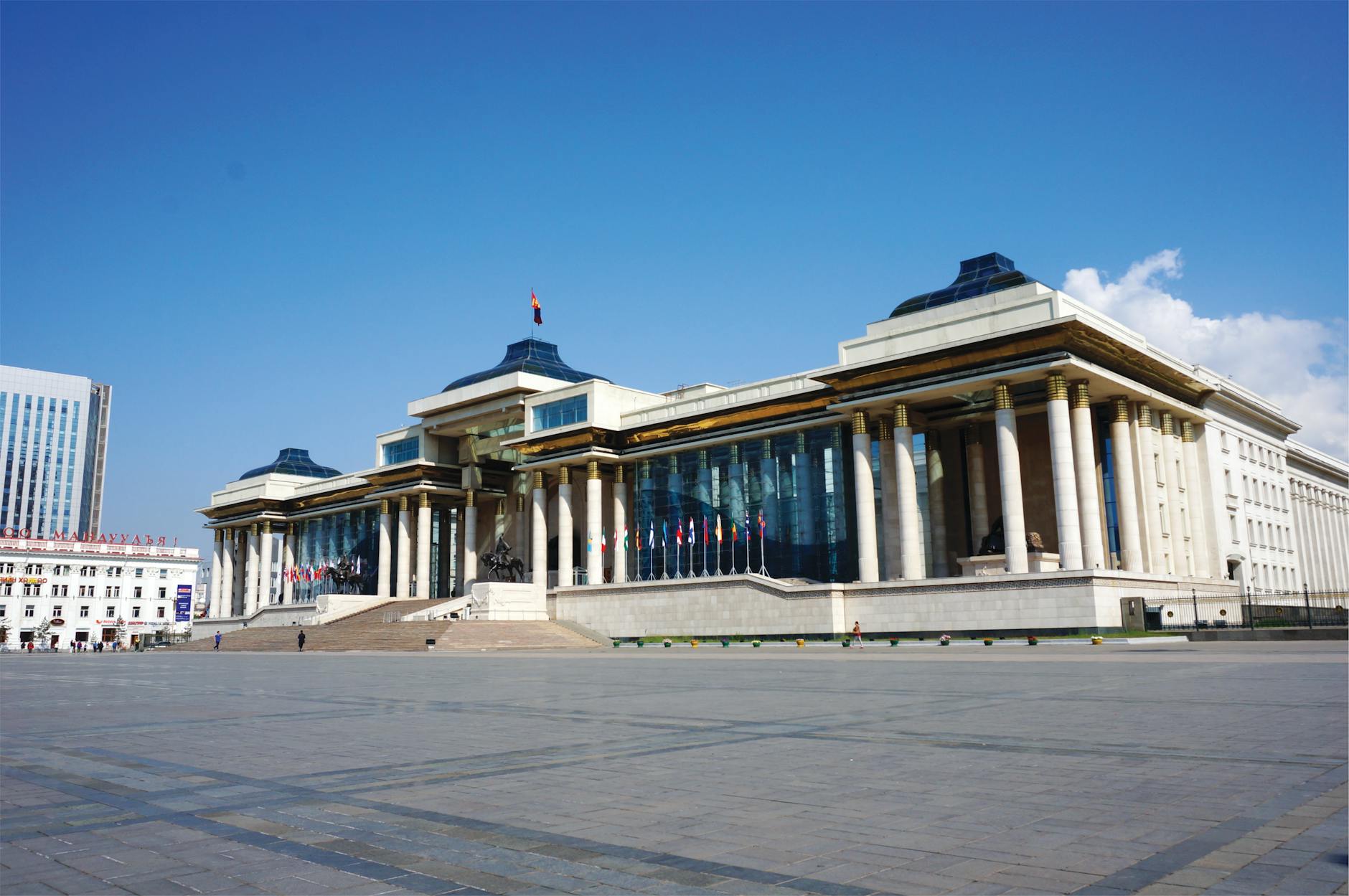
The United States is intensifying engagement with Mongolia beyond traditional "Third Neighbor" frameworks, recognizing Ulaanbaatar's strategic significance amid great power competition. Ambassador Richard L. Buangan's diplomatic efforts reflect American interests in Mongolia's democratic governance, rare earth minerals, and geopolitical position—though deepening ties faces constraints from Mongolia's structural dependence on China and Russia.
Mongolia occupies one of the world’s most constrained geopolitical positions, sandwiched between Russia and China—two nuclear powers with overlapping strategic interests in Central Asia and the Indo-Pacific. For decades, Mongolian foreign policy has been defined by the principle of the “Third Neighbor” doctrine, a framework designed to balance relationships with Moscow and Beijing by cultivating partnerships with distant powers, particularly Japan, South Korea, and the United States. However, the intensification of great power competition in the 2020s has fundamentally altered the calculus of Mongolian statecraft, forcing Ulaanbaatar to recalibrate its diplomatic strategy in ways that carry significant implications for regional stability.
The recent engagement between U.S. Ambassador Richard L. Buangan and Mongolian leadership signals a deliberate American effort to deepen bilateral ties beyond traditional third-neighbor frameworks. This shift reflects Washington’s broader Indo-Pacific strategy, which increasingly treats Mongolia not as a peripheral actor but as a consequential player in the competition for influence across Eurasia.
Mongolia-US relations have historically operated within defined parameters. The Third Neighbor doctrine, formally articulated in the 1990s following Mongolia’s transition to democracy, provided intellectual cover for Ulaanbaatar to maintain equidistant relationships with Russia and China while selectively engaging Western powers. This approach proved pragmatic during the post-Cold War period when great power competition was relatively muted.
Ambassador Buangan’s recent diplomatic engagement suggests the United States is now pushing beyond this traditional framework. American interests in Mongolia extend across several domains: Mongolia’s significant rare earth mineral deposits, its potential as a democratic counterweight in a region increasingly dominated by authoritarian governance, its geographic position astride critical Eurasian trade corridors, and its emerging role in regional security architecture discussions.
The deepening of US-Mongolia ties also reflects recognition that Mongolia’s domestic political orientation matters. Unlike many Central Asian states, Mongolia has maintained democratic institutions, regular elections, and constitutional constraints on executive power since 1990—a distinction that gives US engagement greater strategic weight in Washington’s broader competition with authoritarian powers.
Mongolia’s mineral wealth—particularly its substantial rare earth element reserves and coal deposits—has become increasingly salient to US strategic planning. As the Biden administration has prioritized supply chain resilience and reduced dependence on Chinese processing of critical minerals, Mongolia’s position as an alternative source has gained prominence. The Oyu Tolgoi copper-gold mine, one of the world’s largest undeveloped copper deposits, and the Khanbogd rare earth project represent significant assets in global competition for resources essential to clean energy and defense manufacturing.
However, Mongolia’s resource sector remains heavily dependent on Chinese investment and infrastructure. Chinese firms operate the Trans-Mongolian Railway, Chinese capital dominates mining operations, and Chinese markets absorb the majority of Mongolian mineral exports. This economic asymmetry constrains Ulaanbaatar’s ability to pivot toward Western partners, even when strategic considerations might favor such diversification. The US and its allies face a structural challenge: providing sufficient economic incentives to offset Mongolia’s existing dependence on China without overextending commitments that Beijing could interpret as threatening.
Mongolia’s enhanced engagement with the United States occurs against the backdrop of significant regional security developments. Russia’s 2022 invasion of Ukraine and subsequent military buildup along its Far Eastern borders have created new security anxieties across Mongolia’s northern frontier. Simultaneously, Chinese military modernization and assertive behavior in the South China Sea have raised concerns about Beijing’s long-term intentions toward smaller regional powers.
Mongolia’s geographic position makes it vulnerable to coercion from either neighbor. The country hosts significant Russian military installations inherited from the Soviet era, maintains substantial Russian energy dependence, and shares a 3,485-kilometer border with Russia. Yet Mongolia also shares a 4,677-kilometer border with China and faces demographic and economic pressures that create implicit vulnerabilities to Chinese influence. In this context, US security engagement—whether through military training, intelligence sharing, or security dialogue—provides Ulaanbaatar with strategic reassurance and hedging capacity.
The strengthening of Mongolia-US security ties also reflects broader NATO and allied efforts to construct alternative security architectures in Eurasia. While Mongolia is unlikely to join NATO or formal Western alliances, its participation in security dialogues, defense cooperation, and intelligence-sharing arrangements contributes to a broader ecosystem of democratic security partnerships that constrains authoritarian powers’ freedom of action.
Despite strategic logic supporting closer US-Mongolia ties, significant constraints limit the pace and scope of deepening partnership. Mongolia’s economic vulnerability to Chinese and Russian pressure remains acute. China accounts for approximately 60-70% of Mongolia’s exports, while Russia supplies 90% of Mongolia’s energy imports. This structural dependence creates asymmetric vulnerability: Beijing or Moscow can impose substantial costs on Ulaanbaatar through trade restrictions, energy cutoffs, or border pressure, whereas Mongolia’s leverage over either neighbor is minimal.
Domestic political constraints also shape Mongolia’s foreign policy flexibility. Mongolian society remains divided on questions of great power alignment. Significant segments of the Mongolian population retain cultural and historical ties to Russia, while economic realities create pragmatic dependencies on China. Public opinion polling indicates Mongolians prefer equidistant relationships with major powers rather than alignment with any single bloc. This domestic consensus constrains what political leaders can credibly commit to without risking domestic political backlash.
Furthermore, Russia maintains sufficient coercive capacity to punish Mongolian alignment with the West. Moscow’s demonstrated willingness to weaponize energy supplies, as evidenced by its leverage over European gas markets, suggests Russia could impose significant costs on Mongolia should Ulaanbaatar move too far toward Western partnerships. Ambassador Buangan’s diplomatic engagement must therefore navigate between strengthening US ties and avoiding provocation of Russian interests in ways that trigger costly retaliation.
Mongolia’s evolving relationship with the United States functions as a microcosm of broader US strategy toward non-aligned powers in the Indo-Pacific and Eurasia. The American approach emphasizes deepening partnerships with democratic states, securing access to critical resources, and constructing security architectures that constrain authoritarian powers—all without demanding formal alliance commitments that smaller states find politically unsustainable.
The success or failure of US-Mongolia engagement will carry implications beyond the bilateral relationship. It will signal whether Washington can construct sustainable partnerships with strategically important but structurally vulnerable states without overcommitting resources or triggering great power conflicts. Mongolia’s experience will inform how the United States approaches similar relationships with other non-aligned democracies in Central Asia, Southeast Asia, and the Pacific.
Ambassador Buangan’s diplomatic initiative represents a realistic assessment that Mongolia matters to US strategic interests, not because it will become a formal ally, but because it remains a consequential actor in great power competition across Eurasia. The challenge for both Washington and Ulaanbaatar lies in deepening partnership while respecting the structural constraints that define Mongolian statecraft. This requires calibrated engagement that provides security reassurance and economic opportunity without demanding choices that Mongolia cannot sustain given its geographic position and resource dependencies.