Physical Address
304 North Cardinal St.
Dorchester Center, MA 02124
Physical Address
304 North Cardinal St.
Dorchester Center, MA 02124
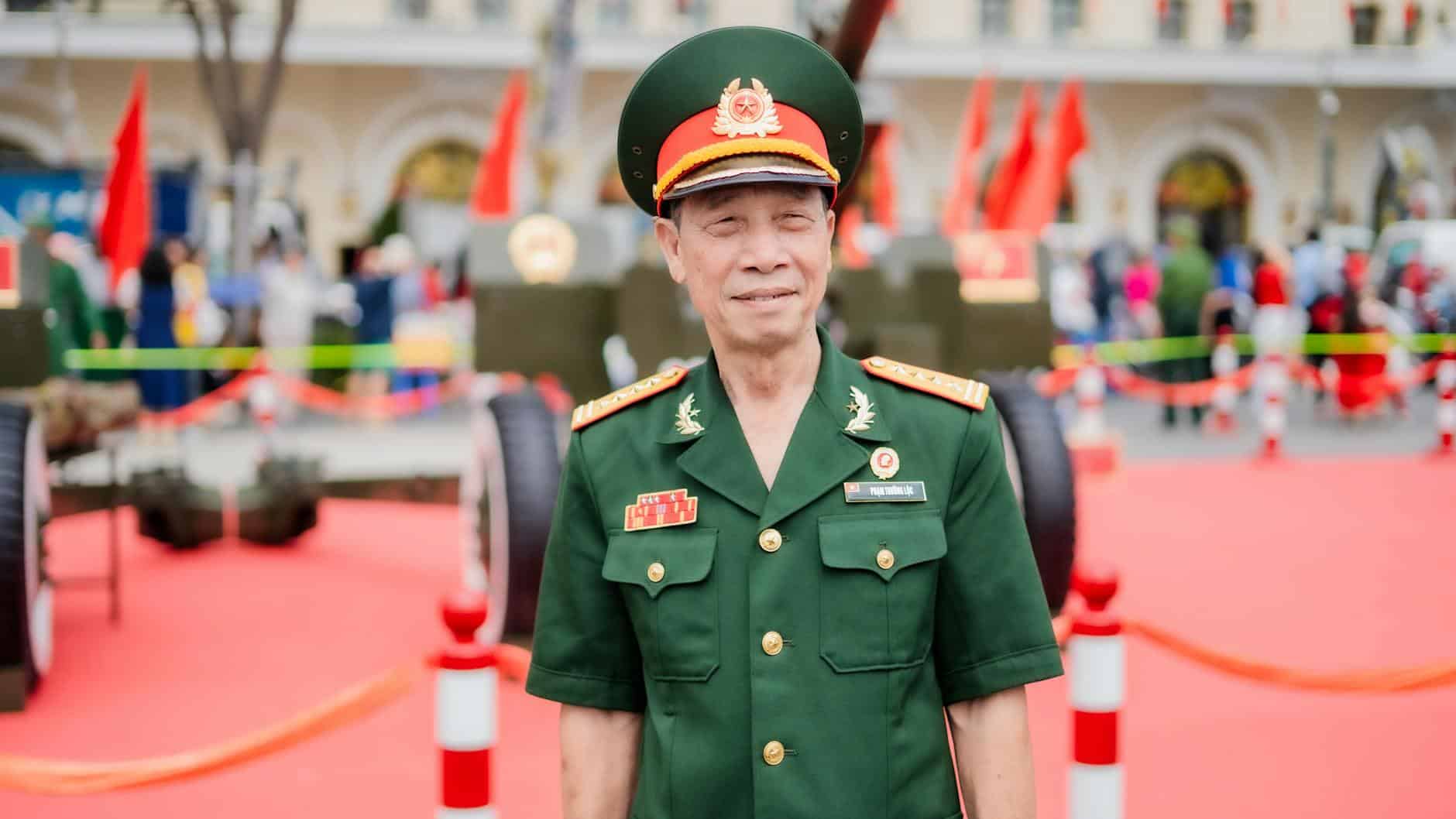
Vietnam has spent 13 years building a sophisticated regional strategy centered on nontraditional security—climate, infrastructure, AI governance—rather than military alignment. Communist Party General Secretary To Lam's 2026 Shangri-La Dialogue keynote signals that this framework has matured into a credible alternative to great power balancing.
Vietnam’s approach to regional security has undergone a deliberate strategic recalibration over the past 13 years, one that reveals how a middle power can exercise influence in an Indo-Pacific increasingly dominated by U.S.-China competition. At the 23rd Shangri-La Dialogue on May 29, 2026, Communist Party General Secretary and President To Lam delivered a keynote address that crystallized this shift—moving Vietnam from passive balancing between Washington and Beijing toward active construction of regional arrangements on its own terms. This evolution, beginning with then-Prime Minister Nguyen Tan Dung’s 2013 keynote, demonstrates a sophisticated understanding of Vietnam’s structural constraints and strategic opportunities in an era of great power rivalry.
To Lam’s central assertion—that Vietnam “does not approach [its] relations with major powers through the prism of security”—represents far more than diplomatic rhetoric. It signals a deliberate choice to compete for regional influence in domains where Vietnam can establish authority without directly challenging either the United States or China. This framework addresses a fundamental problem facing all middle powers in the Indo-Pacific: traditional security competition leaves smaller states perpetually reactive, forced into uncomfortable alignments or exhausting balancing acts. Vietnam’s answer is to redefine what “security” means at the regional level.
Nguyen Tan Dung’s May 31, 2013 keynote at the Shangri-La Dialogue introduced a concept that would become the intellectual foundation for Vietnam’s regional strategy: “lòng tin chiến lược” (strategic trust). The timing was strategically significant. ASEAN had just experienced an unprecedented failure in July 2012 when the Phnom Penh ministerial meeting collapsed without issuing a joint communiqué—the first such failure in the organization’s 45-year history. The deadlock centered on South China Sea language, with Cambodia, aligned with China, blocking consensus. Dung’s keynote responded to this regional fragmentation by proposing a framework that transcended traditional security concerns.
Strategic trust, as Dung framed it, rested on three pillars: great power responsibility, ASEAN centrality, and a broadened definition of security challenges. Critically, Dung explicitly named the United States and China as the powers bearing greatest responsibility for the region’s future. However, rather than focusing on their military competition or territorial disputes, he tied their responsibility to managing nontraditional threats: climate change, pandemics, and water security. This rhetorical move accomplished two objectives simultaneously. First, it created a framework where Vietnam could engage both powers constructively without choosing sides. Second, it elevated issues where Vietnam possessed genuine expertise and regional standing—maritime safety, disaster management, and environmental cooperation—into the security conversation.
For the decade following Dung’s keynote, Vietnam’s voice at the Shangri-La Dialogue shifted to the Ministry of National Defense, with successive defense ministers—Phung Quang Thanh, and later Phan Van Giang—maintaining and expanding the strategic trust framework. The 2014 address by Phung Quang Thanh offers the clearest illustration of this strategy’s sophistication. Thanh delivered his speech on May 31, 2014, mere weeks after China had towed the Haiyang Shiyou 981 oil rig into waters Vietnam claims—a direct sovereignty challenge that triggered nationalist sentiment and military tensions. The title of his speech, “Managing Strategic Tensions,” appeared to signal a direct engagement with the crisis. Instead, Thanh pivoted to transnational crime and maritime safety cooperation.
This was not capitulation or evasion. Rather, it represented a calculated decision to contest China’s actions through a different register. By emphasizing cooperation on maritime safety and maritime law enforcement, Thanh implicitly delegitimized unilateral resource extraction and asserted Vietnam’s authority over regional maritime governance—without triggering the confrontational security language that would have forced other ASEAN states to choose sides or remain silent. Vietnam was defending its sovereignty through the framework of cooperative maritime management.
By 2025, Minister of Defense and Deputy Prime Minister Phan Van Giang’s plenary demonstrated how substantially the nontraditional security agenda had expanded. Van Giang’s speech enumerated a comprehensive list: natural disasters, pandemics, climate change, water security, food security, terrorism, drug-related crime, and human trafficking. Each of these domains represented areas where Vietnam could build coalitions with Japan, South Korea, Australia, India, and the European Union—partners with whom hard-security alignment would be impossible given Vietnam’s need to maintain workable relations with China. Yet by anchoring these partnerships in nontraditional security, Vietnam could deepen cooperation in capability-building and intelligence-sharing without triggering Beijing’s concerns about encirclement.
To Lam’s May 29, 2026 address marked a significant escalation in ambition and analytical depth. Rather than simply listing nontraditional security challenges, To Lam diagnosed the entire regional crisis through the lens of strategic trust. He identified three foundational crises occurring simultaneously: a crisis of the international order, a crisis of the development model, and a crisis of strategic trust. This diagnostic framework positioned Vietnam not as a state responding to external pressures, but as a state capable of articulating the region’s fundamental problems.
To Lam’s vision for an “Asia-Pacific that is peaceful, stable, resilient and capable of mitigating risks early and from afar” moved beyond Dung’s 2013 formulation by emphasizing proactive construction—”kiến tạo”—rather than reactive management. The specific risks he enumerated reflected the evolving security landscape: technology and defense industry norms, artificial intelligence governance, undersea cable and critical infrastructure resilience, information environment cooperation, human security and societal resilience, and preventive diplomacy capacity.
Notably, To Lam’s language regarding great powers shifted markedly from Dung’s explicit naming of the United States and China. Instead, To Lam referenced “partners with major influence in and outside the region” and “major powers” in general. He condemned coercion and unilateral moves to create new facts on the ground, and warned against weaponizing trade and technology—language that applied to both Washington’s technology restrictions and Beijing’s economic coercion, without naming either. This rhetorical adjustment reflects Vietnam’s growing confidence in its framework and its desire to position itself above the U.S.-China contest rather than within it.
Vietnam’s sustained investment in nontraditional security represents a rational response to the structural constraints imposed by great power competition. The traditional security balance in the Indo-Pacific—where middle powers choose alignment with either Washington or Beijing—offers Vietnam limited agency. The “bamboo diplomacy” that has kept Vietnam safe through flexibility and non-alignment provides survival but not influence. By contrast, the nontraditional security agenda creates space for Vietnam to set terms on ground of its choosing.
This strategy addresses specific capability gaps where Vietnam can attract partnerships without triggering Chinese security concerns. AI governance, undersea cable protection, cyber norms, and critical infrastructure resilience are domains where Vietnam can cooperate with Japan, South Korea, Australia, India, and the European Union—building deep partnerships in areas where formal military alliances would be impossible. These partnerships generate real intelligence-sharing, capability transfer, and coordination mechanisms, yet they remain insulated from the hard-security competition that would force Vietnam to choose between Washington and Beijing.
Equally important, the nontraditional security framework allows Vietnam to defend its sovereignty interests without appearing to align against China. To Lam explicitly restated Vietnam’s South China Sea position “without hedging,” making clear that “warmer relations with China and the defense of sovereignty run together.” The nontraditional security agenda does not replace sovereignty defense; it supplements it. By establishing regional authority over maritime safety, disaster response, and infrastructure resilience, Vietnam constructs a legal and normative framework that constrains unilateral action and privileges cooperative governance—which indirectly protects Vietnamese interests in disputed waters.
Vietnam’s 13-year investment in the nontraditional security framework represents the maturation of a middle power doctrine adapted to the realities of Indo-Pacific competition. To Lam’s 2026 keynote signals confidence that this framework has achieved sufficient regional traction to become institutionalized. The shift from explicitly naming the United States and China to referencing “major powers” in general reflects Vietnam’s assessment that the framework itself has become the dominant conversation, reducing the need to constantly reference the underlying great power competition.
This approach offers lessons for other middle powers facing similar structural constraints. Rather than seeking to balance between great powers indefinitely—a strategy that generates flexibility but not influence—Vietnam has identified domains where middle powers possess genuine comparative advantage and can establish authoritative voice. AI governance, critical infrastructure resilience, and maritime safety are not peripheral to Indo-Pacific security; they are increasingly central. By establishing Vietnam’s leadership in these domains, Hanoi has transformed what appeared to be a constraint—its inability to compete militarily or economically with great powers—into a strategic asset.
The success of Vietnam’s framework depends on whether the region’s great powers will accept being repositioned as stakeholders in Vietnamese-led initiatives rather than primary drivers of regional order. To Lam’s careful language—condemning coercion and unilateral action without naming specific powers—suggests Vietnam is attempting to bind both Washington and Beijing to the nontraditional security agenda through the logic of their own stated commitments to rules-based order and cooperative security. Whether this framework can constrain great power behavior or merely provide rhetorical cover for continued competition remains the critical question for Indo-Pacific stability.